Email: blogagri2@gmail.com

How to Grow Peanuts: Complete Guide to Groundnut Cultivation


Groundnut cultivation works best when farmers establish the correct plant population in loose, well-drained soil, supply nutrients according to field conditions, maintain moisture during flowering and pod formation, and harvest at the right maturity. Seed rate often falls around 100–125 kg of kernels per hectare in many production systems, but variety, seed size, germination and growth habit can substantially change the amount required.
Groundnut, also known as peanut (Arachis hypogaea), is a legume with an unusual growth habit. Flowers develop above ground, but after pollination a structure called a peg grows downward into the soil, where the pod forms. ICRISAT describes this underground pod development as one of the crop’s defining characteristics. ICRISAT OAR
That means successful production depends on more than fertilizer. Soil structure, drainage, plant stand, calcium availability in the podding zone, water management and harvest timing all influence the final yield.
Groundnut Cultivation at a Glance
These figures are useful planning ranges, not universal prescriptions.
| Factor | Practical guide |
|---|---|
| Suitable soil | Loose, well-drained sandy soil, sandy loam or loamy sand |
| Soil pH | About 5.5–7.0 |
| Optimum temperature | About 25–30°C |
| Seed rate | Often around 100–125 kg kernels/ha; variety-specific rates can differ |
| Common compact-type spacing example | 30 × 10 cm |
| Sowing depth | Commonly around 4–6 cm where moisture is suitable |
| Critical water stages | Flowering, pegging and pod development |
| Important secondary nutrients | Calcium and sulfur where deficient |
| Crop duration | Depends strongly on variety and climate |
| Yield potential | Can exceed 2.5–3 t/ha under suitable varieties and good management |
ICRISAT recommends deep, loose, well-drained soils, gives a soil pH range of approximately 5.5–7.0, and identifies 25–30°C as an optimum temperature range. It also warns that groundnut does not tolerate waterlogging. ICRISAT OAR
Important
Groundnut recommendations vary by country, soil, season and variety. The numeric examples below should be used as planning references. Local agricultural Extension, research-station recommendations and soil tests should take priority.
Climate Requirements for Groundnut
Groundnut is primarily a warm-season crop.
ICRISAT notes that optimum growth occurs around 25–30°C and that temperatures above about 35°C can reduce production. Low temperatures slow germination and crop development. ICRISAT OAR
Rainfall requirement depends heavily on maturity type. ICRISAT’s cropping guide gives a very broad range of approximately 250–1,000 mm during the growing period, with early varieties requiring less than late-maturing varieties. ICRISAT OAR
The total rainfall number alone can be misleading.
A field may receive adequate seasonal rainfall but still experience damaging drought during flowering and pegging. Conversely, excessive rain on poorly drained ground can reduce root health and interfere with pod development.
Climate Consideration
In rainfed areas, choose a groundnut variety whose maturity period fits the dependable rainy season. A high-yielding long-duration variety can be a poor choice where terminal drought regularly arrives before pod filling is complete.
Best Soil for Groundnut Cultivation
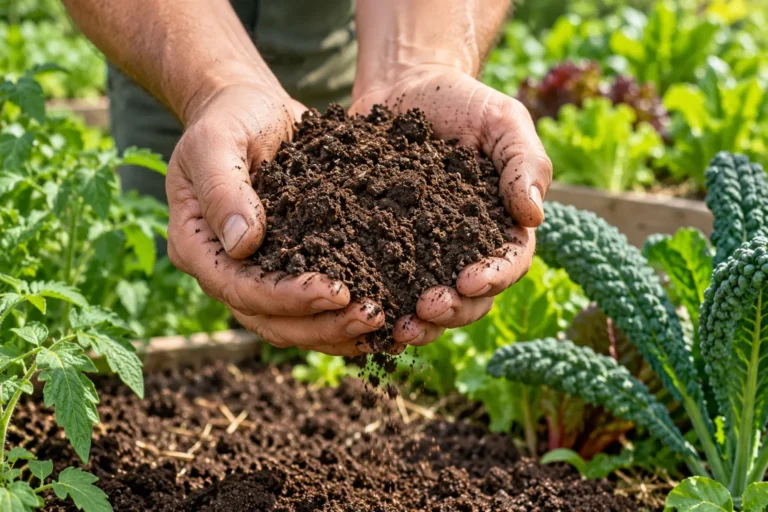
Groundnut is particularly well suited to deep, loose and well-drained sandy soils.
ICRISAT identifies sandy soils, sandy loams and loamy sands as suitable because roots and pegs can penetrate easily and pods are easier to recover during harvest. ICRISAT OAR
Soil should provide:
good drainage, sufficient moisture storage, adequate aeration, and a loose pod-development zone.
Very heavy or compact soil can make pegging and harvesting more difficult. Waterlogging is especially undesirable.
A simple field check
ICRISAT provides a useful low-tech field observation: soil that can be rolled into a stable ball or flattened into a ribbon tends to contain more clay and may be less suitable for groundnut production than a loose sandy soil. ICRISAT OAR
This does not mean every clay-containing field is impossible to use. It means drainage, compaction and seedbed preparation deserve more attention.
Field Preparation and Rotation
Groundnut benefits from a seedbed without severe compaction.
ICRISAT recommends avoiding successive groundnut crops on the same land and describes crop rotation as useful for reducing pest and disease buildup and maintaining soil conditions. Cereals such as maize, sorghum and millet are among the rotation crops discussed in its groundnut guide. ICRISAT OAR
Rotation is particularly useful for breaking cycles involving soil-borne diseases and some nematodes.
The objective of cultivation should be a workable seedbed and loose podding zone—not simply as much tillage as possible.
Choosing a Groundnut Variety
Variety influences nearly every later management decision.
Groundnut types differ in:
maturity period, growth habit, kernel size, seed requirement, disease response, oil content, end market and harvest characteristics.
ICRISAT describes major groundnut groups including Virginia, Runner, Spanish and Valencia types and notes differences in growth habit, seed size and maturity. ICRISAT OAR
Choose a variety that matches the local growing season and intended market.
For example, a farmer producing confectionery groundnuts may need a different seed type from a grower supplying an oil market.
Groundnut Seed Rate per Hectare
There is no single correct groundnut seed rate.
The kilograms of kernels required depend on:
seed size, variety, spacing, target population, laboratory germination and expected field establishment.
This is particularly important because a kilogram of small groundnut seed contains many more kernels than a kilogram of a bold-seeded variety.
A farmer can therefore achieve the same plant population with quite different kilogram-per-hectare seed rates.
Why fixed seed rates can be misleading
Suppose two groundnut seed lots are planted at exactly 120 kg/ha.
If one lot has substantially larger kernels, it contains fewer seeds per kilogram and may establish fewer plants per hectare.
A better approach is to start with a target plant population, then adjust for actual seed mass and germination.
The BlogAgri Seed Rate Calculator does exactly this by using target plants per square metre, thousand-seed weight, germination and expected field loss. BlogAgri Seed Rate Calculator Blogagri.com
Useful seed-rate conversions
| Seed rate | Approx. per acre |
|---|---|
| 100 kg/ha | 40.5 kg/acre |
| 110 kg/ha | 44.5 kg/acre |
| 120 kg/ha | 48.6 kg/acre |
| 125 kg/ha | 50.6 kg/acre |
| 150 kg/ha | 60.7 kg/acre |
These are only conversions. They are not recommendations that every groundnut variety should be planted at those rates.
Field Tip
Check germination and seed size before buying the full seed requirement. Adding extra seed is a poor substitute for correcting low seed quality, unsuitable planting depth or poor establishment conditions.
Groundnut Spacing and Plant Population
Spacing should match variety and growth habit.
Compact bunch types can generally be planted more closely than spreading or runner types.
A commonly used compact-type layout is approximately:
30 cm between rows × 10 cm between plants
but wider row arrangements are used for spreading types and different mechanized systems.
Population matters because both very low and excessive stands can reduce production efficiency.
A thin crop wastes field space and can allow more weed growth. Excessive density increases competition and may create a humid canopy favorable to some diseases.
For layout planning, BlogAgri’s Agriculture Tools hub includes Plant Population and Plant Spacing calculators. BlogAgri Agriculture Calculators Blogagri.com
How Deep Should Groundnut Be Sown?
Sow into moist soil at a depth that supports reliable emergence without placing seed unnecessarily deep.
A practical range in many systems is roughly:
4–6 cm
The correct depth changes with soil texture and moisture.
On dry, loose sandy soil, seed may need access to moisture slightly deeper in the profile. In heavier or crust-prone soil, excessive depth can slow emergence.
Uniform depth is often more valuable than chasing one exact number.
Rhizobium and Nitrogen Fixation
Groundnut is a legume.
In association with suitable rhizobia, it can form root nodules and fix atmospheric nitrogen. ICRISAT notes this nitrogen-fixing ability as an important feature of the crop. ICRISAT OAR
Effective nodulation helps explain why groundnut generally requires less fertilizer nitrogen than crops such as maize.
However, nitrogen fixation can be weakened by poor soil conditions, ineffective rhizobia, drought or other stress.
ICRISAT’s production guide notes that modest nitrogen applications may sometimes be useful under conditions where fixation is inadequate. ICRISAT OAR
Where an appropriate groundnut inoculant is recommended locally, inoculation can help establish effective nodulation.
Groundnut Fertilizer Requirements
The best groundnut fertilizer program begins with a soil test.
TNAU explicitly recommends testing the soil and applying fertilizers according to the recommendation. Where no soil test is available, one TNAU package gives a blanket example of:
25:50:75 kg N:P₂O₅:K₂O per hectare. Agritech TNAU
That figure should not be treated as a worldwide fertilizer formula.
Soils vary enormously in residual phosphorus, potassium, sulfur and other nutrients.
ICRISAT similarly emphasizes that groundnut can respond to phosphorus, nitrogen, potassium, calcium, magnesium and other nutrients depending on field conditions. ICRISAT OAR
Nitrogen
Because groundnut can fix atmospheric nitrogen, heavy nitrogen fertilizer is generally not the foundation of its nutrient program.
A modest starter amount may be used in some regional recommendations.
Too much nitrogen should not be assumed to produce more pods.
Phosphorus
Phosphorus supports root growth, nodulation, energy transfer and reproductive development.
ICRISAT identifies phosphorus as an important nutrient in many groundnut production regions and discusses phosphorus application before planting. ICRISAT OAR
Potassium
Potassium supports crop water relations, enzyme activity and stress response.
The appropriate K rate depends largely on soil-test status, previous cropping and expected production.
Check the whole fertilizer ratio
A compound fertilizer has a fixed nutrient ratio.
Use the BlogAgri NPK Fertilizer Calculator to compare the field’s N, P₂O₅ and K₂O targets with the fertilizer grade you intend to use. It can also reveal when meeting one nutrient with a compound product would over-supply another. BlogAgri NPK Fertilizer Calculator Blogagri.com
Why Gypsum Is Important for Groundnut
Groundnut has an unusual calcium requirement because pods develop within the soil.
Gypsum supplies calcium and sulfur without functioning like agricultural lime.
TNAU recommends 400 kg gypsum/ha around 40–45 days after sowing in its production package and advises avoiding unnecessary application in calciferous soils. It specifically states that gypsum encourages pod formation and better pod filling. Agritech TNAU
ICRISAT also discusses applying gypsum where calcium is needed in the upper soil zone where pods develop. Its guide shows that rates can vary substantially by production system and field condition. ICRISAT OAR
This variation is important.
There is no reason to copy a 400 kg/ha or 500 kg/ha gypsum rate automatically without considering the soil and local recommendation.
Agricultural Insight
Unlike many crops that mainly absorb calcium through deeper roots, developing groundnut pods benefit from calcium availability in the upper podding zone. This is why the placement and timing of calcium can matter as much as the total amount.
Micronutrient Management
Groundnut can suffer deficiencies of micronutrients including iron, zinc and boron under certain soil conditions.
Deficiency risk is influenced by:
soil pH, soil type, previous nutrient management and local geology.
Do not add a broad micronutrient mixture simply because groundnut is being grown.
Use soil analysis, tissue analysis or locally recognized deficiency symptoms where practical.
Groundnut Irrigation Management
Water management has a major effect on pod yield.
TNAU identifies flowering, pegging and pod development as critical stages where moisture deficit can seriously reduce economic yield. Agritech TNAU
Early in the season, adequate moisture supports germination and stand establishment.
During flowering and pegging, severe water stress can reduce reproductive success.
During pod development, moisture supports pod expansion and kernel filling.
At the same time, groundnut should not remain waterlogged.
Avoid irrigation by calendar alone
An irrigation schedule of “water every seven days” may be suitable in one field and excessive in another.
Irrigation frequency depends on:
soil texture, rooting depth, temperature, rainfall, crop stage and irrigation efficiency.
BlogAgri’s Irrigation Water Requirement Calculator can help convert a known crop-water requirement into field water volume; use local agronomic guidance to determine the crop-water assumptions first. BlogAgri Agriculture Calculators
Weed Management
Early weed competition can reduce establishment and crop growth.
Weed control is especially important before the crop canopy develops and before extensive pegging.
Late aggressive cultivation becomes risky because equipment or hoes can disturb pegs and developing pods.
A good management strategy controls weeds early enough that later disturbance of the podding zone can be minimized.
Common Mistake
Do not continue deep intercultivation simply because weeds are visible after pegging. Damaging reproductive structures can cost more yield than the remaining weeds.
Groundnut Pests and Diseases
The most important pests and diseases differ by growing region.
ICRISAT identifies unreliable rainfall, pests and diseases—including rosette, aflatoxin and leaf spots—as major constraints in groundnut production. ICRISAT OAR
Common problem groups include leaf spots, rust, soil-borne rots, viral diseases and foliage-feeding insects.
The strongest management program begins with:
healthy seed, suitable rotation, adapted varieties, clean crop establishment and regular field scouting.
Crop-protection chemicals should follow the current registered label for the crop and country. Do not copy pesticide products or rates from another jurisdiction.
Groundnut Yield per Hectare
Groundnut yield varies enormously.
ICRISAT notes that average yields in some African production systems have historically been under 1 t/ha, while its cropping guide indicates that improved management can raise production toward 2.5–3 t/ha or more under suitable conditions. ICRISAT OAR
That figure is a useful production benchmark, not a guaranteed yield.
Yield is influenced by variety, plant stand, rainfall, irrigation, soil fertility, disease, weed competition and harvest loss.
Yield conversion
| Pod yield | Approx. kg/acre |
|---|---|
| 1.0 t/ha | 405 kg/acre |
| 1.5 t/ha | 607 kg/acre |
| 2.0 t/ha | 809 kg/acre |
| 2.5 t/ha | 1,012 kg/acre |
| 3.0 t/ha | 1,214 kg/acre |
For field sampling, the BlogAgri Crop Yield Calculator scales a representative harvested sample to yield per hectare, yield per acre and total field production. BlogAgri Crop Yield Calculator Blogagri.com
What Usually Limits Groundnut Yield?
| Problem | Likely consequence | Management focus |
|---|---|---|
| Poor seed germination | Low final stand | Seed quality, depth and moisture |
| Incorrect population | Wasted area or excessive competition | Seed rate and spacing |
| Waterlogging | Weak roots and disease | Drainage |
| Drought during flowering/pegging | Reduced pod formation | Moisture management |
| Low calcium in podding zone | Poor pod filling | Soil test and gypsum strategy |
| Excess weeds | Resource competition | Early weed control |
| Severe leaf disease | Premature defoliation | Resistant varieties and timely control |
| Late harvest | Pods lost in soil | Maturity monitoring |
| Poor drying | Mould and quality loss | Rapid post-harvest drying |
This is why simply applying more fertilizer is often a poor yield-improvement strategy.
First identify the limiting factor.
When Is Groundnut Ready to Harvest?
Harvest should be based on pod maturity, not only on days after sowing.
Variety and growing conditions can shift the actual maturity date.
Lift plants from several representative areas of the field and examine pod development.
Signs of advancing maturity include well-developed kernels and characteristic changes inside the pod shell.
Harvesting too early leaves a high proportion of immature kernels.
Waiting too long increases the risk that pods detach and remain in the soil during lifting.
Post-Harvest Drying and Aflatoxin Risk
Post-harvest management is part of groundnut production, not a separate issue.
Groundnut is particularly susceptible to contamination by aflatoxin-producing fungi under unfavorable conditions.
Risk is increased by drought stress, damaged pods, delayed harvesting, wet produce and poor storage.
Dry harvested groundnuts promptly on a clean surface and protect them from re-wetting.
Avoid mixing visibly mouldy or damaged material into good produce.
Safety Note
Aflatoxin contamination cannot be made safe simply by mixing poor-quality groundnuts with a larger quantity of clean produce. Food and feed safety requirements should be taken seriously.
Is Groundnut Cultivation Profitable?
Yield alone does not determine profitability.
Seed, fertilizer, gypsum, crop protection, irrigation, machinery, labor, harvest and drying costs all influence the final return.
BlogAgri’s Crop Production Cost Calculator separates these major crop-production cost categories so growers can build a transparent field budget. BlogAgri Crop Production Cost Calculator Blogagri.com
After estimating realistic saleable yield and selling price, the Farm Profit Calculator can estimate revenue, total cost, profit per hectare, margin and return on cost. BlogAgri Farm Profit Calculator Blogagri.com
A useful profitability analysis should test more than one yield and price scenario.
Practical Groundnut Cultivation Checklist
- Choose a locally adapted variety whose maturity fits the growing season.
- Select a loose, well-drained field and correct severe compaction or drainage problems.
- Base seed quantity on target population, actual seed size and germination—not kilograms alone.
- Use spacing suited to the variety’s growth habit.
- Test the soil and match fertilizer to actual nutrient requirements.
- Make sure calcium is available in the pod-development zone where local guidance indicates a need.
- Protect flowering, pegging and pod filling from severe moisture stress.
- Control weeds early so later cultivation does not damage pegs.
- Monitor pests and disease instead of relying on routine pesticide applications.
- Sample pods for maturity, harvest promptly and dry produce quickly on a clean surface.
Frequently Asked Questions
What is the seed rate for groundnut per hectare?
Groundnut seed rate depends on variety, kernel size, germination, spacing and target plant population. Many production recommendations are around 100–125 kg of kernels per hectare, while bold-seeded varieties or particular production systems may require more. Use the recommendation for the specific variety and seed lot rather than treating one kilogram rate as universal.
What is the groundnut seed rate per acre?
A seed rate of 100 kg/ha is approximately 40.5 kg/acre, 120 kg/ha is about 48.6 kg/acre, and 125 kg/ha is about 50.6 kg/acre. These figures are unit conversions, not universal recommendations. Actual seed requirement should account for variety, seed size, germination, target population and field establishment.
What fertilizer is best for groundnut cultivation?
There is no single best fertilizer for every groundnut field. A soil test should guide nitrogen, phosphorus, potassium and secondary-nutrient applications. Groundnut can fix atmospheric nitrogen through effective nodulation, while phosphorus, potassium, calcium and sulfur may still require attention depending on soil fertility and local recommendations.
How much NPK fertilizer does groundnut need?
NPK recommendations vary by soil and location. For example, one TNAU recommendation uses 25:50:75 kg N:P₂O₅:K₂O per hectare where a soil test is unavailable. This should not be treated as a global prescription. A field-specific soil-test recommendation is preferable because nutrient status differs greatly among soils.
Why is gypsum used in groundnut cultivation?
Gypsum supplies calcium and sulfur. Calcium availability near the soil surface is particularly important because groundnut pegs enter the soil and pods develop there. Where calcium is deficient, gypsum can support pod formation and filling. The application rate should follow soil conditions and local recommendations rather than being used automatically.
What is the best spacing for groundnut?
Groundnut spacing depends on variety and growth habit. Compact bunch types can use closer spacing, with 30 × 10 cm being one common example, while spreading or runner types generally require wider rows. Use locally tested spacing for the chosen variety and production system.
At what stage does groundnut need the most water?
Flowering, pegging and pod development are especially sensitive to moisture stress. Adequate moisture is also required during germination and establishment, but groundnut does not tolerate prolonged waterlogging. Irrigation frequency should therefore reflect soil type, rainfall, weather and crop stage rather than a fixed calendar.
How much groundnut yield can be obtained per hectare?
Groundnut yield varies widely with variety, climate and management. ICRISAT reports that improved management can support yields around 2.5–3 t/ha or more in suitable production systems, while poorly managed or drought-stressed crops may produce much less. These figures are benchmarks rather than guaranteed yields. ICRISAT OAR
How can I tell when groundnut is ready to harvest?
Check pods from representative plants rather than relying only on days after sowing. Mature pods should contain well-developed kernels and show characteristic internal shell changes. Harvesting too early increases immature kernels, while harvesting too late can cause mature pods to detach and remain in the soil.
Why is crop rotation important in groundnut farming?
Crop rotation can reduce the buildup of pests, diseases and some soil-borne problems associated with repeated groundnut production. Groundnut also fits well into rotations with cereal crops. The best sequence depends on local disease pressure, soil fertility and the crops grown in the farming system. ICRISAT OAR
Final Thoughts on Groundnut Cultivation
Successful groundnut cultivation is less about finding one perfect seed rate or fertilizer dose and more about making several management decisions work together.
Start with an adapted variety and a healthy plant stand. Use loose, well-drained soil, base fertilizer on actual nutrient requirements, make calcium available in the podding zone where needed, and protect flowering, pegging and pod development from severe moisture stress.
Then treat harvest and drying with the same care as crop establishment.
A high biological yield has limited value if pods are lost during lifting, damaged by delayed harvest or contaminated during poor drying and storage.
For planning, start with the BlogAgri Seed Rate Calculator, then use the NPK Fertilizer Calculator, Crop Yield Calculator, and Farm Profit Calculator to connect establishment, nutrient management, expected production and economics. Blogagri.com
Sources and Further Reading
For soil, climate, rotation, groundnut biology and production-system guidance, see the ICRISAT/Africa Soil Health Consortium Groundnut Cropping Guide. ICRISAT Groundnut Cropping Guide ICRISAT OAR
For nutrient management, gypsum timing and critical irrigation stages, see Tamil Nadu Agricultural University’s groundnut nutrient-management guidance. TNAU Groundnut Nutrient Management