Email: blogagri2@gmail.com
Goat Breeds for Small Farms: Dairy, Meat and Fiber Choices
Explore goat breeds for milk, meat, fiber, and companionship. Compare popular options and learn what to check in breeder records, housing, health, and costs before choosing goats for your farm.

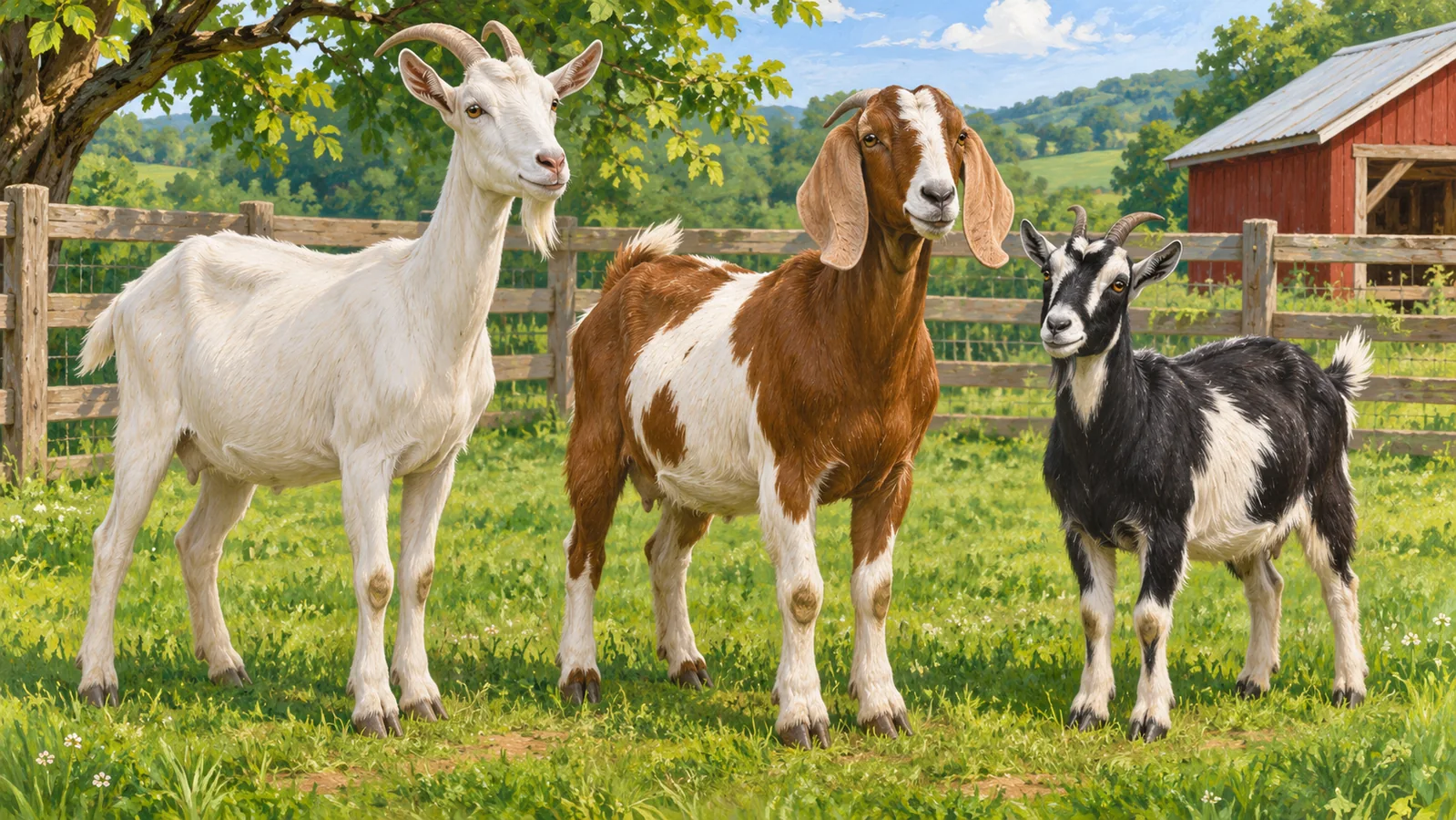
Choosing goat breeds is easier when you know what you want from the herd. A family looking for fresh milk needs different animals and facilities from a farmer raising meat kids or someone collecting fiber for spinning.
Start with your main purpose, then look for healthy animals from a well-managed herd. The breeder’s records, the goats’ handling experience, and the conditions they are used to will help you judge whether they belong on your farm.
QUICK ANSWER
Choose goat breeds for your main goal—milk, meat, fiber, or companionship. Dairy options include Alpine, Saanen, Nubian, LaMancha, and Nigerian Dwarf. Boer, Kiko, and Spanish are common meat choices, while Angora goats produce mohair. Compare individual records and local herd performance, and prepare secure facilities and compatible goat companions before buying.
Goat breeds at a glance
Use this table to narrow your search before contacting breeders. Once you have a shortlist, compare actual animals and their records.
| Main purpose | Breeds or types to consider | What to check before buying |
|---|---|---|
| Milk | Alpine, Saanen, Nubian, LaMancha, Nigerian Dwarf, and other dairy breeds | Lactation records, milk components, and milking behavior |
| Meat | Boer, Kiko, Spanish, Myotonic, and suitable crosses | Growth, reproductive history, soundness, and buyer preferences |
| Mohair | Angora | Fleece quality, shearing arrangements, and processing access |
| Cashmere | Selected cashmere-producing goats | Fiber measurements, fleece evaluations, and registry terminology |
| Companionship | Suitable, well-handled individuals | Adult size, behavior, compatibility, and lifetime care |
These categories reflect common selection goals described by Extension services and breed organizations. Some farms produce more than one product, but choosing a main purpose gives you a clear starting point. adga.org
For example, a dairy herd may also sell breeding animals. Before counting that extra income, find out what buyers expect in terms of registration, health records, and production history.
Dairy goat breeds for a small farm
The American Dairy Goat Association maintains herd books for Alpine, Guernsey, LaMancha, Nigerian Dwarf, Nubian, Oberhasli, Saanen, Sable, and Toggenburg goats. Its standards help you understand breed identification and registration requirements. adga.org
Alpine and Saanen
Alpine and Saanen are standard-sized dairy options worth investigating when milk production is your main goal. Start by finding breeders within a reasonable distance and asking which animals have individual milk records.
If possible, arrange your visit around milking time. Watch how the doe approaches the stand, responds to handling, and settles into the routine. Ask whether she has been milked by hand, machine, or both.
Check the equipment you would need at home. The stand height, restraints, and working space should suit both the goat and the person doing the milking.
Nubian and LaMancha
Nubians have long, pendulous ears, while LaManchas have very short external ears. Both are recognized dairy breeds. Their appearance helps with identification, while individual records help you assess their usefulness in your herd. adga.org
When a seller quotes milk production, ask exactly what the figure covers. Is it one milking, a full day, or an average over a recorded period? Also ask how long the doe has been in milk.
Write those details down. They make comparisons much more useful when you visit another breeder offering animals at a different stage of lactation.
Nigerian Dwarf
Nigerian Dwarf is a miniature dairy breed. It is worth considering if you prefer a smaller dairy animal, but check whether the individual doe’s production and handling suit your needs. adga.org
Meet adult goats as well as the kids for sale. Ask the breeder to demonstrate milking and let you see the setup closely. Consider whether you can comfortably use similar equipment.
Include feeding, fencing, hoof care, breeding, and kidding in your plans. Buying a smaller animal still commits you to a full care routine.
Other dairy breeds
Oberhasli, Toggenburg, Sable, and Guernsey are also worth investigating where good stock is available. A knowledgeable local breeder may make a less familiar breed a practical choice.
Ask what support the breeder offers after purchase. Someone who can explain their feeding program, share records, and answer questions about the animal can help you prepare for the move.
TIP
Visit more than one herd before choosing your first dairy goats. Seeing different milking setups will help you decide what you can manage comfortably every day.
Compare milk records before choosing a doe
ADGA’s breed averages describe recorded lactations. They are useful background, but individual production varies. Check the year, number of records, and measurement units before using a table to compare breeds. adga.org
For a purchase, request records connected to the actual doe. Useful details include her identification, lactation dates, total milk production, and available fat and protein measurements.
Ask about the feed and management behind those results. A doe moving to a different ration, climate, and routine may perform differently.
Imagine that a seller advertises a particularly high daily yield. That number might represent the doe’s best day. Your household needs to know how much milk will be available across the season, so ask for the longer record and discuss lower-production periods.
Penn State notes that genetics and diet influence milk output and composition. Plan for the whole dairy routine, including breeding, kidding, milking, equipment cleaning, and milk handling. extension.psu.edu
If you intend to sell milk or dairy products, contact your state dairy authority before buying equipment or promising customers a supply.
Meat goat breeds and crosses
Start a meat-goat plan by learning what local buyers want. Ask about preferred weights, ages, delivery arrangements, and seasonal demand. These details help you choose breeding stock and decide which records matter most.
Boer
Boer goats originated in South Africa and are associated with meat production and substantial muscling. Ask breeders for growth information and details of the feeding program used to achieve those results. extension.psu.edu
Compare animals of known ages. A large goat in a photograph may simply be older than another animal you are considering.
Request weights with dates and identification numbers. Then ask what the animal ate during that period. This helps you judge whether the performance came from a system you can reproduce and afford.
Kiko
Kiko goats were developed in New Zealand with survival and growth among their selection goals. When investigating a herd, ask about its performance under conditions similar to your own. extension.psu.edu
Discuss reproductive history, kid growth, and the management the goats receive. Ask the breeder about difficult seasons and what adjustments were needed.
A useful conversation includes problems as well as successes. You need to understand what maintaining the herd requires when conditions become challenging.
Spanish
Spanish goats are another meat-oriented option. The Livestock Conservancy describes them as a landrace with variation among strains and regional populations. Ask which bloodline or population the animals come from and how the herd has been managed. livestockconservancy.org
The name “Spanish” has also been used loosely for mixed goats. If ancestry or conservation breeding matters to you, clarify the seller’s terminology and request supporting documentation.
Choose a source herd whose climate, feed resources, and handling practices resemble what you can provide.
Crossbred goats
Crosses can fit a commercial herd when their documented performance matches your goals. Ask why the breeder selected the parent lines and what results they have recorded.
Consider how the cross fits your future breeding plan. Write down whether you intend to retain replacement females, buy replacements, or produce animals solely for sale.
Common Mistake
Accepting “hardy” or “low maintenance” as a complete management description leaves important questions unanswered. Ask what the goats receive in feed, routine monitoring, handling, and veterinary care throughout the year.
Myotonic goats and heritage breeding
Myotonic goats are also called Tennessee Fainting goats. Their characteristic stiffness is associated with myotonia. Handle them calmly and avoid deliberately startling them to demonstrate the trait. livestockconservancy.org
If you want to conserve a heritage breed, check current guidance from the relevant registry and The Livestock Conservancy before buying breeding animals.
Ask which records establish eligibility for the program you have in mind. Confirm how parentage is documented and what happens to registration status if animals are crossed.
Also consider the practical side of maintaining a breeding group. Find out where unrelated stock is available, who might buy surplus animals, and how you will keep records over several generations.
Fiber goats for mohair and cashmere
Before purchasing fiber goats, speak with a shearer, processor, fiber guild, or potential buyer. Ask what they accept, how they assess quality, and what services cost.
Angora goats for mohair
Angora goats produce mohair. Ask the breeder how shearing is arranged and how the goats are managed around fiber collection. extension.psu.edu
Request fleece samples and any available evaluations. Discuss the amount of usable fiber after sorting and processing, along with the work involved in getting it ready for sale.
If you want fiber for personal spinning, explain that goal to the breeder and processor. They can help you understand whether the fleece and available services suit the project.
Book necessary services before the goats arrive. This is especially useful where only a few people handle small fiber flocks.
Cashmere-producing goats
Cashmere is fine undercoat fiber produced by selected goats. The Cashmere Goat Association also defines standards for North American Cashmere Goats, so ask which standard or registry a seller means. cashmeregoatassociation.org
Request fiber measurements and fleece evaluations. Fineness, length, and other quality characteristics matter when assessing potential use.
Ask how the fiber is collected and what further processing is needed. Match that information to the requirements of your intended buyer or your own craft project.
BUDGET TIP
Price each step from keeping the goat to obtaining usable fiber. Include collection, sorting, processing, transport, and your time before estimating a return from fleece or yarn.
Choosing goats for companionship
For companion goats, meet the actual animals before committing. Ask the seller to demonstrate catching, leading, and routine handling.
Watch how the goats behave with one another and with their usual caretaker. Consider whether their adult size and behavior fit your household’s handling ability.
If children will help with chores, plan adult supervision and explain the intended routine to the breeder. Choose animals whose care requirements are manageable for the adults responsible.
Goats are herd animals. Penn State recommends keeping at least two, so plan for compatible companions from the start. extension.psu.edu
You can also ask about suitable wethers, meaning castrated males, when milk production or breeding is outside your goals. Discuss their age, health history, and ongoing care with the breeder and veterinarian.
Prepare your farm before bringing goats home
Walk through a normal day on your property. Decide where you will feed, check water, store hay, catch an animal, and keep incoming goats separate.
Then think about doing those jobs in heavy rain, winter weather, or after dark. A convenient summer setup can become difficult to use later in the year.
Check fencing and shelter
Prepare secure fencing and a dry, ventilated shelter. Have an experienced local keeper review the fence design for the age, size, and horns of the animals you plan to buy.
Check gates, corners, and gaps carefully. Show the adviser where you intend to move animals for handling or transport.
If you grow vegetables, fruit trees, or ornamental plants, include those areas in the discussion. Plan how the goats will be kept out of your garden before they arrive.
ClIMATE Note
Ask local breeders what their hardest season involves. Discuss wet ground, winter feed, summer conditions, and shelter. Compare their arrangements with the resources available on your own property.
Arrange handling and backup care
Set aside an area where animals can be handled safely for routine care. Check that suitable transport is available when you need it.
Write a care sheet with feeding instructions, important contacts, and the location of supplies. Give it to anyone who might cover chores.
Arrange that help before purchasing goats. Milking animals, companion goats, and breeding stock all need care when the owner is away or unwell.
Review health records before purchase
Ask a local veterinarian about appropriate purchase checks, incoming-animal isolation, testing, parasite monitoring, and preventive care. Penn State’s health guidance emphasizes biosecurity and separating new or unhealthy animals. extension.psu.edu
Request dated records connected to each animal’s identification. If a seller says the herd is “tested,” ask which tests were performed, when, and which animals were included.
Observe the goats moving and being handled. Write down concerns and ask for an explanation, while leaving diagnosis and interpretation of health findings to a qualified professional.
WARNING
A breed’s reputation cannot establish an individual goat’s health. Arrange advice on purchase checks and incoming-animal management before mixing new goats with an established herd.
Use the same questions at every breeder visit
A consistent checklist makes it easier to compare animals after you return home.
- What are the animal’s identification, age, and breeding background?
- Which production records belong to this individual?
- What feeding and management produced those results?
- What health records are available?
- How does the animal behave during routine handling?
- Why is it being sold?
- What advice can the breeder provide after purchase?
Add purchase price, transport, and any facility changes to your notes. Resolve missing information before paying a deposit.
If possible, take an experienced goat keeper with you. Agree beforehand that the visit is for evaluating animals, so you have time afterward to compare the options calmly.
Match your budget and region to the herd
This guide focuses on US breed selection. For a project in Pakistan, use BlogAgri’s goat breeds of Pakistan guide as regional background and consult local livestock services about suitable stock and markets.
Build the budget around your main purpose. Include milking costs for dairy goats, fiber collection and processing for fiber animals, and lifetime care for companions.
Keep purchase costs and facility changes visible. In a hypothetical comparison, one group might cost $200 less to buy but require $800 in extra fencing or equipment. Replace those illustrative figures with actual quotes before deciding.
Shortlist two or three suitable breeds or crosses, visit the herds, and compare records. Bring goats home once the animals, facilities, daily routine, and budget fit together.
Frequently asked questions
Which goat breed is best for beginners?
Choose healthy, well-handled animals from a breeder who provides records and practical support. Match the goats to your purpose, facilities, and handling ability. Visiting local herds will help you judge these factors. Prepare suitable housing, compatible companions, and veterinary support before making the purchase.
Are Nigerian Dwarf goats the same as Pygmy goats?
They are distinct breeds. Nigerian Dwarf is recognized by ADGA as a miniature dairy breed. If you want milk, check individual dairy records and observe the milking routine. Confirm the animal’s identity and background instead of assuming every small goat has the same production potential. adga.org
Which goat breed produces the most milk?
Use current recorded data as a starting point, then compare individual does. Production depends on genetics, feeding, management, and stage of lactation. Ask for complete records and discuss the conditions behind them. Your choice should suit both your milk needs and the care you can provide. adga.org
Can the same goat provide milk, meat, and fiber?
Goats may contribute more than one product, but their suitability varies. Choose your main purpose first and request the records relevant to it. Lactation records help assess dairy animals, while fleece measurements help assess fiber animals. Investigate secondary products before including them in a business plan.
Can I keep just one goat?
Plan for at least two compatible goats because they are herd animals. Include their companionship needs in the housing, feed, transport, and care budget. Ask the breeder about animals that get along and discuss introductions with your veterinarian when adding goats to an existing herd. extension.psu.edu
Are crossbred goats worth considering?
Crossbred goats can suit commercial or household goals when their performance and care needs are understood. Ask about parentage, growth or milk records, and the breeder’s reasons for the cross. If registration or conservation breeding matters, check the relevant requirements before choosing animals.