Email: blogagri2@gmail.com

Best Soil for a Vegetable Garden: Types, Amendments and Tests

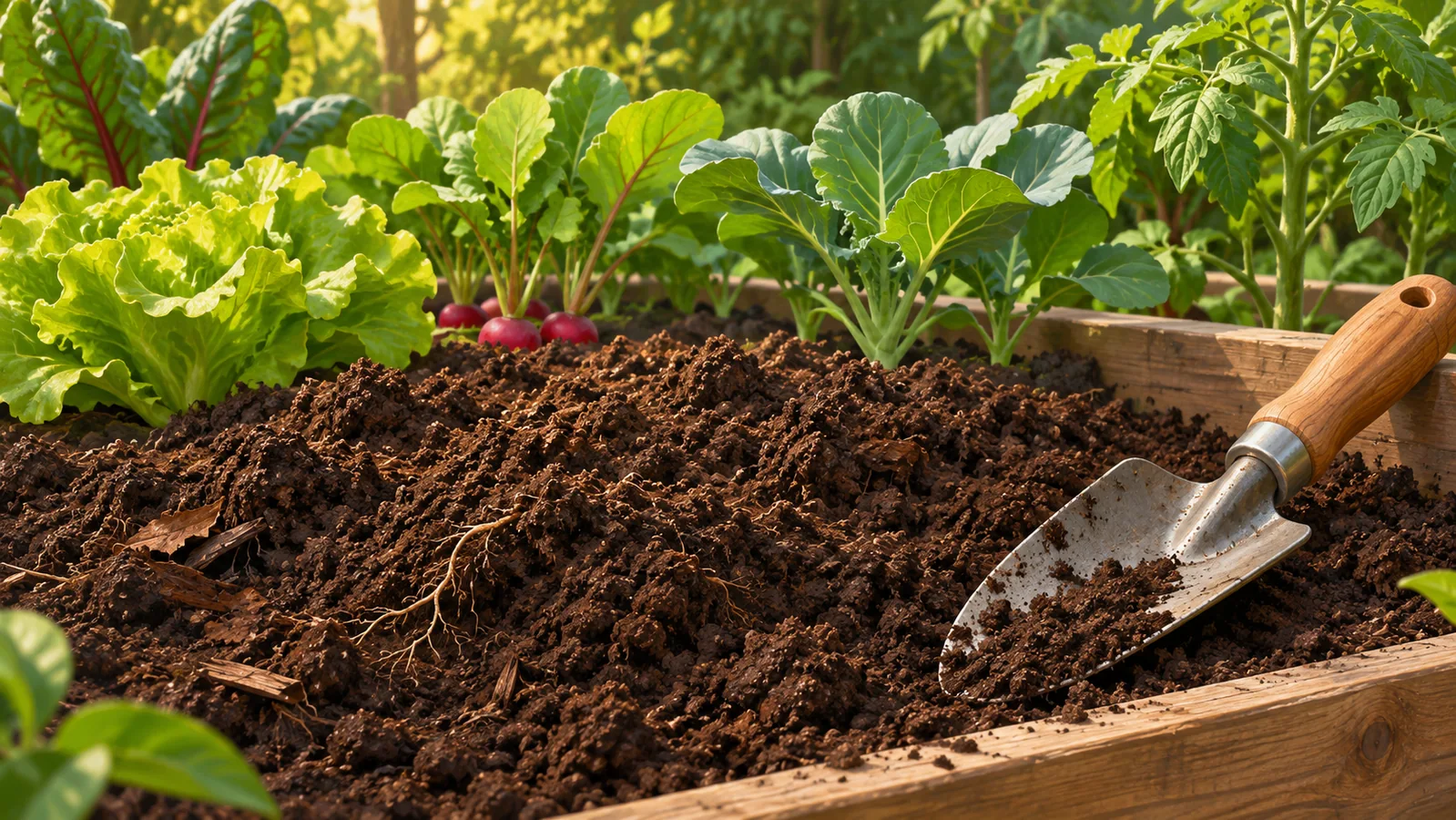
Choosing the best soil for a vegetable garden starts with the ground you already have. Before buying bags or booking a delivery, look at where water collects, how the soil feels, and whether you are planting in the ground, a raised bed, or containers.
A productive garden can begin with sandy soil, clay-rich soil, or a ready-made blend. The useful question is what your particular growing space needs. A soil test and a few observations will help you spend money on changes that serve a purpose.
QUICK ANSWER
The best soil for a vegetable garden provides roots with air, moisture, and nutrients while allowing excess water to drain. Improve safe existing soil for in-ground beds, choose a traceable mineral-soil blend for permanent raised beds, and use container potting mix for pots. Check drainage, soil safety, pH, and nutrient levels before adding amendments.
Match the soil to your growing space
Different growing systems put different demands on their soil. Start with the arrangement you plan to use, then compare suitable materials.
| Growing space | Practical starting point | What to check |
|---|---|---|
| In-ground garden | Safe existing soil with amendments guided by testing | Compaction, drainage, pH, and nutrients |
| Open-bottom raised bed | Suitable native soil or a documented mineral-soil blend | Source, usable rooting depth, and compost content |
| Pots and grow bags | Mix formulated for containers | Aeration, drainage openings, and included fertilizer |
Rutgers recommends considering suitable native mineral soil for permanent raised beds, while Maryland Extension recommends well-aerated growing media for containers. Rutgers Cooperative Extension
An open-bottom bed over suitable ground allows a different rooting environment from a bed standing on pavement. Before filling either, establish where water can go and how much usable soil depth your crops will have.
For a rooftop, balcony, or elevated planter, confirm the structure’s load capacity before ordering material. Wet growing media and irrigation water add weight that must be accounted for in the design.
TIP
Write down your growing system, inside dimensions, crops, and current problem before visiting a supplier. These details make it easier to ask useful questions and compare recommendations.
Understand texture and structure
Soil texture describes the proportions of sand, silt, and clay. Structure describes how soil particles are arranged into aggregates, with spaces that hold air and water.
Sandy soil generally drains quickly. Clay-rich soil holds more water and nutrients but can become compacted. Loam has a useful balance of particle sizes, although good management still matters.
The University of Maryland explains that roots depend on soil for water, air, nutrients, and physical support. Compaction and poor drainage can interfere with those functions. University of Maryland Extension
Try a simple texture check
Moisten a small handful of soil and work it between your fingers. Notice whether it feels gritty, smooth, or sticky. Pinch a little between your thumb and finger and see whether it forms a ribbon.
Repeat in several parts of the plot. Record differences rather than assuming one handful represents the whole garden. This exercise gives a rough impression of texture. Laboratory testing answers different questions about chemistry and possible contaminants.
Use the observations to guide a discussion with your local Extension office. For example, take photographs of a bed that stays wet and describe how its soil feels compared with a better-performing area.
Check drainage before adding fertilizer
Visit the garden after rain. Look for puddles, runoff entering the beds, and places where the surface remains wet long after nearby ground has drained. Mark the locations on a simple sketch.
Maryland Extension describes a screening test using a hole 12 inches deep and 12 inches across. Fill it with water, then refill it the following day. The guide says the second filling should drain within about eight hours. University of Maryland Extension
Treat the result as a reason to investigate further. It does not identify every cause of poor drainage or provide a design for fixing the site.
Check whether foot traffic, a compacted layer, or water arriving from elsewhere may be involved. Seek local advice if the garden regularly floods or remains saturated. A raised frame alone does not resolve a site-wide drainage problem.
QUICK CHECK
Photograph the same part of the garden immediately after rain and again later. Note the date and approximate time. This gives an adviser a clearer picture than saying the soil is sometimes wet.
Test pH and nutrients before amending
For many common vegetables in mineral soil, mildly acidic to near-neutral conditions are suitable. Wisconsin Extension gives about pH 6.5 as a useful general target, with crop-specific differences. Wisconsin Horticulture
Get a laboratory recommendation before applying lime or sulfur. Leaf color alone cannot tell you which amendment is needed.
Choose a lab that interprets results for vegetable gardens in your region. Tell it what you plan to grow and what material you are sampling. A container mix may require a different analytical method from ordinary mineral soil. Rutgers Cooperative Extension
Take a representative sample
Follow the selected laboratory’s instructions for depth, equipment, and sample quantity. Combine subsamples from the same management area, while keeping distinctly different beds or problem areas separate. University of Maryland Extension
Label each sample so you can match the result to the right place. Keep a garden sketch with the labels, especially if you have several raised beds filled from different deliveries.
When the report arrives, check the units and the area covered by each recommendation. Ask the lab or Extension office to explain anything unclear before buying products.
Keep the report with your planting notes and amendment receipts. Future tests are easier to interpret when you know what has been added.
Improve in-ground soil with a clear purpose
If the soil is suitable and safe, work on the limitations you have identified. You may need to improve organic matter, reduce compaction, correct a nutrient imbalance, or change the way water reaches the bed.
Finished compost can improve soil condition, but the amount should reflect the existing soil and the material being used. Ask about ingredients and maturity, and remember that compost contributes nutrients as well as organic matter.
Maryland’s amendment guidance favors organic matter for improving clay-rich soil. Adding a few bags of sand is an unreliable approach to changing a clay garden’s drainage. University of Maryland Extension
COMMON MISTAKE
Adding compost, manure, and fertilizer together without checking the soil can make it difficult to know what the garden actually needs. Read the test recommendation and account for the nutrients in each planned addition.
Minnesota Extension explains that repeated compost or manure applications can contribute to phosphorus buildup. Keep testing records and adjust additions as conditions change. UMN Extension
For ingredient and quality questions, use BlogAgri’s guide to choosing finished compost. Before ordering, note the product name and suggested application so you can compare it with the laboratory advice.
Make beds easier to maintain
Keep regular walking routes outside the growing area. Plan bed widths around what you can reach for planting, watering, and harvesting.
Avoid working soil when it is wet enough to smear and compact. If you are unsure, wait and reassess rather than forcing a planting schedule onto unsuitable conditions. University of Maryland Extension
Use an appropriate surface mulch after planting where it suits the crop and season. BlogAgri’s vegetable garden mulch comparison explains the differences among common materials and their uses.
Choose raised-bed soil by ingredients and source
For permanent raised beds, Rutgers Cooperative Extension supports using suitable mineral soil with appropriate organic-matter amendments. It also explains that bagged products carrying similar soil labels can contain very different ingredients. Rutgers Cooperative Extension
Ask a bulk supplier for the source of the soil, the blend ingredients, and an available recent soil test. Request a sample from the material currently being sold.
A dark color or a soft feel is only part of the assessment. Use the sample to inspect the material, then use documentation and testing to judge whether it suits food production.
Questions to ask before delivery
- Where did the mineral soil come from?
- Which compost or other materials were added?
- Are the blend proportions available?
- Does the test report describe this product or another batch?
- What is the delivered price for the volume needed?
- Where can the truck unload, and how will the material reach the beds?
Avoid assuming one compost percentage fits every situation. Compost quality, native soil, drainage, and growing conditions affect the decision.
Rutgers also discusses problems that can develop in beds filled entirely with organic growing media. For a permanent bed, ask how the proposed blend will behave as its organic components decompose. Rutgers Cooperative Extension
BUDGET TIP
Compare delivered cost and suitability together. A cheaper load becomes less useful if you must pay for testing, major correction, or removal after discovering it does not suit the garden.
For frame dimensions, access, and layout, see BlogAgri’s raised garden bed design guide. Finalize those details before calculating the fill.
Use container potting mix for pots and grow bags
Choose a growing mix intended for containers when planting vegetables in pots or grow bags. Maryland Extension explains that ordinary garden soil can be too dense for good air and water movement in a confined container. University of Maryland Extension
Read the ingredients and directions. Find out whether fertilizer is included, how long the manufacturer says it supplies nutrients, and what later feeding guidance applies.
Check that excess water has a drainage route. Position the container so its openings remain usable, then observe it after watering.
Keep the bag label or photograph it before disposal. If the plant later develops a problem, knowing the growing mix and included fertilizer helps you describe the setup accurately.
For several pots, label which mix went into each. This simple record can help you compare performance without relying on memory.
CLIMATE NOTE
A sunny, windy patio and a sheltered corner create different watering demands. Check moisture in the actual root zone and adjust to weather and plant growth rather than using one calendar schedule for every container.
Address questionable soil before growing food
A standard fertility test does not establish that soil is free from lead or other contaminants. If the site has a concerning history, ask about specific testing before planting.
EPA recommends appropriate lead testing and describes clean raised beds or containers as ways to reduce exposure when properly managed. The suitable approach depends on the findings and local guidance. epa.gov
WARNING
If contamination is suspected, contact the laboratory or local health authority about sampling and garden design. Avoid mixing questionable material into clean beds. Keep children away from potentially contaminated soil while its safety is being assessed.
EPA also recommends washing hands and produce, limiting contaminated dust, and avoiding tracking soil indoors. Follow advice appropriate to the identified contamination. A visual inspection cannot confirm safety. epa.gov
When importing soil, request source information before delivery. Keep the receipt, supplier details, and any test report with your garden records.
Calculate how much soil you need
Measure the inside length and width of the bed and the depth that still needs filling. Using the frame’s outside measurements can overstate the order.
For a rectangular bed, use these calculations.
Cubic feet = length in feet × width in feet × fill depth in inches ÷ 12
Cubic yards = cubic feet ÷ 27
An 8-by-4-foot bed needing 12 inches of fill requires the following amounts.
| Calculation | Result |
|---|---|
| 8 × 4 × 12 ÷ 12 | 32 cubic feet |
| 32 ÷ 27 | Approximately 1.19 cubic yards |
| 32 ÷ 2, using 2-cubic-foot bags | 16 bags |
That example calculates volume only. Discuss any additional allowance with the supplier and add it deliberately. Different products and handling methods do not justify one assumed settling percentage.
Use BlogAgri’s topsoil and raised-bed soil calculator to compare dimensions, bag counts, and material costs. Include delivery and other charges separately when comparing quotes.
For beds of different sizes, calculate each one individually and add the results. Keep the measurements with your order so any last-minute design change can be reflected before delivery.
Keep a simple soil-care record
Choose a consistent place to keep soil tests, product labels, receipts, and observations. Add a short note whenever you amend a bed or change the watering setup.
At the end of the growing season, record what happened rather than just whether the harvest felt good or bad. Note beds that puddled, areas that dried quickly, and crops that struggled in a particular location.
Share those details with an adviser when planning improvements. They make it easier to connect a recommendation with an observed problem.
Start with site safety, drainage, and the growing system. Then test, choose appropriate materials, and order the amount you actually need. A documented decision now can make next season’s soil work much simpler.
Frequently asked questions
What is the best soil for a vegetable garden?
A well-structured soil that provides air, water, and appropriate nutrients is a good foundation. The material depends on the growing system. Improve suitable native soil for in-ground gardens, assess mineral-soil blends for permanent raised beds, and choose container potting mix for pots and grow bags.
Can I grow vegetables in clay soil?
Yes, many clay-rich soils can support vegetables with suitable management. Check drainage and compaction first, protect beds from foot traffic, and avoid working wet ground. Use soil tests and local advice to decide whether organic matter or other changes are needed for your particular site.
Should I fill a raised bed entirely with compost?
For a permanent bed, assess a suitable mineral-soil blend and use compost according to the soil’s needs. Compost varies in nutrient content, maturity, and other properties, and its volume changes as it decomposes. Ask for product information before committing to a full load. Rutgers Cooperative Extension
Can I use garden soil in vegetable pots?
Ordinary garden soil can become too dense in containers and limit root-zone air and drainage. A container potting mix is usually the practical starting choice. Check the product directions, drainage openings, and included fertilizer, then monitor the pot under your actual growing conditions. University of Maryland Extension
Do I need fresh soil every year?
Routine complete replacement is usually unnecessary in a suitable, healthy in-ground garden. Review test results and observed problems, then make targeted improvements. Raised beds and containers need assessment according to their materials and history. Investigate poor growth before deciding that new soil is the solution.
How do I know whether purchased soil is safe?
Ask where it came from and request relevant documentation or testing. Explain that it will be used for vegetables. A fertility report alone may not answer contamination questions. If the source or land history raises concerns, consult the laboratory or local adviser before accepting the material.