Email: blogagri2@gmail.com

Broad Breasted White Turkey: Growth, Feed and Care

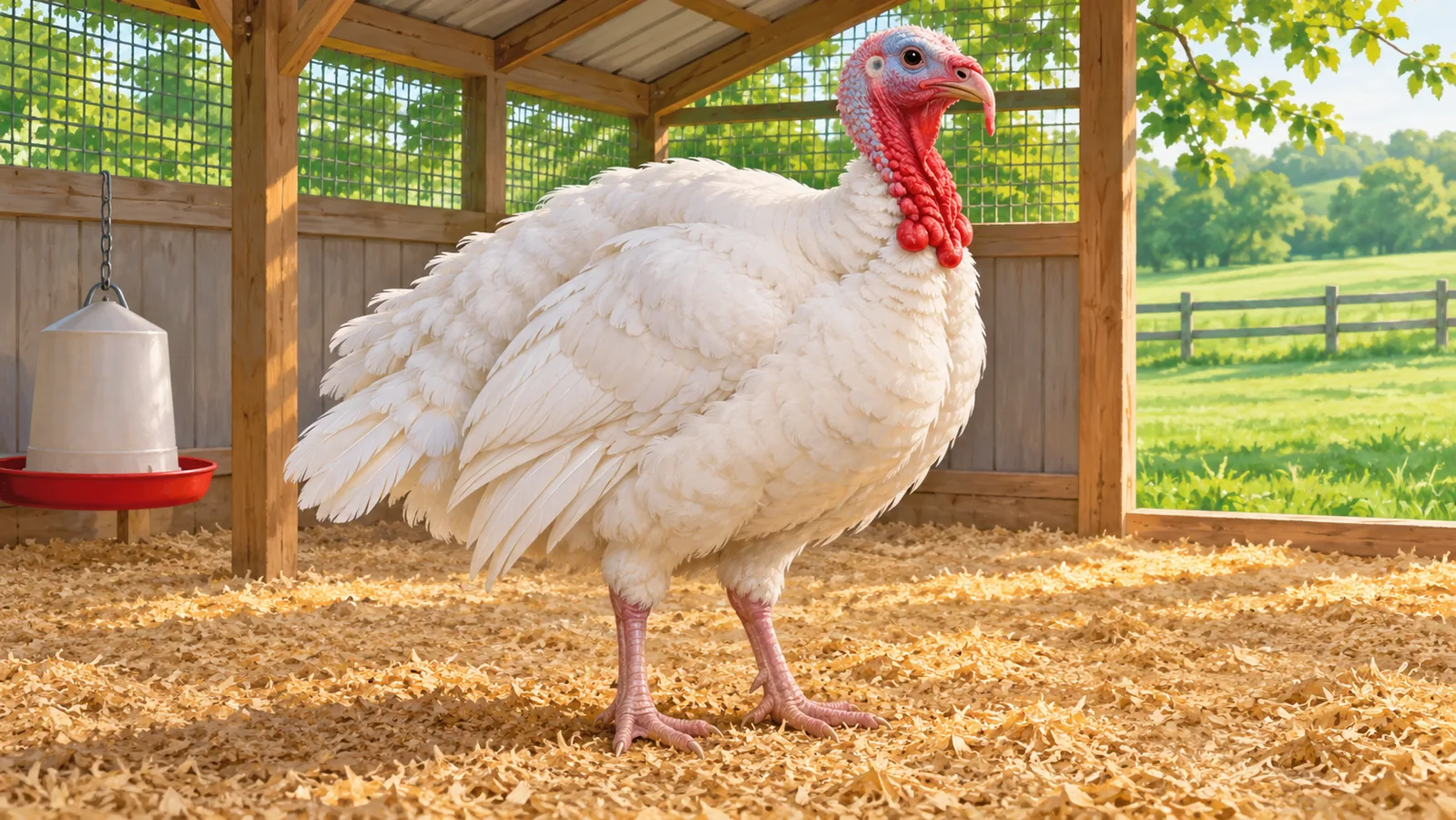
Broad Breasted White turkeys are commercial meat-type birds selected for rapid growth and substantial breast meat. They can suit a small seasonal flock, but their growth makes feed, brooding, leg health, and processing plans especially important. They are a different choice from heritage turkeys intended for slower growth and natural breeding.
Before ordering poults, decide the size of bird you want, confirm access to suitable turkey feed, and arrange processing. Start with the hatchery’s guidance for the strain you are buying rather than relying on a universal growth chart.
Broad Breasted White vs heritage turkeys
Penn State Extension identifies Broad Breasted White as the commonly raised commercial variety. White feathering and selection for meat production helped make it a practical market bird. The names often called turkey “breeds” are generally varieties or commercial types of domestic turkey.
| Decision | Broad Breasted White | Heritage turkey |
|---|---|---|
| Main production goal | Efficient meat production and breast yield | Slower growth, reproduction, or conservation goals |
| Planning emphasis | Target size, feed supply, processing date | Longer grow-out and suitable market |
| Breeding expectation | Commercial breeding commonly uses artificial insemination | Appropriate heritage stock can mate naturally |
| Daily management | Monitor mobility, litter, access to feed and water | Still needs appropriate feed, shelter, and biosecurity |
Penn State’s heritage-versus-production comparison describes the trade-off between quicker meat production and heritage breeding goals. Neither choice removes the need for daily care.
Growth and processing age: use a target, not a promise
Sex, strain, feed, weather, and health all affect weight. Live weight is also different from dressed carcass weight. A table that fails to specify these factors can give a misleading impression of precision.
As one planning reference, Penn State describes commercial hens commonly reaching roughly 18–20 lb live weight at 14 weeks, with toms around 24–36 lb at 17 weeks. These are published examples, not guaranteed performance for every Broad Breasted White flock.
Ask the hatchery for a current growth guide, then compare actual weights with your desired finished size. Check the processor’s limits before ordering. A large bird may exceed a customer’s roasting pan, freezer space, or preferred portion size even when growth has gone well.
Prepare the brooder before poults arrive
Poults need a clean, dry, predator-protected area with appropriate supplemental heat and room to move away from the warmest spot. Test the equipment before arrival and check temperature at bird level.
The University of Kentucky-authored backyard meat turkey guide gives 100°F (about 38°C) at poult level as an initial turkey-brooding reference, reducing by approximately 5°F weekly. Equipment type and the birds’ behavior also matter; follow the hatchery and heater instructions for your setup.
Observe the flock frequently. Huddling, avoiding the heat, crowding, or unusual calling calls for an immediate check of warmth, drafts, access, and bird health. A thermometer is useful, but one reading cannot establish that every poult is comfortable.
Use absorbent bedding with good footing and remove wet patches. Avoid slippery floor coverings. The Cooperative Extension brooding guide explains how heat equipment, bedding, and feeder placement affect early care.
Safety Note: Secure heat equipment as its manufacturer directs and keep the required clearance from bedding and combustible materials. Do not rely on an electrical cord to suspend a heat lamp. Have a practical plan for power or heater failure.
Help poults find feed and water
On arrival, verify that each poult can reach and use suitable drinkers and feeders. Watch the birds eating and drinking rather than assuming that equipment nearby is enough. Poults can fail to find feed and water, particularly during the first days.
Use drinkers appropriate to poult size so birds cannot easily become soaked and chilled. Keep feed and clean water accessible and expand feeder space as birds grow. Recheck access if smaller birds are being displaced.
Use a complete turkey feeding program
A turkey starter, grower, and finishing program should match the birds’ age and the supplier’s directions. Do not assume an ordinary chicken starter or a grain-and-scrap mixture meets turkey requirements. Crude protein alone does not describe whether a ration supplies the necessary amino acids, minerals, and vitamins.
Confirm a local feed supply before placing the order for poults. Keep feed dry and protected from pests, and follow storage guidance. Ask the feed supplier or poultry nutrition adviser before substituting products or adding supplements to a complete ration.
For general poultry context, browse our livestock and poultry guides, but retain turkey-specific recommendations for this flock. Chicken feeding instructions should not be transferred unchanged to turkeys.
Housing and daily welfare checks
Increase usable space as birds grow, keep bedding dry, and provide ventilation without chilling young poults. Arrange feeders and waterers so heavy birds can reach them without difficult jumps or competition.
Check walking, footing, resting behavior, appetite, and water use every day. Fast-growing commercial birds can develop leg and joint difficulties; a feed program is not a guarantee against every problem. Have lameness, inability to reach water, breathing trouble, or rapid deterioration assessed promptly by a poultry veterinarian.
In hot weather, monitor shade, airflow, and water particularly closely. In cold or wet conditions, reassess shelter and bedding. Use stocking and space recommendations appropriate to bird size and your housing system instead of copying one fixed backyard number.
Biosecurity and keeping turkeys with chickens
Do not assume a healthy-looking chicken flock makes shared ground safe for turkeys. FDA’s blackhead disease guidance explains that chickens and other birds can contribute to the spread of the organism that causes histomoniasis, to which turkeys are highly susceptible.
Discuss the site’s poultry history with a local veterinarian or Extension poultry specialist before introducing turkeys. FDA currently states that no animal drugs are approved in the US to prevent, treat, or control blackhead disease. Do not rely on an internet medication recipe.
Follow USDA APHIS biosecurity guidance: keep equipment and footwear clean, manage visitors, protect feed and water from wildlife, and monitor the flock for illness. Contact a veterinarian or state animal-health official promptly about unusual sickness or sudden deaths.
Can you keep a breeding flock?
Broad-breasted commercial turkeys are generally a poor fit if the main goal is a naturally reproducing flock. Commercial breeding commonly depends on artificial insemination, and keeping birds beyond a planned meat-production period adds management and welfare challenges.
If natural breeding or conservation is the priority, investigate suitable heritage varieties with an experienced breeder. Choose the production system first; do not buy commercial poults assuming they will behave like a heritage breeding flock.
Plan processing and costs before ordering
Confirm the processing route, booking, target bird size, transport, and cold storage. If selling meat, check current requirements with the relevant state agriculture or food authority and your processor. Requirements depend on location and operation; a backyard flock is not automatically exempt.
Build a budget using actual local quotes for poults, feed, bedding, heat, equipment, veterinary support, processing, transport, and labor. Allow for realistic losses without treating poor welfare as an acceptable cost-saving measure. Use our farm profit calculator to compare your own assumptions, rather than interpreting breed efficiency as guaranteed profit.
Choose the bird that fits your plan
Broad Breasted White turkeys can be a practical meat-flock choice when you have suitable feed, daily care, and a confirmed processing plan. Check the hatchery’s strain guidance, prepare the brooder, and monitor the flock as it grows. If long-term natural breeding is your goal, compare heritage options before buying.