Email: blogagri2@gmail.com

11 Types of Edible Mushrooms: Taste & Uses
Explore 11 popular types of edible mushrooms, from button and shiitake to oyster and morel. Compare their flavors, textures, and cooking uses, plus learn how to choose, store, and prepare mushrooms safely.

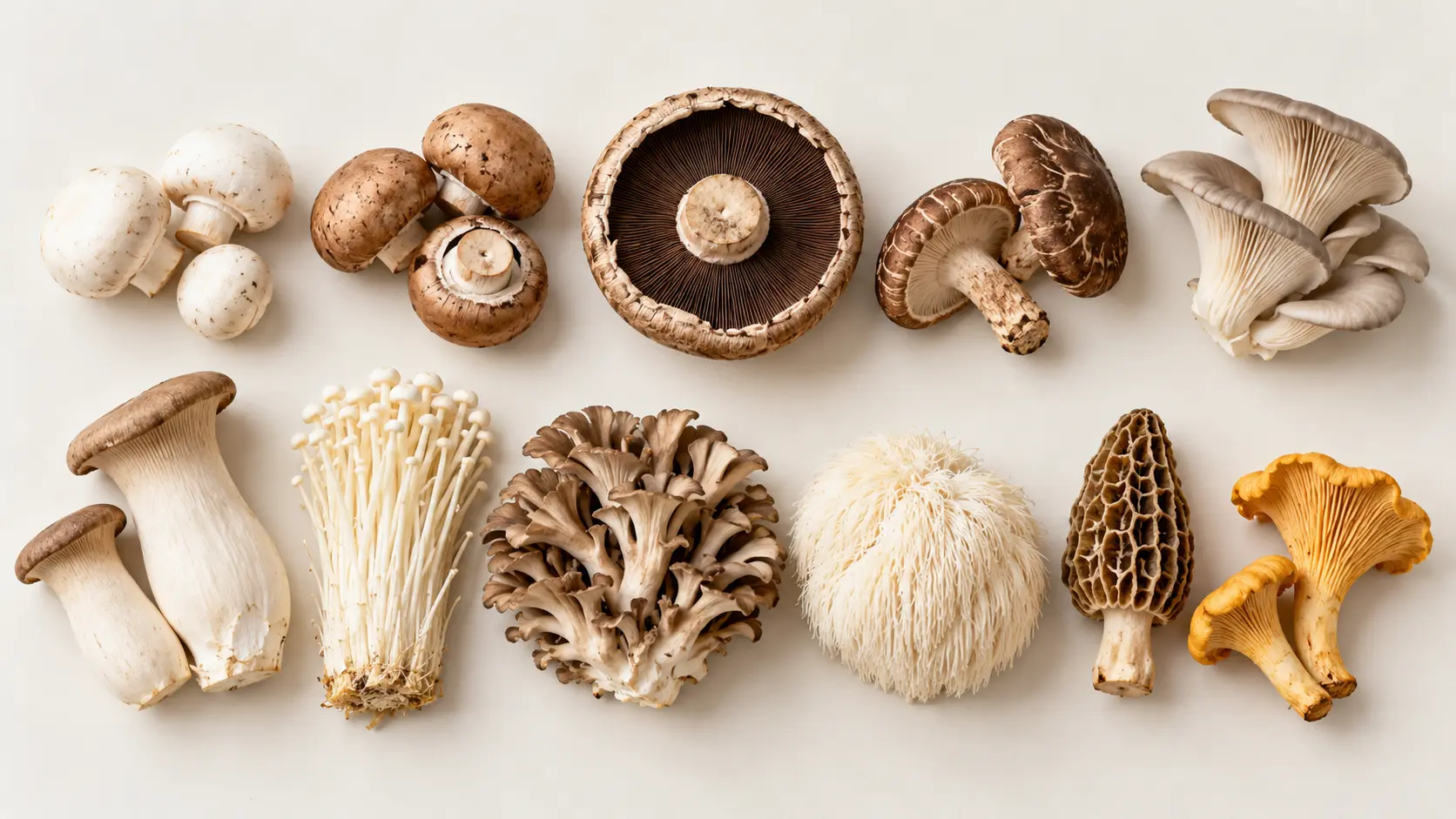
Standing in front of the mushroom section at a grocery store, you might notice three familiar choices: white buttons, brown cremini, and large portobello caps. A specialty store may offer even more—delicate oyster mushrooms, long clusters of enoki, or shaggy white lion’s mane that looks nothing like an ordinary mushroom.
Which should you buy?
If you’re making pizza or a quick pasta sauce, affordable button or cremini mushrooms will probably do the job. For a grilled sandwich, portobello is a better fit. Shiitake brings deeper savory flavor to soups and noodle dishes, while oyster mushrooms develop tender, lightly crisp edges when cooked in a hot skillet.
The easiest edible mushrooms for beginners are white button, cremini, portobello, and oyster mushrooms. They are versatile, relatively easy to prepare, and suitable for many everyday meals. Shiitake, maitake, king oyster, and lion’s mane are worth exploring when you want different textures and stronger flavors.
This guide introduces 11 popular types of edible mushrooms found in the United States. You’ll learn what each one tastes like, how to cook it, what to check before buying, and how to keep fresh mushrooms in good condition.
Important safety note: Buy mushrooms from reputable grocery stores, farms, or suppliers that can verify their identity. Never eat a wild mushroom based on a photograph, an identification app, or its resemblance to a grocery-store variety. Some poisonous mushrooms look remarkably similar to edible species, and cooking does not reliably make them safe.
Quick Comparison: 11 Common Edible Mushroom Types
Not every mushroom works equally well in every recipe. Some become tender after a few minutes in a skillet, while others hold their shape during roasting or simmering.
Use this comparison to choose a mushroom according to the meal you’re preparing.
| Mushroom type | Flavor | Texture when cooked | Best cooking uses |
|---|---|---|---|
| White button | Mild, gently earthy | Tender | Pizza, omelets, pasta |
| Cremini (baby bella) | Earthy, more robust | Firm | Pasta sauce, soups, skillet dishes |
| Portobello | Deep, savory | Thick and meaty | Grilling, stuffing, sandwiches |
| Shiitake | Rich, savory, umami | Tender cap, chewy edges | Ramen, stir-fries, broth |
| Oyster | Mild, sometimes slightly sweet | Delicate, tender | Sautéing, noodles, crispy sides |
| King oyster | Mild, savory | Dense and chewy | Searing, roasting, grilling |
| Enoki | Mild | Thin and lightly springy | Thoroughly cooked soups and hot pot |
| Maitake | Earthy, savory | Tender with crisp edges | Roasting, sautéing |
| Lion’s mane | Mild, sometimes seafood-like | Tender, fibrous | Seared slices, vegetarian cutlets |
| Morel | Nutty, woodsy | Tender, slightly chewy | Thoroughly cooked sauces and sautés |
| Chanterelle | Delicate, fruity, earthy | Tender yet substantial | Eggs, sauces, sautéed dishes |
Flavor descriptions are approximate. Freshness, variety, growing conditions, and cooking method can change how a mushroom tastes.
There is one useful detail that many first-time buyers don’t realize: white button, cremini, and portobello mushrooms are all forms of the same cultivated species, Agaricus bisporus. Differences in pigmentation and maturity help explain their appearance and texture.
The Penn State Extension mushroom resources provide additional background on cultivated mushroom varieties and production.
1. White Button Mushrooms: The Easiest Place to Start
White button mushrooms are probably the most familiar variety in American grocery stores.
You’ll usually find them in small packages, either whole or pre-sliced. Their flavor is mild enough to blend into many dishes without taking over the other ingredients.
That makes them a reliable choice if you’re cooking mushrooms for someone who isn’t particularly enthusiastic about their taste.
Slice a few into an omelet, add them to homemade pizza, or cook them with onions for a simple sandwich filling. They’re also useful in soups, casseroles, and pasta dishes.
White buttons have one small drawback: they can seem bland or watery when cooked in a crowded pan.
Mushrooms contain considerable moisture. When the pan is overloaded, that water collects around them and they soften before developing much color.
Try cooking the mushrooms in a wider skillet, giving the moisture time to evaporate. Once the surface begins to brown, the flavor becomes richer.
Best first recipe: Sauté sliced white button mushrooms in olive oil until their moisture reduces. Add garlic, black pepper, and a little butter near the end. Serve with scrambled eggs or toast.
2. Cremini Mushrooms: A Little More Flavor Without Much Fuss
Cremini mushrooms are sometimes labeled baby bella or baby portobello.
They resemble brown button mushrooms, with a firmer texture and a slightly deeper, earthier flavor than white buttons.
If you’ve been using white mushrooms for months and want something different without learning a completely new ingredient, cremini is a sensible next purchase.
They work particularly well in dishes that need a savory background flavor.
For example, chopped cremini mushrooms can be browned with onions before adding tomatoes to a pasta sauce. They also fit naturally into risotto, rice bowls, stews, and skillet dinners.
Cremini mushrooms are generally interchangeable with white button mushrooms in everyday recipes.
You can use the same quantity, although larger mushrooms may need a little longer to cook.
One simple trick is to avoid stirring constantly. Spread the mushrooms across the skillet and let them develop some color before turning them.
That browned surface contributes much more flavor than mushrooms that have only softened in their own liquid.
3. Portobello Mushrooms: A Filling Choice for Grilling
Portobello mushrooms are the large, mature brown form of Agaricus bisporus.
Their broad caps and dense texture make them particularly useful when you want mushrooms to become a substantial part of the meal.
A large portobello can be brushed with oil, seasoned, and grilled for a sandwich. Smaller caps can be stuffed with spinach, cheese, garlic, or cooked vegetables.
They also work well sliced into fajitas or roasted alongside peppers and onions.
The dark gills underneath the cap are edible. Some cooks remove them because they can darken sauces or fillings, but doing so is a matter of presentation rather than a basic preparation requirement.
Before cooking, trim the stem if it is particularly tough, then clean the cap.
Portobellos release moisture during cooking, so avoid adding a large amount of watery filling before the mushroom has had a chance to cook.
Buying tip: Choose caps that feel reasonably firm and are free from slime or obvious decay. A cap that looks slightly open is normal for a mature portobello.
4. Shiitake Mushrooms: Rich Flavor for Soups and Stir-Fries
Shiitake mushrooms have a distinctive savory character that makes them especially useful in East Asian-inspired cooking.
Their caps are usually brown, sometimes with lighter markings. Once cooked, the cap becomes tender but retains a pleasant bite.
Fresh shiitake mushrooms are excellent in ramen, rice bowls, noodle soups, and stir-fries. They can also add depth to vegetarian sauces when you want a richer, more satisfying flavor.
Unlike button mushrooms, shiitake stems are often quite woody.
Remove the tough stems before cooking the caps. If the stems are clean and suitable, you can use them to flavor broth and strain them out afterward.
Dried shiitake mushrooms are also worth trying. They can add concentrated flavor to soups and sauces after being rehydrated and thoroughly cooked.
Why shiitake mushrooms should be thoroughly cooked
Raw or undercooked shiitake mushrooms can cause an unusual itchy skin reaction in some people, sometimes called shiitake dermatitis.
For this reason, don’t treat shiitake as a raw salad mushroom.
Cook the mushrooms thoroughly using a suitable recipe.
Washington State University Extension’s shiitake-growing guide also discusses the culinary use of shiitake caps and the need for thorough cooking.
If you’re interested in producing mushrooms rather than only buying them, BlogAgri’s Mushroom Farming for Beginners explains how shiitake differs from other cultivated varieties.
5. Oyster Mushrooms: Delicate, Tender, and Excellent in a Skillet
Oyster mushrooms look quite different from button mushrooms.
Their caps are usually fan-shaped and grow in clusters. Depending on the cultivated variety, they may be pale gray, cream, brownish, pink, or yellow.
They are usually milder than shiitake mushrooms, with a delicate savory flavor that pairs well with garlic, butter, olive oil, herbs, and soy sauce.
The texture is one of their biggest attractions.
Instead of slicing every mushroom into small pieces, you can often separate the cluster into larger sections and cook them until the edges begin to brown.
Oyster mushrooms are particularly good in pasta, noodle dishes, and simple sautéed sides.
Because the caps are delicate, handle them gently. If dirt is present, clean them just before cooking rather than leaving them wet in the refrigerator.
Trim away any particularly tough base where the cluster was attached.
For a quick side dish, sauté oyster mushrooms in a little oil until tender and browned. Add garlic toward the end and finish with lemon juice.
They don’t need an elaborate sauce. In fact, a heavy sauce can hide their delicate flavor.
6. King Oyster Mushrooms: The Best Choice When Texture Matters
King oyster mushrooms are related to other oyster mushrooms, but their shape is quite different.
They have thick stems and relatively small caps. The stem is often the main reason people buy them.
When sliced into rounds and seared, king oyster stems develop a firm, chewy texture. Cut lengthwise, they can be roasted or grilled as larger pieces.
Some cooks use thick rounds in dishes inspired by seared scallops, although the flavor and nutritional characteristics are different from seafood.
A useful preparation is to cut the stem into thick slices, lightly score the surface, and cook in a hot skillet until golden. Garlic, soy sauce, and butter can be added near the end.
King oysters can also be shredded into strips and used in stir-fries.
They are usually more expensive than basic button mushrooms, so they may not be the most economical option for everyday pizza toppings.
But if your main goal is a substantial mushroom texture, they are worth trying.
7. Enoki Mushrooms: Delicate Clusters for Thoroughly Cooked Soups
Enoki mushrooms are easily recognized by their long, thin white stems and tiny rounded caps.
They are often sold tightly packed in clusters and are popular in Korean, Japanese, Chinese, and other Asian cuisines.
Their flavor is mild, while their slender stems contribute a distinctive texture to soups and hot-pot dishes.
To prepare enoki, trim away the firm lower base and separate the mushrooms into smaller bundles.
They work well in broths, noodle soups, and thoroughly cooked vegetable dishes.
An important enoki food-safety warning
Enoki mushrooms require particular care because multiple Listeria monocytogenes outbreaks have been linked to contaminated products.
Do not eat enoki mushrooms raw. Cook them thoroughly, and follow any additional preparation instructions on the package.
Keep raw enoki separate from foods that won’t be cooked, and wash your hands, utensils, and food-preparation surfaces after handling them.
Pregnant people, older adults, and people with weakened immune systems face greater risks from Listeria infection.
The FDA’s enoki mushroom outbreak investigation and safety guidance explains these precautions.
Refrigeration alone does not eliminate the risk, and a product should never be used if it is subject to a current recall.
8. Maitake Mushrooms: Excellent for Roasting
Maitake mushrooms, commonly called hen of the woods, grow in clusters of overlapping, frilly sections.
Their unusual appearance may make them seem difficult to prepare, but cooking them is fairly straightforward.
Maitake has a rich, earthy flavor that becomes especially appealing when the thin edges are roasted until lightly crisp.
Rather than chopping the entire cluster into tiny pieces, separate it into manageable sections.
Toss the pieces with olive oil, place them on a baking sheet with enough space between them, and roast until cooked and browned.
Garlic, thyme, miso, and soy sauce work well with their savory flavor.
Maitake can also be sautéed or added to rice dishes.
For someone who already enjoys cremini or shiitake mushrooms, maitake is a good introduction to specialty varieties.
The main adjustment is learning to handle its irregular shape without breaking it into unnecessarily small fragments.
9. Lion’s Mane Mushrooms: A Very Different Mushroom Experience
Lion’s mane hardly resembles the mushrooms most people grew up eating.
Instead of a familiar umbrella-shaped cap, it forms a white mass covered in soft, hanging spines.
Its appearance is striking, but its culinary value comes from the texture.
When properly cooked, lion’s mane can become tender and somewhat fibrous. Some people compare its texture or flavor to seafood, especially when used in dishes inspired by crab cakes.
That comparison is subjective, and lion’s mane won’t taste exactly like crab. What makes it interesting is its ability to take on seasoning while remaining substantial.
One approach is to cut it into thick slices, gently cook away excess moisture, and then brown the pieces in a skillet.
It also works in vegetarian patties, cutlets, and other savory dishes.
Because the flavor is relatively mild, seasoning matters. Garlic, lemon, black pepper, herbs, and paprika are good starting points.
Lion’s mane may be available through specialty mushroom farms, farmers markets, or selected grocery stores.
If you’re considering growing this variety, BlogAgri’s beginner mushroom cultivation guide explains why lion’s mane requires different growing conditions from oyster mushrooms.
10. Morel Mushrooms: A Seasonal Specialty That Needs Care
Morel mushrooms are recognizable by their distinctive honeycomb-like caps.
They are associated with seasonal cooking and can be expensive compared with common cultivated mushrooms.
Their flavor is often described as nutty, earthy, and woodsy. When properly prepared, morels can be excellent in butter-based sauces, pasta, and other dishes where their flavor isn’t overwhelmed.
However, morels are not the ideal first mushroom for someone who has never cooked mushrooms before.
They often require careful cleaning because debris and insects can collect in their textured caps.
More importantly, raw or undercooked morels have been associated with illness.
The FDA’s investigation of illnesses linked to morel mushrooms warns that gastrointestinal and neurological symptoms have occurred after consumption of raw or undercooked morels. Cooking may reduce risk but does not guarantee safety.
Buy morels only from a reputable, knowledgeable supplier and cook them thoroughly. Do not attempt to identify wild morels from appearance alone. Poisonous false morels exist, and cooking does not reliably make them safe.
If this is your first time preparing morels, choose a reliable recipe specifically written for that mushroom rather than improvising a raw or lightly cooked dish.
11. Chanterelle Mushrooms: A Delicate, Fragrant Choice
Chanterelles are another specialty mushroom commonly associated with seasonal markets and restaurant cooking.
Many have a golden-yellow or orange appearance, although color and shape vary among species.
Their flavor is often described as delicate, earthy, and sometimes faintly fruity.
Chanterelles pair particularly well with butter, herbs, eggs, cream-based sauces, and pasta.
Unlike a strong-flavored shiitake, a good chanterelle doesn’t necessarily need heavy seasoning.
A simple sauté can be enough to bring out its flavor.
Their irregular folds can trap bits of soil or forest debris, so careful cleaning is important. Handle them gently, and avoid leaving them soaking unnecessarily.
Because chanterelles are often wild-harvested, buying from a knowledgeable, reputable seller is especially important.
They can be confused with other fungi, some of which are unsuitable or poisonous. Beginners should never depend on online photographs or identification apps when deciding whether a wild mushroom is edible.
Which Edible Mushroom Should You Buy for a Particular Dish?
If you’re staring at several unfamiliar mushroom packages, start with the dish rather than the mushroom’s appearance.
For an everyday pasta sauce, cremini offers good flavor without much extra preparation. If you prefer something mild, white button is equally useful.
For grilled sandwiches or stuffed mushrooms, choose portobello because the broad cap holds its shape.
If you’re making ramen or a rich noodle broth, shiitake adds savory depth. Thoroughly cooked enoki can contribute a different texture.
Oyster mushrooms are a good choice for quick sautéed dishes, while king oyster mushrooms work well when you want thicker, chewier pieces.
For a roasted side dish, try maitake. Lion’s mane is worth experimenting with when you want a firmer, fibrous texture.
Morels and chanterelles are better treated as occasional specialty ingredients, particularly if you are still learning how to handle fresh mushrooms.
A practical first shopping plan: Begin with cremini for an everyday recipe. Try oyster mushrooms for your second experiment, then move to shiitake or king oyster once you’re comfortable with different textures.
You don’t need to buy five varieties at once to learn the differences.
How to Choose Fresh Mushrooms at the Grocery Store
Fresh mushrooms should generally look clean and feel reasonably firm for their variety.
That doesn’t mean every mushroom must be perfectly smooth. Oyster mushrooms have delicate edges, lion’s mane has soft spines, and maitake naturally grows in irregular clusters.
Look for freshness relative to the mushroom’s normal appearance.
Avoid packages with obvious mold, extensive slime, strong unpleasant odors, or signs of advanced decay.
A mild earthy smell is normal. A sour or rotten smell is not.
Also examine the packaging.
Mushrooms release moisture during storage, and excessive trapped moisture can accelerate deterioration.
A small amount of condensation may occur, but wet, slimy mushrooms sitting in pooled moisture are best avoided.
For specialty mushrooms from farmers markets, ask the seller when they were harvested and how they should be stored and cooked.
The Purdue Extension FoodLink mushroom guide provides additional buying, cleaning, storage, and preparation guidance.
Fresh or dried mushrooms: Which is better?
Fresh mushrooms are the easiest choice when texture matters.
They’re useful for sautéing, grilling, roasting, and dishes where the mushroom remains visible.
Dried mushrooms are different. Varieties such as shiitake and porcini can provide concentrated flavor, particularly in broths, soups, and sauces.
Follow the package instructions for rehydration and cooking.
Dried mushrooms are not automatically safe to eat without cooking, and drying does not guarantee the removal of naturally occurring toxins or contamination.
For your first mushroom recipes, start with fresh cultivated varieties and experiment with dried products later.
How to Clean Mushrooms Without Ruining Their Texture
Most grocery-store mushrooms need only a little cleaning before cooking.
If they are nearly clean, a soft brush or slightly damp cloth may be enough to remove loose debris.
For dirtier mushrooms, a brief rinse under clean running water can be practical, followed by drying. Avoid leaving delicate varieties submerged for long periods unless a reliable species-specific preparation method requires it.
Clean mushrooms shortly before use instead of washing them and leaving them wet in the refrigerator.
Different varieties need slightly different handling.
Button and cremini mushrooms are fairly sturdy and easy to wipe or rinse briefly.
Oyster mushrooms require gentler handling because their caps can tear.
Shiitake stems are often tough, so trim them before cooking.
King oyster stems are usually useful and can be sliced or shredded.
Enoki mushrooms should have their firm clustered base removed before thorough cooking.
Morels and chanterelles may contain more trapped debris, especially when wild-harvested. Follow an appropriate cleaning method for the purchased species.
Common mistake: Cleaning every mushroom in the same way. A firm portobello and a delicate oyster cluster do not benefit from identical handling.
How to Store Fresh Mushrooms
Fresh mushrooms are perishable, and refrigeration is important.
For many varieties, a paper bag or another breathable food-safe container can help manage moisture better than tightly sealing wet mushrooms in plastic.
If the mushrooms came in a package designed for refrigerated produce storage, follow the product’s instructions.
Keep them in a refrigerator at 40°F (4°C) or below.
Try to use delicate mushrooms such as oyster mushrooms relatively soon after purchasing them. Firmer varieties may remain in acceptable condition longer, but freshness varies by harvest date, packaging, and storage history.
There isn’t one reliable storage duration that suits every mushroom.
Check the condition before cooking and discard mushrooms showing clear spoilage.
The USDA’s refrigerator food-safety guidance explains why appropriate refrigeration reduces food-safety risks.
If you’ve purchased more mushrooms than you can use, consider cooking them before freezing, or follow a tested drying or preservation method suitable for that variety.
How to Cook Mushrooms So They Brown Instead of Turning Watery
One of the most common disappointments in mushroom cooking is ending up with a skillet full of soft, pale mushrooms.
Usually, the pan is too crowded or the heat is too low for the amount of moisture being released.
For a simple sauté, start with fresh cultivated mushrooms such as white button or cremini.
- Clean and slice approximately 8 ounces of mushrooms.
- Heat a wide skillet over medium-high heat and add a little olive oil.
- Spread the mushrooms in a reasonably even layer. Cook in batches if necessary.
- Allow moisture to evaporate and the surfaces to brown, turning the mushrooms occasionally.
- Add garlic and other seasonings toward the end so they don’t burn.
- Continue cooking until the mushrooms are thoroughly cooked, then serve.
The exact cooking time depends on the mushroom type, thickness, pan, and heat level.
For large or dense mushrooms, allow enough time to cook through rather than judging readiness from surface browning alone.
Enoki, shiitake, morels, and wild-type mushrooms have additional safety considerations and should not be treated as quick raw garnishes or casually undercooked ingredients.
If mushrooms are going into a sauce, browning them separately before adding the liquid can create a richer flavor.
For roasting, spread suitable mushrooms over a baking sheet rather than piling them into a deep dish.
For grilling, larger portobello caps and thick king oyster slices are easier to handle than delicate enoki or small oyster caps.
Are Mushrooms Good for You?
Edible mushrooms provide flavor and texture without requiring large amounts of fat in cooking.
They also contain nutrients such as B vitamins and minerals, although the amount varies by species and growing conditions.
Some mushrooms contain vitamin D, particularly when they have been exposed to ultraviolet light during production or processing.
If vitamin D is important to you, check the product label rather than assuming that every mushroom contains the same amount.
The University of Connecticut Extension’s edible mushroom nutrition guide provides a useful overview of commercially available species and their nutritional characteristics.
Mushrooms can be part of a varied diet, but they should not be presented as treatments for diseases or replacements for medical care.
For this buying guide, their most practical benefits are culinary: they add savory flavor, interesting texture, and variety to meals.
Frequently Asked Questions
What are the best edible mushrooms for beginners?
White button and cremini mushrooms are good starting choices because they’re widely available, mild, and versatile. Portobello is useful for grilling, while oyster mushrooms are easy to enjoy in cooked dishes. Begin with a familiar recipe and try more specialized varieties as you become comfortable handling and cooking mushrooms.
Which mushroom tastes the most like meat?
Portobello, king oyster, maitake, and lion’s mane can provide substantial textures in cooked dishes. However, they do not taste exactly like beef, chicken, or seafood. Their flavor depends on seasoning and preparation, and their nutritional composition differs from animal proteins.
Can you eat edible mushrooms raw?
Some commercially cultivated mushrooms, such as white button mushrooms, are commonly served raw. However, cooking is generally the safer choice, especially for people at increased risk of foodborne illness. Enoki should be thoroughly cooked because of Listeria concerns; shiitake and morels also require proper cooking. Never eat unidentified wild mushrooms raw or cooked.
Which mushrooms are best for pasta?
Cremini mushrooms are a reliable everyday choice. Shiitake adds a deeper savory flavor, while oyster mushrooms provide a tender texture. Portobello works well in larger pieces. Brown the mushrooms before adding cream or tomato sauce if you want a richer flavor.
Can I grow the edible mushrooms sold in grocery stores?
Some varieties can be cultivated at home, but the difficulty varies. Oyster mushrooms are often a practical starting point for beginners, while shiitake, lion’s mane, and button mushrooms have different production requirements. BlogAgri’s Mushroom Farming for Beginners explains suitable growing systems, substrates, and basic cultivation considerations.
Start With One Mushroom and One Good Recipe
You don’t need to become a mushroom expert to enjoy more variety in your cooking.
Begin with a familiar choice. White button mushrooms are easy to use, cremini adds extra flavor, and portobello is useful when you want something substantial.
Once you’re comfortable with those, try oyster mushrooms in a skillet or shiitake in a soup. King oyster, maitake, and lion’s mane can follow when you want to experiment with different textures.
Morels and chanterelles are best approached as carefully sourced specialty ingredients, with particular attention to identification and preparation.
The most important habit is simple: buy from trusted sources, store mushrooms properly, and cook each variety according to its specific requirements.
If your interest extends beyond cooking into producing your own mushrooms, explore BlogAgri’s Mushroom Farming category for more guides on cultivation, growing conditions, and beginner production methods.