Email: blogagri2@gmail.com

Growing Dragon Fruit in Containers From Cutting to Harvest
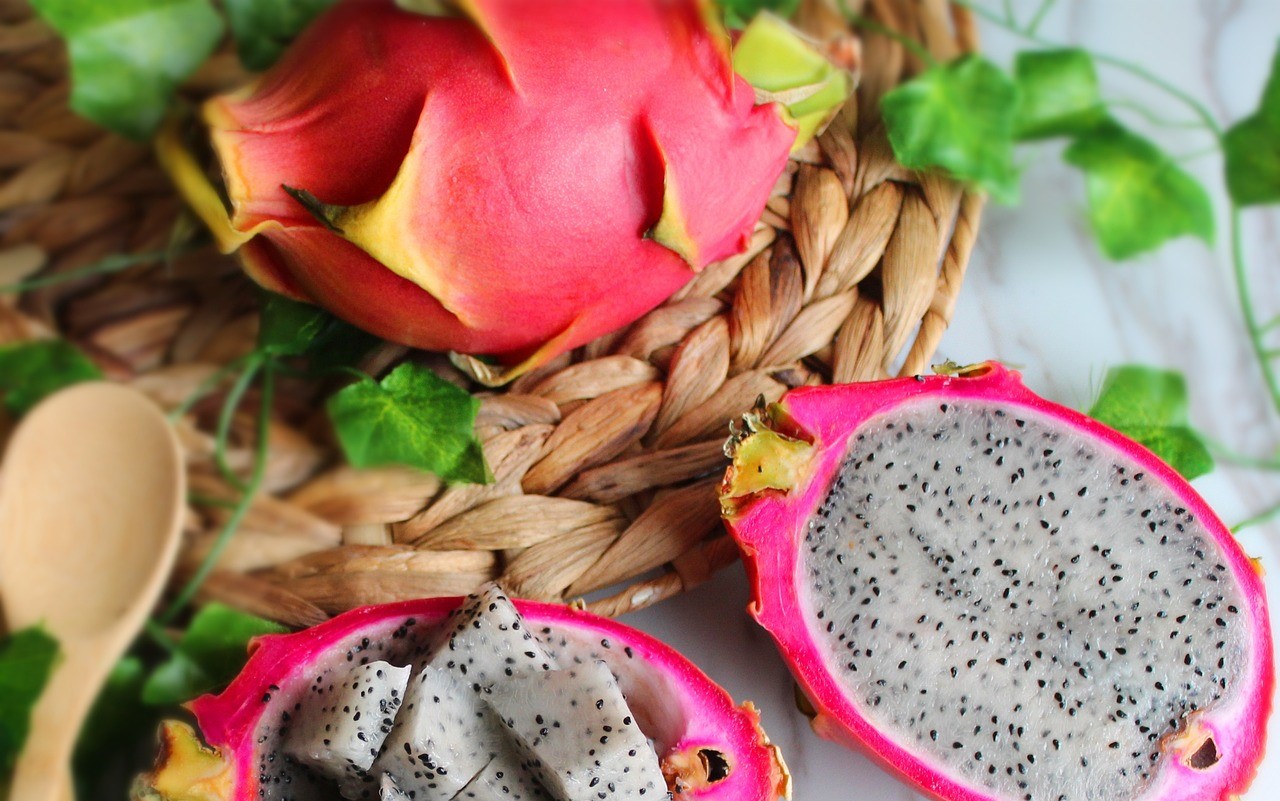
Growing dragon fruit in containers requires a large draining pot, a strong trellis, warm conditions, several hours of direct light, and careful watering. Start with a healthy rooted cutting, train one main stem upward, allow branches to hang over the support, and confirm whether the variety needs cross-pollination before expecting fruit.
Dragon fruit, also called pitaya or pitahaya, is a climbing tropical cactus that can be grown on patios, balconies, rooftops, and protected courtyards.
Container growing gives you more control over the root zone and makes it possible to move or protect the plant during cold weather. It does not make the crop small or maintenance-free.
A mature dragon fruit plant can develop a heavy mass of long stems. The pot, post, and upper support must therefore be planned as one structure rather than as three separate items.
What Is Dragon Fruit?
Dragon fruit is produced by several climbing cactus species and hybrids. The plants develop fleshy, jointed stems with aerial roots that cling to posts, trees, rocks, and other supports.
The fruit may have:
- Red or pink skin with white flesh
- Red or pink skin with red or purple flesh
- Yellow skin with white flesh
- Small black edible seeds
- Green or coloured scales around the peel
Dragon fruit flowers are large, fragrant, and mainly open at night. Some varieties set fruit with their own pollen, while others need pollen from a genetically different compatible plant.
The UF/IFAS dragon fruit guide explains that self-incompatibility occurs in several cultivars and recommends planting different genetic types when compatibility is uncertain.
Important: Ask the nursery for the exact variety name and whether it is self-fertile, self-compatible, or self-incompatible. “Red dragon fruit” is a fruit description, not enough information for pollination planning.
Why Grow Dragon Fruit in a Container?
Containers are useful where:
- The native soil drains poorly
- The garden is paved
- Space is limited
- Winter protection is necessary
- The plant must be moved
- Soil quality is uncertain
- The grower wants a patio fruit plant
- An individual plant needs a controlled root zone
Container culture can make watering, feeding, and soil management easier to observe. It can also create new problems.
Potted dragon fruit may:
- Dry faster than field-grown plants
- Overheat in dark containers
- Become top-heavy
- Outgrow a weak trellis
- Develop salt buildup
- Require regular pruning
- Need repotting or root-zone renewal
- Produce less than a well-managed field plant
Use the following table before starting.
| Question | Suitable condition | Warning sign |
|---|---|---|
| Is the location warm enough? | Warm season with frost protection | Regular freezing without indoor space |
| Is enough light available? | Strong direct light for much of the day | Deep shade or dim indoor room |
| Can the structure carry the weight? | Heavy pot and anchored support | Lightweight pot with a small garden stake |
| Can water drain safely? | Several open drainage holes | Sealed decorative container |
| Can the plant be checked regularly? | Daily observation is practical | Plant will be left unattended for long periods |
| Is pollination understood? | Variety compatibility is known | Variety name and fertility are unknown |
| Is there harvest access? | Support is reachable without danger | Trellis requires an unsafe ladder |
Climate Requirements
Dragon fruit performs best in tropical and subtropical climates with warm temperatures and little or no frost.
UF/IFAS describes approximately 65–77°F or 18–25°C as a useful growth range from native production areas. Plants may be damaged by prolonged freezing conditions, while extreme heat and intense sunlight can scorch exposed stems.
| Climate condition | Likely effect | Container adjustment |
|---|---|---|
| Warm and humid | Fast growth but possible disease pressure | Improve airflow and avoid overwatering |
| Hot and dry | Stem sunburn and rapid pot drying | Use gradual sun exposure and afternoon protection |
| Cool but frost-free | Slower growth | Keep the pot in the warmest bright position |
| Light frost risk | Stem injury | Move or cover the plant |
| Freezing winters | Severe damage or plant death | Overwinter in a protected greenhouse or bright indoor area |
| Strong wind | Broken stems or trellis failure | Anchor the pot and support |
Climate Consideration: A container makes a plant movable only while the total unit remains manageable. A mature plant, wet soil, and heavy trellis may become too heavy to move. Plan winter protection before the plant reaches full size.
How Much Sunlight Does Dragon Fruit Need?
Dragon fruit generally performs best in full or almost full sun, but newly rooted cuttings and plants moved from shade can burn if exposed suddenly to intense sunlight.
UF/IFAS recommends temporary shading during establishment where sunlight is damaging, while warning that excessive shade can reduce fruit production and quality.
Use this approach:
- Keep newly rooted cuttings in bright, protected light.
- Introduce morning sun first.
- Increase direct exposure gradually over one to two weeks.
- Monitor the stems for pale yellow, bleached, or brown patches.
- Provide afternoon protection where heat and reflected light are extreme.
A balcony beside glass, white walls, metal roofing, or concrete may receive stronger reflected heat than an open garden.
Healthy sun exposure usually produces firm green stems. Long, weak, unusually thin growth may indicate insufficient light.
Choosing the Best Dragon Fruit Variety
Do not choose a variety only by flesh colour.
Compare:
- Self-fertility
- Cross-pollination requirements
- Fruit size
- Flavour
- Skin colour
- Flesh colour
- Thorniness
- Growth habit
- Heat tolerance
- Cold tolerance
- Disease history
- Local performance
Variety decision guide
| Grower situation | Better variety characteristic |
|---|---|
| Space for only one plant | Reliably self-fertile selection |
| Two or more plants possible | Compatible varieties with overlapping flowering |
| Hot exposed balcony | Variety proven under local heat |
| Cooler marginal climate | Earlier or locally adapted selection |
| Home eating | Flavour and manageable growth |
| Direct sales | Appearance, shelf life, size, and customer demand |
| Beginner grower | Named, rooted cutting from a reliable nursery |
A seed-grown plant is genetically variable and may take much longer to flower. UF/IFAS notes that seed propagation can delay fruiting for years, while stem cuttings are the standard method for producing more predictable plants.
Selecting the Correct Container
Dragon fruit needs a wide, stable, draining container.
There is no single perfect pot size because variety, climate, trellis design, plant age, and intended lifespan differ. A small nursery pot may be suitable during rooting, but a mature fruiting plant needs a substantially larger and heavier root zone.
For long-term home growing, choose a container that is:
- Wide enough to resist toppling
- Deep enough for a stable root system
- Strong enough for a fixed support
- Equipped with several drainage holes
- Made from a food- and plant-safe material
- Large enough to reduce rapid drying
- Positioned where drained water can escape
A practical mature setup commonly uses a container approximately 18–24 inches or 45–60 centimetres wide, with similar useful depth. Larger containers provide more stability but become harder to move.
Treat this as a planning range, not a universal minimum.
Container-material comparison
| Material | Advantage | Limitation |
|---|---|---|
| Heavy plastic | Retains moisture and is easy to drill | May become hot or brittle |
| Glazed ceramic | Heavy and stable | Difficult to move and may crack |
| Terracotta | Breathable and attractive | Dries quickly and can break |
| Fabric grow bag | Good root aeration | Dries rapidly and provides weak trellis support |
| Wooden planter | Can be built around a strong frame | Requires safe, durable material |
| Large nursery pot | Affordable and practical | May need external bracing |
A broad container is usually more stable than a narrow, tall pot.
Common Mistake: Planting dragon fruit in a decorative pot and adding the support later. Build or anchor the trellis before filling the container because a mature plant becomes difficult to redesign.
Do Not Put Gravel in the Bottom
The existing article recommends stones or gravel beneath the soil. This does not improve drainage inside a normal plant pot.
Water can remain in the finer potting medium above a coarse gravel layer, leaving less useful soil volume for the roots.
Illinois Extension advises using containers with open drainage holes and skipping gravel inside the bottom of an individual pot. A small piece of screen can be placed over a large hole when needed to limit soil loss. Read its container drainage guidance.
Prepare the container by:
- Cleaning it if it was previously used
- Confirming that every hole is open
- Covering only very large holes with mesh
- Installing the trellis
- Adding potting mix directly
- Leaving watering space below the rim
Do not reuse a container that previously held fuel, pesticides, industrial chemicals, or unknown materials.
Building a Strong Dragon Fruit Trellis
Dragon fruit is not a self-supporting upright cactus. It climbs and then produces hanging branches from the top of its support.
UF/IFAS warns that mature plants can become extremely heavy and recommends a strong trellis that can tolerate several hundred pounds in landscape production.
A container trellis commonly includes:
- One strong central post
- A wide upper ring, square, or crosspiece
- Smooth surfaces that do not cut stems
- Corrosion-resistant fasteners
- Anchoring within or beneath the pot
- Enough height for hanging branches
- Harvest access without unsafe climbing
A support around 4–6 feet or 1.2–1.8 metres above the potting surface is manageable for many home systems. The exact height should match the grower’s reach and the structure’s strength.
Avoid thin wire directly against the stems. If wire is used, cover it with smooth tubing because narrow wire can cut developing branches.
Trellis safety check
Before planting, push the support from several directions.
Ask:
- Does the post move?
- Can the pot tip?
- Are sharp edges exposed?
- Can the wet soil hold the post?
- Will the upper frame carry hanging branches?
- Can the unit survive local wind?
- Can fruit be reached safely?
Safety Note: Do not attach dragon fruit to electrical poles, utility lines, unstable fencing, or a structure that cannot be inspected. Wet soil and a top-heavy cactus create a serious falling hazard.
Best Soil Mix for Dragon Fruit in Containers
Dragon fruit needs a mix that drains freely but still holds more moisture and nutrients than an extremely dry desert-cactus mix.
North Carolina Extension recommends a well-drained loam or cactus-type potting medium and watering after the mix has become nearly dry.
A practical container mix may include:
- 40–50% quality potting mix
- 20–30% finished compost
- 20–30% coarse aeration material such as perlite, pumice, or fine pine bark
The exact blend depends on the base potting product and climate.
| Mix condition | What it means | Adjustment |
|---|---|---|
| Water drains immediately and mix dries in hours | Too coarse for the climate | Add more moisture-retentive potting mix |
| Water remains for several days | Mix is too dense or holes are blocked | Add aeration material and check drainage |
| Mix shrinks from pot sides | Severe drying or unstable organic material | Rehydrate slowly and review the blend |
| Strong sour smell | Poor aeration or decomposition | Replace affected medium |
| White crust on surface | Possible salt buildup | Review fertilizer and water quality |
Avoid using garden soil alone. It may compact inside a container and reduce root aeration.
Avoid using unfinished manure or large amounts of fresh compost. These can create salt, heat, odour, and nutrient problems.
Propagating Dragon Fruit From Cuttings
Cuttings are usually faster and more predictable than seeds.
UF/IFAS describes stem sections of approximately 6–15 inches or 12–38 centimetres and recommends allowing the cut end to cure for about a week in a dry, shaded place before planting in a well-drained medium.
Step-by-step propagation
- Choose a healthy mature stem.
- Use clean, sharp pruning tools.
- Cut a firm section without rot or major damage.
- Mark the bottom end if its direction is unclear.
- Allow the wound to dry and callus in shade.
- Fill a small pot with well-drained medium.
- Insert the base only deeply enough to stand securely.
- Support the cutting if needed.
- Water lightly.
- Keep it warm with bright, protected light.
- Wait for rooting and new growth before heavy feeding.
- Move it into the final container after a useful root system develops.
Do not bury one-third of every cutting as a universal rule. Deep burial in a wet mix can increase rot risk. The cutting needs enough depth for stability without trapping a large section in constantly moist media.
BlogAgri’s guide to growing avocado from seed explains how seed propagation differs from vegetative propagation in fruit crops.
Gardener’s Note: Rooting success is easier to judge by stable attachment and new growth than by repeatedly pulling the cutting from the mix to check for roots.
Planting a Rooted Dragon Fruit Cutting
- Water the rooted plant several hours before transplanting.
- Fill the final pot partly with prepared mix.
- Remove the root ball carefully.
- Position it beside the central post.
- Keep the original planting depth.
- Fill around the roots without crushing the mix.
- Leave space below the pot rim.
- Water thoroughly.
- Allow excess water to drain.
- Tie the main stem loosely to the support.
Use soft plant ties. Tight wire, string, or cable ties can cut the expanding stem.
Training and Pruning
The goal is to create one or a few strong upright stems that reach the top of the support, followed by hanging branches that receive light and can flower.
UF/IFAS recommends removing side shoots along the selected main stem until it reaches the trellis. The growing tip can then be cut to encourage branching over the upper support.
Training stage
- Select one strong main stem
- Tie it loosely to the post
- Remove weak side growth below the trellis
- Inspect ties regularly
- Guide the stem upward
- Pinch or cut the tip after it reaches the top
- Retain well-positioned upper branches
Production-pruning stage
Remove:
- Dead stems
- Diseased stems
- Severely sunburned tissue
- Branches touching the ground
- Crowded internal growth
- Weak branches
- Growth blocking harvest access
Dragon fruit can require pruning more than once a year because it grows rapidly. Open growth improves light penetration and makes pest inspection easier. UF/IFAS advises pruning after harvest and removing diseased or unwanted material from the production area.
The University of California pitahaya production resources also provide practical demonstrations of training, sanitation pruning, pollination, and harvesting.
Watering Potted Dragon Fruit
Dragon fruit is a cactus, but it should not be managed like a desert cactus during active flowering and fruit development.
UF/IFAS notes that the crop tolerates dry periods but also has meaningful water needs. Excess moisture encourages bacterial and fungal disease, while severe drought during flowering and fruit development can reduce production.
How to decide when to water
- Push a finger or wooden stick several inches into the mix.
- Check whether the upper root zone is becoming dry.
- Lift smaller pots to compare weight.
- Water deeply when needed.
- Let excess water leave the pot.
- Empty any saucer holding drainage water.
- Recheck the mix before watering again.
Do not follow one fixed weekly schedule.
Water demand changes with:
- Pot size
- Container material
- Temperature
- Wind
- Plant size
- Flowering
- Fruit load
- Rainfall
- Indoor heating
- Potting mix
| Observation | Possible meaning |
|---|---|
| Soft, wrinkled stems with dry mix | Water shortage |
| Yellowing near wet base | Excess water or root trouble |
| Sour-smelling mix | Poor aeration |
| Black or soft stem tissue | Possible rot |
| Rapid drying every day | Pot too small, heat, wind, or coarse mix |
| Water running down pot sides | Dry mix has pulled away from container |
Field Tip: Place the pot where the drainage holes can be inspected. Roots, compacted mix, insects, or debris can block holes even when the container originally drained well.
Fertilizing Container-Grown Dragon Fruit
Container plants depend on a limited root zone, but more fertilizer does not guarantee more flowers or fruit.
Wait until a newly planted cutting begins active growth. Then use light applications of a balanced fertilizer suitable for fruiting container plants.
UF/IFAS recommends small, repeated applications for young plants rather than one heavy dose. Its exact formulas and quantities are designed for South Florida conditions and should not be copied globally without local adjustment.
A practical feeding plan should consider:
- Plant age
- Pot volume
- Potting-mix fertility
- Water quality
- Growth rate
- Season
- Flowering stage
- Product label
- Local recommendations
Apply fertilizer to moist potting mix and keep it away from direct contact with the stem.
Watch for:
- Brown stem margins
- White crust on soil
- Sudden soft growth
- Yellow new growth
- Weak flowering
- Stalled growth
These symptoms do not automatically prove a specific nutrient deficiency. Root damage, pH, overwatering, cold, salinity, and disease can look similar.
After obtaining a suitable nutrient recommendation, use BlogAgri’s fertilizer dosage calculator to understand how nutrient needs relate to common fertilizer materials. The calculator does not replace container-specific label instructions.
Agricultural Insight: Excess nitrogen may create a large green plant without a proportional increase in flowers. Container feeding should support controlled growth, not continuous soft stem production.
Flowering and Pollination
Dragon fruit flowers commonly open at night and may remain open into the early morning.
Some varieties are self-compatible. Others produce little or no fruit with their own pollen.
Pollination decision table
| Situation | Recommended action |
|---|---|
| Variety is confirmed self-fertile | Hand pollination may still improve set |
| Variety is self-incompatible | Use pollen from a compatible different variety |
| Variety is unknown | Add a different named variety or test hand pollination |
| Flowers open but fall without fruit | Review compatibility, temperature, water, and pollen availability |
| Indoor plant flowers | Hand pollination is usually necessary |
| Only one clone is available | Do not assume its pollen is compatible |
How to hand-pollinate
- Check flowers after they open.
- Use a clean, dry, soft brush.
- Collect pollen from the anthers.
- Apply pollen to the central stigma.
- Use pollen from a compatible variety where required.
- Label the flower and record the date.
- Avoid spraying water onto the flower.
- Check whether the base begins swelling over the following days.
Pollen may sometimes be collected and stored briefly, but success depends on moisture, temperature, timing, and variety. Beginners should use fresh pollen whenever possible.
Dragon Fruit Care Schedule
| Frequency | Main task |
|---|---|
| Daily in hot weather | Check moisture, stem condition, flowers, and trellis stability |
| Several times weekly | Inspect for pests, rot, and blocked drainage |
| Weekly | Check ties and train new growth |
| Monthly during active growth | Review fertilizer needs and salt buildup |
| During flowering | Check flowers at night or early morning |
| After fruit set | Maintain steady moisture and support heavy branches |
| After harvest | Prune crowded or damaged stems |
| Before cold weather | Prepare frost or indoor protection |
| Every 1–3 years | Review pot size, roots, soil condition, and support |
Common Pests and Diseases
Container-grown plants may develop mealybugs, scale insects, mites, ants, snails, slugs, or stem diseases.
| Problem | Visible signs | First response |
|---|---|---|
| Mealybugs | White cottony clusters | Isolate, inspect joints, and remove light infestations |
| Scale insects | Firm bumps on stems | Check closely and use an approved treatment |
| Mites | Fine stippling or webbing | Confirm the pest before treatment |
| Ants | Activity around sap-feeding insects | Control the honeydew-producing pest |
| Stem rot | Soft, dark, spreading tissue | Reduce moisture and remove affected tissue after diagnosis |
| Sunburn | Bleached, yellow, or brown dry patches | Increase shade gradually |
| Root stress | Yellowing and weak growth | Check moisture, drainage, roots, and salts |
| Anthracnose or fruit spots | Dark lesions on fruit or stems | Improve sanitation and obtain local diagnosis |
Do not mist the plant simply to control spider mites. Repeated wetting can increase stem-disease risk and may not solve the infestation.
Remove diseased tissue with clean tools. Disinfect tools between plants and dispose of infected material according to local guidance.
Safety Note: Use only pest and disease products registered for edible dragon fruit in your country. Follow the label for protective equipment, application rate, re-entry period, and preharvest interval. “Organic” or “natural” does not automatically mean safe for every cactus, pollinator, or edible crop.
Dragon Fruit Troubleshooting Guide
| Symptom | Possible causes | First checks |
|---|---|---|
| Cutting rots before rooting | Planted before curing, wet mix, deep planting | Check callus, moisture, and drainage |
| Plant grows but does not flower | Immaturity, shade, excess nitrogen, poor pruning | Check age, light, and growth pattern |
| Flowers open but fruit does not form | Pollination incompatibility or environmental stress | Confirm variety and hand-pollinate |
| Stems turn pale yellow | Sunburn, root stress, nutrient problem | Check light change and root-zone condition |
| Stems become soft | Water stress, cold, or rot | Inspect the base and potting mix |
| Pot falls or leans | Weak support or top-heavy canopy | Brace the pot and reduce unsafe growth |
| Fruit splits | Irregular water, cultivar, or weather | Maintain steadier moisture |
| Small fruit | Poor pollination, low leaf area, stress, heavy crop | Review pollination and plant condition |
| White crust develops | Fertilizer or water salts | Flush carefully and review feeding |
| Roots fill drainage holes | Plant is root-bound | Repot or renew the root zone |
Harvesting Dragon Fruit
Dragon fruit should be harvested close to full ripeness because it does not continue normal ripening after harvest.
UC Davis identifies skin-colour development and time after flowering as common maturity indicators. Depending on variety and production conditions, harvest may begin approximately 27–33 days after flowering. Read the UC Davis dragon fruit postharvest guide.
Harvest when:
- The skin has developed the expected colour
- Green areas have largely changed
- The fruit is well shaped
- Bracts remain reasonably fresh
- The peel is not cracked
- The fruit has reached the normal variety size
Use clean pruning shears rather than twisting aggressively.
Cut the fruit without tearing the supporting stem. Handle it gently because abrasion and compression increase water loss and decay risk.
Storing Dragon Fruit
Do not use “up to two weeks” as a universal storage promise.
Storage life depends on:
- Variety
- Harvest maturity
- Fruit damage
- Temperature
- Humidity
- Packaging
- Disease
- Starting freshness
UC Davis lists about 50°F or 10°C as an optimum storage temperature for common red pitaya types and approximately 43°F or 6°C for yellow pitaya. Temperatures that are too low can cause chilling injury, depending on type and maturity.
For home use:
- Keep unwashed fruit clean and dry
- Refrigerate it in a protected container
- Avoid crushing or stacking heavily
- Use damaged fruit first
- Discard mouldy or leaking fruit
- Cut only shortly before use
- Refrigerate cut fruit promptly
Freezing changes the texture but works for smoothies, sauces, and frozen desserts.
Can Potted Dragon Fruit Be Profitable?
One or two potted plants are more useful for household fruit, plant sales, educational demonstrations, or testing varieties than for large commercial production.
Potential products include:
- Fresh fruit
- Rooted cuttings
- Nursery plants
- Pollen-compatible plant pairs
- Specialty varieties
- Workshops
- Container trellis kits
Before selling, calculate:
| Cost | Estimated amount |
|---|---|
| Rooted cutting | $_____ |
| Large container | $_____ |
| Trellis | $_____ |
| Potting mix | $_____ |
| Fertilizer | $_____ |
| Irrigation | $_____ |
| Cold protection | $_____ |
| Pest management | $_____ |
| Labour | $_____ |
| Packaging | $_____ |
| Total cost | $_____ |
Do not estimate income from fruit price alone. Young plants may take time to establish, flower, and produce consistently.
Growers exploring niche crops can compare dragon fruit with BlogAgri’s cash crops for small farms and small farm income ideas.
Common Dragon Fruit Container Mistakes
Using a Small, Lightweight Pot
The plant may topple before it reaches useful production.
Adding Gravel for Drainage
Gravel reduces soil volume and does not correct poor container drainage.
Using a Weak Stake
A thin stake cannot support a mature canopy.
Keeping the Plant in Deep Shade
Low light can reduce flowering and create weak growth.
Moving It Directly Into Harsh Sun
Unhardened stems may burn.
Watering Like a Desert Cactus
Severe drought during flowering and fruit development can reduce the crop.
Watering on a Fixed Calendar
Container moisture changes with weather and plant size.
Applying High Fertilizer Rates
Salt damage and excessive vegetative growth may follow.
Ignoring Pollination Compatibility
A healthy flowering plant may still fail to set fruit.
Allowing an Unmanaged Stem Tangle
Crowding reduces access, airflow, light, and structural safety.
Harvesting Green Fruit
Dragon fruit does not improve significantly after being picked too early.
When You Should Not Grow Dragon Fruit in a Container Yet
Delay the project when:
- No strong trellis can be installed
- The location receives deep shade
- Frost protection is unavailable
- The balcony cannot support the weight
- Drainage water has nowhere safe to go
- The plant cannot be checked regularly
- Variety identity is unknown
- Pollination cannot be managed
- Only a tiny decorative pot is available
- Moving a mature plant will be impossible
- The goal depends on guaranteed profit
A rooted cutting in a temporary nursery pot is safer than rushing into a poorly designed final system.
Frequently Asked Questions
Can dragon fruit grow successfully in a container?
Yes. Dragon fruit can grow and produce fruit in a large, well-drained container when it receives strong light, warm conditions, balanced watering, suitable fertilizer, and a heavy trellis. The container must remain stable as the plant develops a large and heavy canopy.
What size container is best for dragon fruit?
A young rooted cutting can begin in a smaller nursery pot, but a mature plant needs a much larger and heavier container. A practical long-term target is often around 18–24 inches wide with useful depth and several drainage holes. Trellis stability matters as much as pot volume.
What soil mix should I use for potted dragon fruit?
Use a well-drained potting mix that still holds moderate moisture and nutrients. A practical blend may contain quality potting mix, finished compost, and perlite, pumice, or fine bark. Avoid dense garden soil, unfinished manure, and pure desert-cactus mixes that dry too rapidly.
Should I put gravel in the bottom of the pot?
No. Gravel does not improve drainage inside a normal plant container and may leave less soil for the roots. Use a container with open drainage holes and cover only very large holes with mesh if necessary. Fill the pot with consistent, well-drained growing medium.
How much sunlight does potted dragon fruit need?
Dragon fruit generally performs best in full or almost full sun. Newly rooted or shade-grown plants should be introduced to direct light gradually. Extremely hot, dry, or reflective locations may require temporary afternoon protection to prevent stem sunburn.
How often should dragon fruit in a pot be watered?
Water according to the potting mix rather than a fixed calendar. Apply water when the upper root zone is becoming dry, then allow excess water to drain. The plant may require more frequent watering during hot weather, flowering, and fruit development.
How long does dragon fruit take to produce fruit?
A healthy cutting may flower relatively early under favourable conditions, but container plants commonly need one or more growing seasons to establish reliable production. Variety, cutting maturity, light, temperature, nutrition, pruning, and pollination all affect the time to first fruit.
Does dragon fruit need hand pollination?
It depends on the variety. Some cultivars are self-fertile, while others need compatible pollen from a genetically different plant. Indoor plants and plants with poor night-pollinator activity may benefit from hand pollination even when they are self-compatible.
Why is my dragon fruit flowering but not producing fruit?
The plant may be self-incompatible, lack compatible pollen, experience excessive heat, receive irregular water, or produce weak flowers because of shade or nutrient imbalance. Confirm the variety, collect pollen from a compatible plant where needed, and hand-pollinate newly opened flowers.
Why are my dragon fruit stems turning yellow?
Yellow stems may result from sunburn, excessive water, poor drainage, salt buildup, root damage, cold, nutrient imbalance, or disease. Check when the colour change began, inspect the potting mix and roots, and review any recent changes in sunlight, fertilizer, and watering.
Can dragon fruit survive winter indoors?
Dragon fruit can be overwintered in a bright protected area where temperatures remain safely above freezing. Reduce watering as growth slows, but do not allow prolonged severe dehydration. Inspect the plant for pests before moving it indoors.
When is dragon fruit ready to harvest?
Harvest when the peel has developed the normal red, pink, or yellow colour for the variety and the fruit is close to full maturity. Dragon fruit does not continue normal ripening after harvest, so picking it green may result in poor flavour.
Build the Support Before Growing the Plant
Successful container-grown dragon fruit begins with structure.
Choose a named cutting, a wide draining pot, a strong trellis, and a warm bright location. Train the plant deliberately, test moisture before watering, feed lightly, and confirm pollination compatibility before the first flowers open.
Keep records of:
- Variety
- Planting date
- Container size
- Potting mix
- Fertilizer
- Flowering dates
- Pollination method
- Fruit set
- Harvest date
- Fruit weight
- Pest and disease problems
These records will show whether the main limit is climate, variety, pollination, nutrition, root space, or plant management.
Gardeners planning a wider container-growing area can also read BlogAgri’s guide to designing an above-ground garden bed and explore more resources in the BlogAgri horticulture section.
