Email: blogagri2@gmail.com

How to Grow Avocado From Seed: A Beginner’s Guide
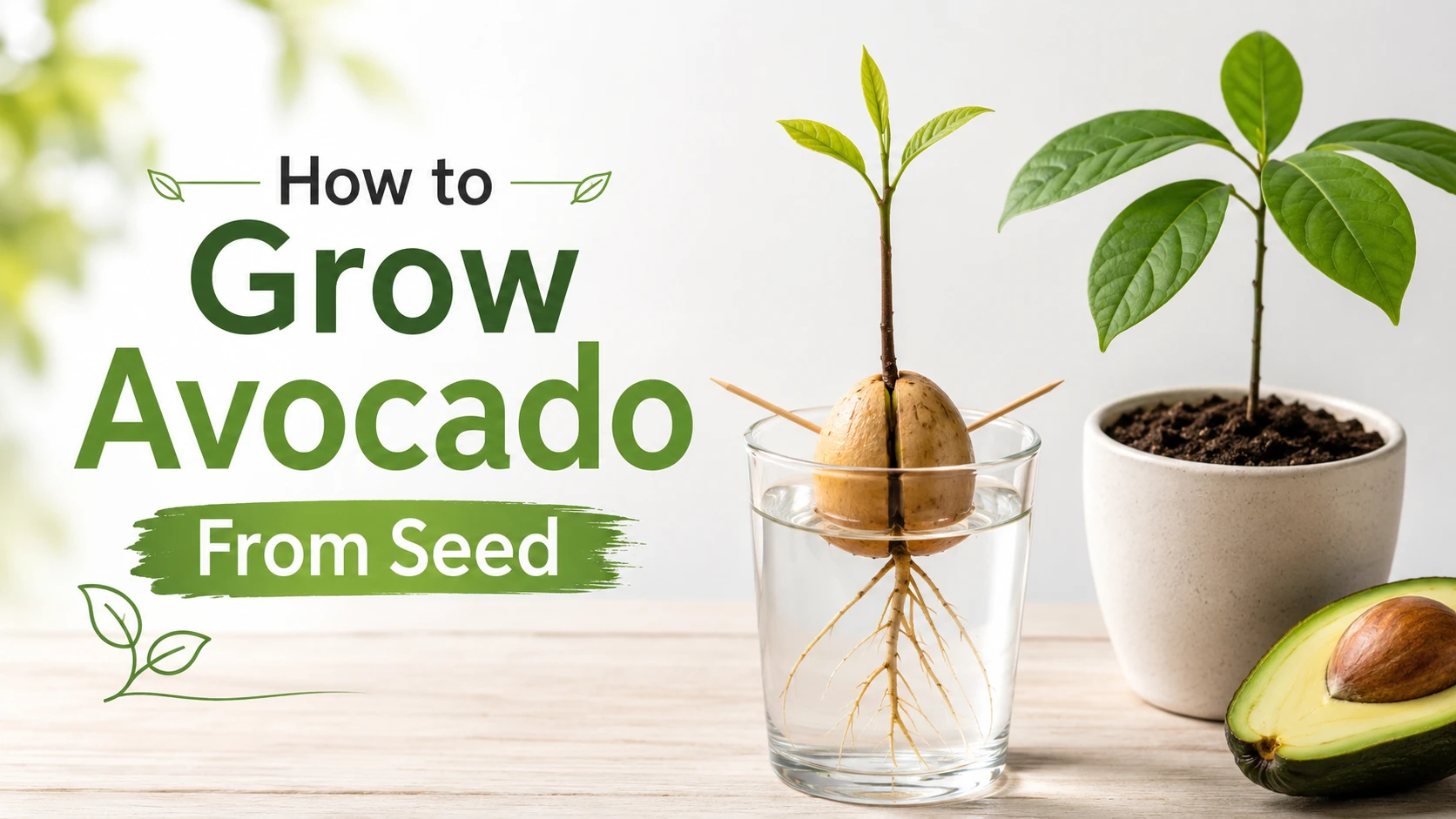
Growing an avocado from seed is a simple and rewarding gardening project. With a fresh avocado pit, a little warmth, steady moisture, and patience, you can grow an attractive young avocado plant at home.
You can start the seed in water using toothpicks or plant it directly in soil. Both methods work, but each has different advantages.
Gardener’s quick answer
Clean the avocado seed, place the broad end in water or moist soil, keep the pointed end facing upward, and maintain warm conditions. Roots may appear within 2 to 8 weeks, followed by a stem and new leaves.
It is important to begin with realistic expectations. A seed-grown avocado can become a beautiful houseplant, but it may take many years to produce fruit. The fruit may also differ from the avocado that provided the original seed.
What Happens When You Grow an Avocado From Seed?
An avocado seed contains enough stored energy to support its first root and shoot.
During germination, the seed usually cracks through the middle. A white root emerges from the broad bottom section, while a green stem grows from the pointed upper section.
This cracking is normal. Do not pull the two halves apart because they continue feeding the young plant during its early development.
From a horticultural point of view, growing an avocado from seed is mainly a propagation and observation project. Commercial avocado orchards usually rely on grafted trees because grafting provides more predictable fruit quality.
🧑🌾 Agricultural note
A seed from a Hass avocado does not automatically produce another true Hass tree. Seed-grown plants contain a new combination of genetic characteristics.
What You Need to Grow an Avocado Seed
You do not need expensive gardening tools.
Gather the following materials:
- One fresh avocado seed
- Clean water
- A glass or small jar
- Three or four wooden toothpicks
- A small plant pot
- Well-draining potting mix
- A warm and bright location
- A plant label or marker
- A clean spoon
Starting with two or three seeds is sensible because not every avocado seed germinates successfully.
Choose a seed that feels firm and healthy. Avoid pits that are soft, heavily damaged, split before removal, or covered with dark rotten areas.
Water, Soil, or Paper Towel: Which Method Is Best?
There are three common ways to grow avocado from seed.
| Growing method | Main advantage | Main disadvantage | Best for |
|---|---|---|---|
| Water and toothpicks | You can watch the roots develop | Water requires regular cleaning | Beginners and children |
| Direct soil planting | Roots are not disturbed later | Germination remains hidden | Simple long-term growing |
| Damp paper towel | Useful for testing several seeds | Mold can develop easily | Small germination experiments |
The water method is the most popular because the developing root remains visible.
Direct planting is closer to natural germination and avoids transplanting a delicate water-grown root. However, you cannot easily check what is happening beneath the soil.
🌿 Gardener’s recommendation
Use the water method for your first avocado seed. Once you understand the germination process, try planting another seed directly in soil and compare the results.
How to Grow Avocado From Seed in Water
Step 1: Remove the Avocado Seed Carefully
Cut the avocado around its length without pushing the knife deeply toward the pit.
Twist the two halves apart and remove the seed with a spoon. Try not to cut, scrape, or puncture the pit.
A small surface mark may not stop germination, but deep damage can injure the growing tissues inside the seed.
Step 2: Clean the Seed
Rinse the seed under lukewarm water.
Remove all remaining avocado flesh because it can rot, attract mold, and make the water smell unpleasant.
Do not wash the seed with soap, bleach, or household cleaning products.
The thin brown outer skin can remain in place. It may loosen naturally after the seed spends several days in water.
Step 3: Identify the Top and Bottom
The broad and slightly flat end is the bottom. The narrower or pointed end is the top.
The root grows from the broad bottom section. The shoot grows upward from the pointed section.
Always keep the pointed end facing upward.
⚠️ Field warning
Planting or placing the seed upside down is one of the most common beginner mistakes. Check the shape carefully before adding toothpicks.
Step 4: Insert the Toothpicks
Insert three or four toothpicks around the middle of the seed.
Space them evenly so they can support the pit on the rim of a glass. Push them only far enough to hold the seed firmly.
Avoid placing toothpicks close to the top or bottom. These are the areas where the stem and roots develop.
Step 5: Place the Seed Over Water
Rest the toothpicks on the rim of the glass.
Fill the glass until the lower third or lower half of the seed is covered with water. The pointed upper section should remain dry and exposed to air.
The bottom of the seed should not dry out during germination.
Step 6: Choose a Warm Location
Place the glass in a warm area with bright, indirect light.
A bright kitchen window, shelf, or protected indoor windowsill can work well. Avoid cold drafts, air-conditioning vents, heaters, and intense afternoon sunlight through glass.
Warmth is especially important before the seed germinates.
Temperatures between approximately 20°C and 27°C are generally suitable for germination. Cooler rooms can slow the process.
Step 7: Maintain Clean Water
Check the glass every few days.
Add water when the level falls below the bottom of the seed. Replace the water when it becomes cloudy, develops an odor, or collects visible material.
Rinse the glass before refilling it.
Clean water allows you to inspect the root and reduces the risk of decay around the seed.
Step 8: Wait for the Seed to Crack
The seed may appear inactive for several weeks.
It will normally begin by developing a crack through the center. A white root may then grow downward, followed by a stem growing upward.
Do not repeatedly lift, turn, or handle the seed. Young roots are soft and easily damaged.
🌱 Gardener’s note
Slow germination does not always mean failure. Some healthy avocado seeds need 8 weeks or longer before producing a visible root.
How to Plant an Avocado Seed Directly in Soil
You can also grow avocado by planting the seed directly in potting soil.
Choose a pot approximately 15 to 20 cm wide. The pot must have drainage holes at the bottom.
Fill the container with a loose and well-draining potting mix. A mixture containing potting soil, perlite, fine bark, or coco coir can provide a useful balance of moisture and air.
Plant the broad end of the seed downward.
Leave the upper third or half of the seed visible above the soil. Burying the entire seed may keep the upper surface too wet and encourage decay.
Water the soil thoroughly and allow excess water to drain.
Keep the potting mix lightly moist but not waterlogged. Place the container in a warm, bright location.
🧑🌾 Soil management note
Avocado roots need both moisture and oxygen. Dense, saturated soil can exclude air from the root zone and increase the risk of root rot.
How Long Does an Avocado Seed Take to Grow?
Germination speed varies between seeds.
| Approximate time | What you may notice | What you should do |
|---|---|---|
| Day 1 | Seed placed in water or soil | Record the starting date |
| Weeks 2–6 | Outer skin loosens or seed cracks | Maintain warmth and moisture |
| Weeks 3–8 | First root appears | Avoid touching the root |
| Weeks 4–10 | Stem begins growing | Provide brighter light |
| Weeks 6–12 | First leaves open | Prepare for transplanting |
| Months 2–3 | Faster leaf and stem growth | Begin regular plant care |
Temperature, seed maturity, variety, previous storage conditions, and moisture can all affect germination.
A seed that becomes soft, black, hollow, or strongly unpleasant-smelling is unlikely to recover.
When to Move an Avocado Seed Into Soil
Do not transplant the seed immediately after the first small root appears.
Wait until the seed has:
- A strong main root
- A visible stem
- Several open leaves
- Active new growth
Prepare a small pot with drainage holes and well-draining potting mix.
Make a planting hole deep enough to hold the root without bending it. Carefully lower the root into the soil.
Keep the upper section of the seed visible above the soil surface.
Water until excess moisture drains from the bottom.
The seedling may look slightly weak after transplanting. Keep it in bright but gentle light while the roots adjust to the new growing medium.
Transplanting warning
Never force a long avocado root into a shallow hole. Bending or breaking the main root can slow growth and weaken the seedling.
How to Care for a Young Avocado Plant
Provide Bright Light
A young avocado plant needs strong light after its stem and leaves appear.
Place it near a bright window. Gradually introduce direct sunlight so the soft leaves do not burn.
Rotate the pot once a week. This encourages balanced growth and prevents the plant from leaning heavily toward the light.
A long, weak stem with wide spaces between leaves usually indicates insufficient light.
Water According to the Soil
Do not water your avocado plant every day without checking the soil.
Push your finger approximately 2 to 3 cm into the potting mix. Water when the upper layer feels dry.
Apply enough water to moisten the root zone, then allow excess water to drain completely.
Never leave the pot standing in a tray filled with water.
Gardener’s rule
Check the soil before watering. The calendar cannot tell you whether the roots are wet, but the soil can.
Maintain Warm Conditions
Avocados are tropical and subtropical plants.
Protect young seedlings from frost, cold winds, and sudden temperature changes.
In colder countries, keep the plant indoors during autumn and winter. Move it outside only when temperatures are warm and stable.
Fertilize Carefully
The avocado seed provides stored nutrients during early growth.
Do not apply strong fertilizer immediately after germination or transplanting.
Wait until the plant is established in soil and producing healthy new leaves. You can then apply a diluted balanced houseplant fertilizer during active growth.
Overfertilizing can damage young roots and cause brown leaf margins.
Encourage Bushier Growth
Avocado seedlings often grow upward on a single narrow stem.
Allow the plant to establish several healthy leaves before pruning. If it becomes tall and weak, pinch or cut the stem just above a healthy leaf node.
This may encourage side branches.
Avoid heavy pruning immediately after transplanting or while the plant is stressed.
Repot Gradually
Repot the plant when roots begin circling the container or growing through the drainage holes.
Move it into a pot only slightly larger than the existing one.
An oversized pot can hold too much wet soil around a small root system.
Growing Avocado Indoors Versus Outdoors
Your climate should guide your growing method.
| Growing conditions | Recommended approach |
|---|---|
| Warm, frost-free climate | Grow outdoors after hardening the seedling |
| Occasional light frost | Use a protected site or movable container |
| Regular freezing winters | Grow indoors or move the pot inside |
| Heavy clay soil | Improve drainage or use a container |
| Small garden | Keep the plant pruned in a large pot |
| Hot, dry climate | Protect young plants from intense afternoon sun |
Outdoor avocado plants prefer sunlight, warmth, shelter from strong wind, and excellent drainage.
Before moving an indoor plant outdoors, harden it gradually.
Place it outside in a shaded and protected location for one or two hours. Increase its outdoor time over 7 to 14 days.
Do not move it directly from an indoor room into full summer sunlight.
☀️ Sunlight warning
Indoor avocado leaves can suffer sunburn when exposed suddenly to strong outdoor sunlight. Increase light gradually.
Common Avocado Seed Problems and Solutions
| Problem | Likely cause | Practical solution |
|---|---|---|
| No growth after several weeks | Low temperature or natural delay | Keep the seed warm and continue monitoring |
| Seed smells unpleasant | Rotting flesh or contaminated water | Clean the glass and inspect the seed |
| Water becomes cloudy | Organic or bacterial buildup | Replace the water and wash the container |
| Root becomes brown and soft | Root decay | Improve cleanliness and replace badly damaged seeds |
| Stem grows tall and thin | Insufficient light | Move gradually to brighter light |
| Leaves become yellow | Excess water or poor drainage | Allow the upper soil to dry |
| Leaf tips become brown | Salt buildup, dry air, or irregular watering | Reduce fertilizer and water consistently |
| Mold appears on the seed | Poor airflow and excess moisture | Wipe the surface and improve ventilation |
| Seed cracks through the middle | Normal germination | Leave the seed undisturbed |
The most common mistake is responding to slow growth by adding more water.
Extra moisture does not speed germination when the seed is already wet. It may instead create conditions that support rot.
Will a Seed-Grown Avocado Tree Produce Fruit?
A seed-grown avocado tree can produce fruit, but fruiting is not guaranteed.
The new tree is genetically different from its parent. Its fruit may vary in:
- Size
- Flavor
- Skin thickness
- Seed size
- Oil content
- Harvest season
- Disease tolerance
- Overall productivity
Seed-grown avocado trees also pass through a long juvenile period. They may need many years before flowering.
An indoor plant may never receive enough sunlight, space, pollination, or seasonal conditions to produce fruit.
A grafted nursery tree is a better option when fruit production is your main goal. Grafted trees are selected for known varieties and usually begin producing earlier under suitable conditions.
You can learn more about the commercial value of avocado production in our guide to profitable small farm crops.
🧑🌾 Agricultural reality
Grow an avocado seed for education, enjoyment, and plant propagation practice. Consider future fruit a bonus rather than a guaranteed result.
Try a Three-Seed Growing Experiment
A simple experiment can help you understand which germination method works best in your home.
Label three seeds as A, B, and C.
- Place seed A in water using toothpicks.
- Plant seed B directly in potting soil.
- Wrap seed C in a damp paper towel and place it inside a partly open reusable container.
Record the following information every week:
- Date the seed cracked
- Date the first root appeared
- Root length
- Date the shoot appeared
- Number of leaves
- Signs of mold or rot
- Watering frequency
- Room temperature
- Growing method
After 8 weeks, compare the results.
| Seed | Method | First root date | First shoot date | Number of leaves | Problems observed |
|---|---|---|---|---|---|
| A | Water | ||||
| B | Soil | ||||
| C | Paper towel |
This experiment adds a practical learning element and helps you understand how temperature, moisture, and growing media influence germination.
For a broader comparison of soil and soilless growing systems, read our guide to the future of aeroponic farming systems.
Frequently Asked Questions
How long does it take to grow avocado from seed?
Most avocado seeds begin showing roots within 2 to 8 weeks. Some may take longer because germination depends on temperature, seed quality, moisture, and storage conditions.
Which end of an avocado seed goes in water?
Place the broad and flatter end in the water. Keep the narrower or pointed end facing upward because the shoot grows from the top.
Can I plant an avocado seed directly in soil?
Yes. Plant the broad end downward and leave the upper third or half of the seed above the soil. Keep the potting mix lightly moist and warm.
How do you plant an avocado seed correctly?
Use a draining pot, loose potting mix, and a healthy seed. Position the broad end downward, leave part of the seed exposed, and water until excess moisture drains away.
Should I remove the brown skin from an avocado pit?
Removing the brown skin is not necessary. Clean away the remaining fruit and allow the thin outer covering to loosen naturally.
How often should I change the avocado seed water?
Check the water every few days. Replace it when it becomes cloudy, develops an odor, or collects visible buildup.
Why did my avocado seed split?
Splitting is normally part of germination. The seed opens as the first root and shoot begin developing.
When should I transplant an avocado seed?
Transplant when the seed has a strong root, a growing stem, and several open leaves. Handle the root carefully and avoid bending it.
Can an avocado tree grow indoors?
Yes. An avocado can grow indoors as a decorative plant when it receives bright light, warm temperatures, good drainage, and suitable watering.
Can an indoor avocado tree produce fruit?
It is possible but unlikely. Indoor plants often lack the light, growing space, maturity, and pollination conditions required for reliable fruit production.
How can I make an avocado seed grow faster?
Provide steady warmth, clean water or lightly moist soil, and a healthy seed. Excess watering, strong fertilizer, or cutting the seed will not safely speed germination.
Why are my avocado leaves turning brown?
Brown leaf tips may result from irregular watering, dry air, fertilizer salts, or mineral buildup. Water consistently, reduce fertilizer, and make sure the pot drains correctly.
Final Growing Advice
Learning how to grow avocado from seed requires patience more than specialist knowledge.
Begin with a healthy pit. Keep the broad end moist, provide steady warmth, and avoid disturbing the first root.
After the seedling moves into soil, focus on bright light, root aeration, reliable drainage, and careful watering.
Your plant may not become a commercial fruit-producing tree, but it can still become an attractive houseplant and a useful introduction to seed germination, plant care, and fruit-tree propagation.
🌱 Final gardener’s note
The healthiest avocado plant is not always the one that grows fastest. Strong roots, compact growth, balanced watering, and healthy leaves matter more than rapid height.
