Email: blogagri2@gmail.com

Calcium Nitrate Fertilizer: Uses and How to Calculate Rates

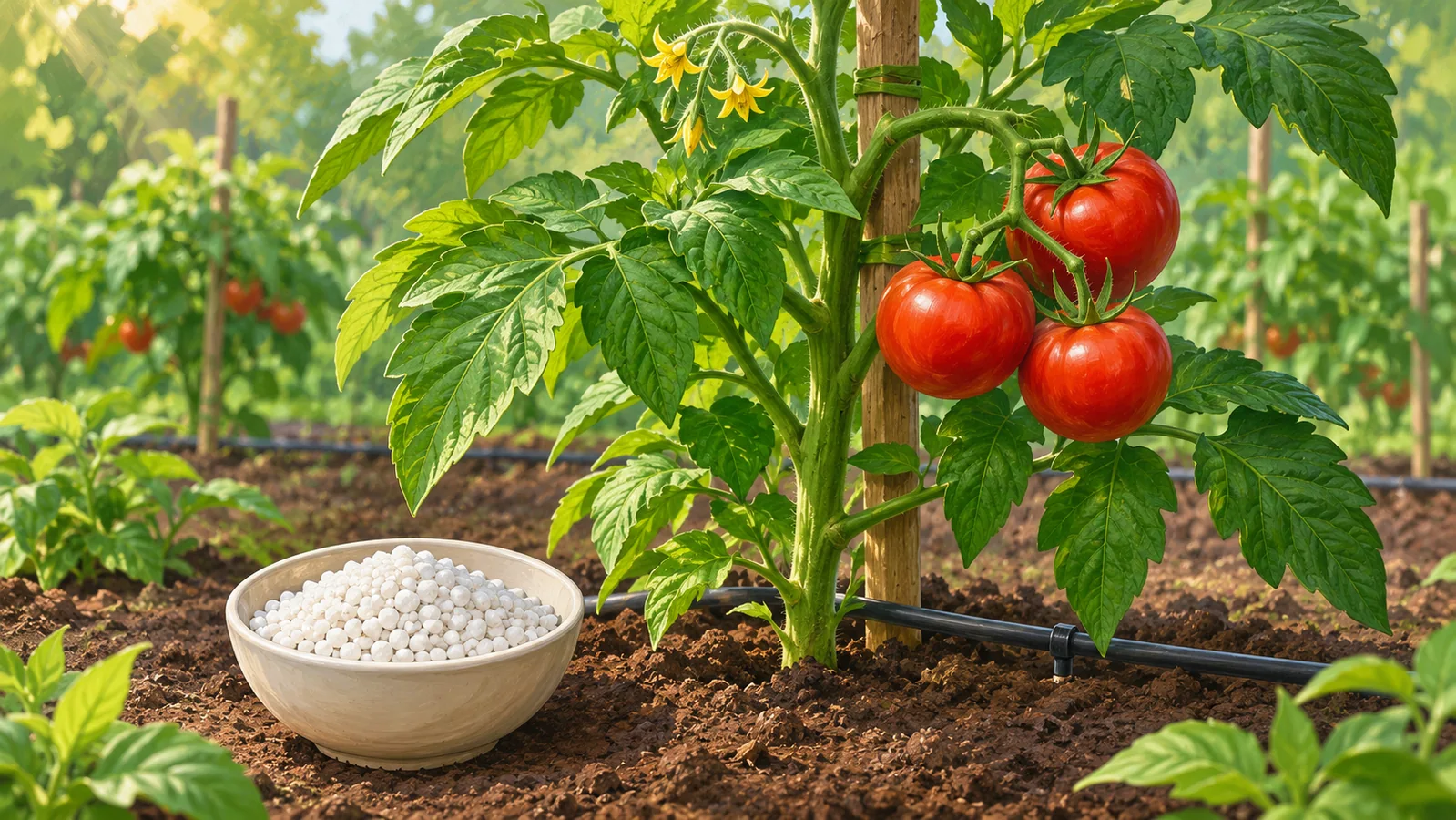
Calcium nitrate fertilizer supplies nitrogen and soluble calcium together. It can fit a vegetable, greenhouse, or field-crop nutrient program when both nutrients are needed. It is not a calcium-only treatment, and it is not an automatic cure for blossom-end rot.
For US growers, the useful starting point is the guaranteed analysis on the product label and a crop-specific nutrient recommendation. Calculate both the nitrogen and calcium delivered before choosing an application rate.
What calcium nitrate fertilizer contains
A common solid grade is 15.5-0-0 with 19% calcium, but liquid and specialty formulations differ. For one verified example, the YaraLiva CALCINIT label specifies 15.5% total nitrogen, consisting of 14.5% nitrate nitrogen and 1% ammoniacal nitrogen, plus 19% calcium. These are product-specific figures, not the composition of every fertilizer sold under this name.
The N-P-K numbers describe nitrogen, phosphate as P₂O₅, and potash as K₂O. Calcium is listed separately. A 15.5-0-0 product does not provide a complete crop nutrient solution by itself.
When it is useful—and when to reconsider
Calcium nitrate is useful where the nutrient plan calls for soluble nitrogen and calcium, particularly in managed fertigation or greenhouse programs. Penn State Extension’s nutrient-solution guidance includes it among fertilizers used in hydroponic recipes and recommends appropriate greenhouse-grade materials.
If the crop has already received sufficient nitrogen, adding calcium nitrate to increase calcium can overfeed nitrogen. Penn State’s fertilizer calculator guidance specifically highlights avoiding excessive nitrogen when adjusting calcium and potassium sources.
Start with soil testing for a field or garden. In a greenhouse, also consider irrigation water and the existing nutrient solution. A crop adviser can help distinguish a nutrient shortage from root damage, moisture stress, or another problem that fertilizer will not correct.
How to calculate an application rate
There is no universal number of bags per acre or spoonfuls per plant. Rate depends on the crop, growing medium, previous applications, irrigation water, and product concentration. The following example demonstrates arithmetic only; it is not a fertilizer recommendation.
Suppose a locally established plan calls for an additional 10 lb nitrogen per acre from a product containing 15.5% N and 19% Ca. Product required = 10 ÷ 0.155 = approximately 64.5 lb per acre. That application also contributes 64.5 × 0.19 = approximately 12.3 lb calcium per acre.
For metric calculations, use the same formula with matching units. A target of 10 kg N/ha would require about 64.5 kg product/ha and supply about 12.3 kg Ca/ha. Do not switch between acre and hectare amounts without conversion.
If calculating from a calcium target instead, divide required calcium by the calcium fraction, then check the nitrogen that amount supplies. A fixed N-to-Ca ratio means one fertilizer rate cannot independently match two unrelated nutrient targets.
Use the fertilizer dosage calculator to translate an established target into product quantity. Count every other nitrogen source in the seasonal budget before applying it.
Calcium nitrate and blossom-end rot
A dark, sunken patch on the blossom end of a tomato or pepper may indicate blossom-end rot. University of Maryland Extension explains that this disorder involves insufficient calcium in developing fruit. Low calcium, unsuitable pH, inconsistent moisture, and excessive nitrogen can all contribute.
A shortage in fruit does not necessarily mean the soil needs more calcium. When soil calcium is adequate, restoring regular root-zone moisture may address the underlying problem more effectively than another fertilizer application. Monitor moisture beneath the surface, maintain suitable mulch, and avoid alternating severe drying with heavy watering.
Damaged fruit tissue will not become sound again after a fertilizer treatment. Focus on preventing problems in later fruit and seek diagnosis if symptoms do not match blossom-end rot. Different fruit diseases need different responses.
Keep concentrated stock solutions compatible
Do not combine concentrated calcium nitrate with phosphate- or sulfate-containing fertilizers in the same stock tank. Penn State recommends separating calcium from phosphates and sulfates in concentrated nutrient solutions to limit precipitation and clogged irrigation lines.
The cited CALCINIT label also warns against dissolving that product with phosphate, sulfate, or carbonate fertilizer salts. Follow the exact label and the irrigation system’s established mixing procedure. A clear-looking mixture is not proof that the nutrient balance is correct.
Safety Note: A jar test can help reveal physical incompatibility, but it does not override a product restriction or establish crop safety. Have an experienced adviser review a new injection program, including water chemistry and injector settings.
Soil, drip, and foliar application are different decisions
Use a product suited to the intended delivery method. A field-applied granular material should not automatically be substituted for a solution-grade fertilizer; Yara markets separate products for these uses. Read its field-grade product information alongside the label of the product actually purchased.
A per-acre amount is not a tank concentration. Fertigation also requires the water volume, injection ratio, and existing nutrient concentration. Do not copy a hydroponic recipe into a soil garden or convert a field rate directly into a leaf spray. Use foliar application only where the product directions support the crop, rate, and method.
Before applying calcium nitrate
Record the crop and growth stage, test results, product analysis, calculated quantity, nitrogen contribution, and planned delivery method. Check the label and safety data sheet for handling and storage. Keep fertilizer away from runoff routes and follow locally appropriate timing guidance.
Calcium nitrate can be a precise nutrient tool when it fits the whole program. Confirm why the crop needs it, calculate both nutrients, and resolve irrigation or compatibility problems before applying more. For potassium decisions, read the separate MOP vs SOP fertilizer comparison.