Email: blogagri2@gmail.com
Goat Breeds for Small Farms: Dairy, Meat and Fiber Choices

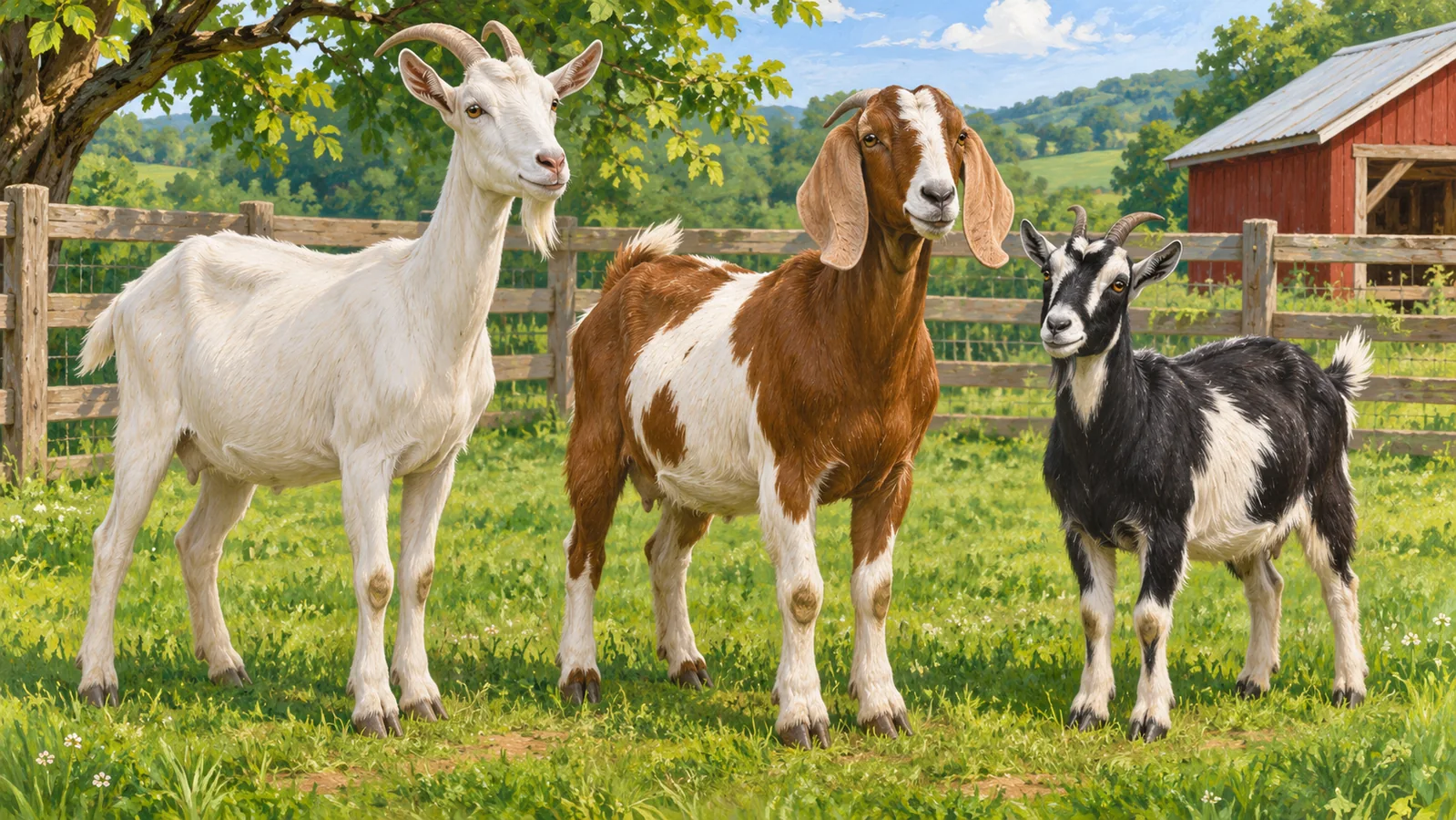
Choose goat breeds by the job you want the herd to do: milk, meat, fiber, or companionship. Then compare animals from herds managed under conditions similar to yours. A breed name can help narrow the search, but it cannot guarantee milk yield, growth, temperament, or good health.
For US small farms, common starting options include dairy breeds such as Alpine, Saanen, Nubian, LaMancha, and Nigerian Dwarf; meat breeds such as Boer, Kiko, and Spanish; and Angora goats for mohair. This guide compares those uses without assuming one breed suits every farm.
Goat breeds at a glance
Use the table to build a shortlist, then check breeder records and local support before buying.
| Main goal | Breeds or types to investigate | What to verify |
|---|---|---|
| Milk | Alpine, Saanen, Nubian, LaMancha, Nigerian Dwarf | Lactation records, milk components, milking routine |
| Meat | Boer, Kiko, Spanish, Myotonic | Growth, soundness, reproductive history, buyer needs |
| Mohair | Angora | Fleece quality, shearing access, fiber buyer |
| Cashmere | Selected cashmere-producing goats | Measured fiber quality and registry terminology |
| Companionship | Suitable individuals of manageable size | Social needs, handling, fencing, lifetime care |
These categories describe selection goals. Dairy animals can also contribute meat, and some herds sell breeding stock. That does not make every goat equally productive for each purpose.
Dairy goat breeds: compare records as well as size
The American Dairy Goat Association breed standards are useful for confirming identification and registration requirements. Nigerian Dwarf is a miniature dairy breed, not simply a small meat or pet goat. Small size does not remove the need for secure facilities or a proper feeding program.
Alpine and Saanen are established standard-sized dairy options. Nubian, LaMancha, Oberhasli, Toggenburg, Sable, and Guernsey are other breeds worth considering where suitable stock is available. Appearance, ear shape, and coat color help identify types, but do not establish how an individual doe will milk.
Compare total milk, fat and protein, lactation length, and the seller’s management. ADGA’s published breed averages describe recorded animals, not a guaranteed result for a new owner. Individual records are more useful for a purchase than an unsupported “gallons per day” promise.
Decide whether you can manage milking, breeding, kidding, sanitation, and milk handling before choosing a dairy breed. Penn State’s dairy goat production guide explains that genetics and diet both affect output. Visit working herds and ask what their daily routine requires.
Meat goat breeds: evaluate the production system
Boer goats are selected for meat traits, including muscling. Kiko goats were developed with survival and growth among their selection goals. Spanish goats offer another meat-oriented option, with considerable variation among bloodlines and production settings. Penn State Extension’s meat goat guide describes these common choices.
Ask for actual growth and reproductive records from the herd. The fastest-growing animal under one feeding program may not be the most suitable for a lower-input farm. Crossbred goats can also fit commercial goals when their performance and management needs are understood.
Avoid treating “hardy” as “immune to disease.” All goats require monitoring, appropriate nutrition, and veterinary support. Local adaptation and sound individual animals matter as much as promotional breed descriptions.
Spanish and Myotonic goats: heritage options
The Livestock Conservancy’s Spanish goat profile describes a variable landrace, including differences among strains. When possible, purchase from a breeder whose management and climate resemble the conditions you can provide.
Myotonic goats are also called Tennessee Fainting goats. The characteristic stiffness is associated with myotonia; it is not a true loss of consciousness. Do not startle animals deliberately for entertainment.
If conservation breeding is your goal, confirm current registry and conservation guidance before planning crosses. A rare breed is not automatically an easy commercial market. Establish who wants the animals or products and what records they expect.
Fiber goats: mohair and cashmere are different
Angora goats produce mohair and need a plan for shearing and fleece management. Cashmere is fine undercoat fiber produced by selected goats; it should not be treated as one universal breed with identical appearance and output.
There is an additional registry distinction: the Cashmere Goat Association describes standards for North American Cashmere Goats. Ask which standard or registry a seller means, and obtain fiber measurements rather than accepting the name alone as evidence of commercial quality.
Before buying fiber animals, find out how fleece will be collected, cleaned, processed, and sold. Compare those costs and labor with likely buyer requirements. A valuable finished yarn does not prove that unprocessed fleece will produce the same return.
Which goat breed is best for beginners?
A beginner usually benefits from healthy, well-handled animals, a trustworthy local breeder, suitable facilities, and accessible advice. Those advantages are more useful than a universal ranking. Meet the actual goats and watch routine handling before purchasing.
Goats are herd animals. Penn State’s getting-started guidance recommends keeping at least two. Plan compatible companionship, rather than assuming human attention will replace other goats.
Choose size in relation to your fencing, handling ability, transport, and feed resources. Nigerian Dwarfs can suit a smaller dairy plan, but “miniature” does not mean maintenance-free. Conversely, a standard-sized goat with calm handling experience may be more manageable than an unhandled small animal.
Check the farm before choosing animals
Prepare dry, ventilated shelter; reliable clean water; appropriate feed storage; secure fencing; and a handling area. Review the fence design for the age, size, and horns of the goats you intend to keep. A fence that works for cattle may leave gaps goats can use.
Ask a local veterinarian or Extension adviser to help plan nutrition, parasite monitoring, and preventive care. Requirements differ among growing kids, dry adults, pregnant does, lactating does, and breeding bucks. Do not copy a universal homemade ration or automatic medication schedule from a breed comparison.
Before a purchase, ask for identification, age, breeding history, available health records, and production records relevant to your goal. Discuss isolation and testing of incoming animals with your veterinarian. Make sure you can provide care during holidays, bad weather, and emergencies.
Keep regional comparisons separate
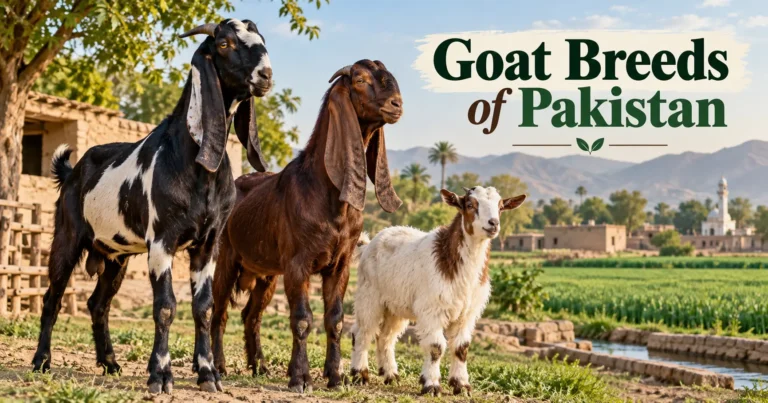
This page focuses on choosing goats for US farms. If your project is in Pakistan, use the separate goat breeds of Pakistan guide as regional background and confirm recommendations with local livestock services. Climate, stock availability, disease pressure, and markets can change the shortlist.
For business planning, include fencing, shelter, bought feed, veterinary care, transport, labor, processing, and marketing before assigning a value to expected production. Our farm profit calculator can compare your own revenue and cost assumptions; it cannot predict an animal’s performance.
Build a shortlist, then inspect the herd
Start with one main purpose and shortlist two or three suitable breeds or crosses. Visit breeders, compare records, and price the facilities and routine care. The best choice is a sound group of animals that fits your resources and goals, supported by a management plan you can sustain.