Email: blogagri2@gmail.com
Mixed Farming in Sustainable Agriculture: Crop-Livestock Integration Guide

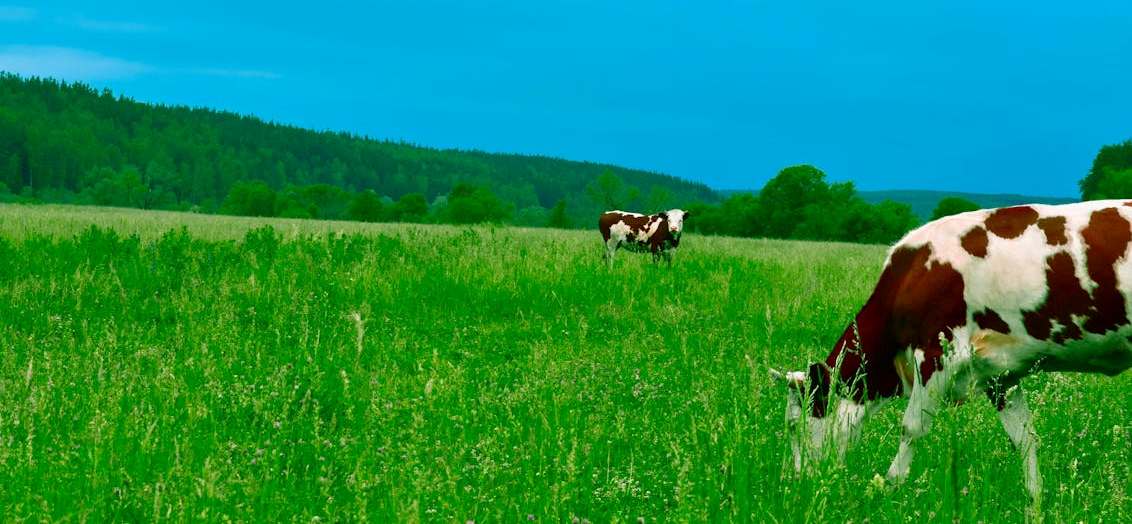
Mixed farming is a farm system where crops and livestock are managed as connected enterprises rather than completely separate businesses.
A corn field may provide grain, silage, or crop residue for cattle. Cover crops may provide winter grazing. Livestock return part of the nutrients they consume to the land through manure and urine. Forage crops can enter the rotation between cash crops, while manure can replace part of the fertilizer requirement when it is tested and applied correctly.
That connection is what makes mixed farming interesting from a sustainability point of view.
It can improve nutrient cycling, diversify farm income, provide additional uses for crop residues and forage, and create more flexible crop rotations. But it also brings extra management, fencing, water, feed, manure, labor, and animal-health responsibilities.
USDA Agricultural Research Service describes integrated crop-livestock systems as systems in which crops and livestock are managed together, with potential economic and environmental benefits but greater management complexity than specialized farms. (ars.usda.gov)
Quick Answer: Mixed farming works best when crops produce food, feed, forage, or residues for livestock and livestock return nutrients to cropland through managed manure or grazing. It is not automatically sustainable; stocking rate, manure management, soil condition, feed supply, crop rotation, water, and economics determine whether the integration actually works.
For a broader look at crop diversity and soil management, see BlogAgri’s Crop Intensification Program: Meaning, Benefits and Examples.
What Is Mixed Farming?
Mixed farming combines crop production and livestock production within one farm system or through closely connected farms.
The livestock enterprise might include:
- Beef cattle
- Dairy cattle
- Sheep
- Goats
- Poultry
- Other farm animals
The crop side may include:
- Grain crops
- Oilseeds
- Pulses
- Forage crops
- Hay
- Silage
- Cover crops
- Pasture
- Crop residues suitable for livestock use
FAO describes integrated crop-livestock systems as arrangements where crop and animal enterprises exchange resources. Crop residues and forage can feed animals, while livestock provide manure and may graze land within crop rotations. (fao.org)
The connection does not have to happen every day.
A farmer might grow corn and soybeans during summer, plant rye after harvest, then allow cattle to graze the rye before the next cash crop.
Another farm might grow alfalfa for several years within a grain rotation and feed that forage to dairy cattle.
A grain farmer who owns no livestock can even work with a neighboring cattle producer to graze cover crops.
Important Distinction: Mixed farming means the crop and livestock enterprises are intentionally connected. Simply owning cattle on one property and renting unrelated cropland elsewhere does not necessarily create meaningful crop-livestock integration.
How Nutrient Cycling Works in Mixed Farming
Nutrient cycling is one of the main reasons crops and livestock can complement each other.
A simplified cycle looks like this:
Soil → crop → livestock feed → animal → manure → soil → crop
For example, a forage crop absorbs nitrogen, phosphorus, potassium, sulfur, and other nutrients from the soil.
Cattle eat that forage.
Some nutrients are retained in animal growth, milk, or other products, but substantial amounts return in manure and urine.
Those nutrients can then contribute to crop production.
FAO notes that crop residues can feed livestock while manure can return nutrients to cropland, helping improve nutrient cycling within mixed systems. (fao.org)
But the cycle is never perfectly closed.
Nutrients leave the farm when:
- Grain is sold
- Milk is sold
- Animals leave the farm
- Hay is sold
- Nutrients run off
- Nitrogen is lost to the atmosphere
- Nutrients move below the root zone
FAO specifically cautions that even a well-integrated crop-livestock system is not a self-sustaining nutrient machine. Nutrient replacement may still be necessary. (fao.org)
Nutrient Cycling: Manure recycles nutrients. It does not create unlimited nutrients. A mixed farm still needs soil tests, manure analysis, nutrient budgets, and sometimes purchased fertilizer.
Manure Is a Resource, but It Must Be Managed
One of the biggest mistakes in discussions of mixed farming is treating manure as automatically beneficial.
Manure can be a valuable fertilizer and soil amendment.
It contains nitrogen, phosphorus, potassium, organic matter, and other nutrients.
But its nutrient concentration varies widely with:
- Animal species
- Diet
- Bedding
- Storage
- Water content
- Handling method
- Time in storage
USDA NRCS recommends testing manure and other organic nutrient sources before application because knowing their nutrient content helps match applications to crop requirements while reducing nutrient loss and unnecessary fertilizer purchases. See USDA NRCS Nutrient Management guidance. (nrcs.usda.gov)
University of Minnesota Extension also provides specific manure management guidance covering sampling, nutrient value, application, and environmental protection. (extension.umn.edu)
A Good Manure Plan Includes
- Soil testing
- Manure testing
- Crop nutrient requirements
- Field history
- Application rate
- Application timing
- Application method
- Distance from water
- Runoff risk
- Recordkeeping
Do not spread manure simply because the storage area is full.
That turns nutrient recycling into waste disposal.
Manure Management Rule: Apply manure because the field needs its nutrients, not simply because the farm needs somewhere to put manure.
Too Much Manure Can Become a Problem
If a livestock enterprise produces more nutrients than nearby cropland can use, phosphorus and other nutrients can build up in soil.
Losses can then increase through runoff or erosion.
NRCS nutrient-management standards emphasize matching nutrient applications to crop need and considering environmental risk when manure supplies exceed what available land can responsibly use. (nrcs.usda.gov)
That means a mixed farm needs enough suitable land, manure-export options, or another nutrient-management strategy to handle the livestock enterprise responsibly.
This is another reason livestock numbers should not be expanded without considering the cropping side of the farm.
Crops Can Produce Feed as Well as Cash Income
One advantage of mixed farming is that a crop does not always need to have only one purpose.
Corn can become:
- Grain for sale
- Grain for livestock
- Silage
- Crop residue for grazing or bedding
Small grains may produce grain while also fitting into rotations that create additional forage opportunities.
Cover crops can sometimes serve both soil-management and grazing purposes.
FAO notes that livestock in mixed systems commonly use local feed resources such as pasture, crop residues, fodder, and agricultural by-products. (fao.org)
That can reduce waste and give farmers more ways to use material already produced on the farm.
But crop residues are not automatically complete livestock diets.
University of Minnesota Extension notes that corn stover, for example, is relatively low in nutritional quality and may require supplementation when used for animals with higher nutrient demands. (extension.umn.edu)
Feed: “The crop can be eaten by cattle” and “the crop provides a nutritionally adequate cattle diet” are not the same statement. Forage testing and ration balancing still matter.
For cattle feed planning, BlogAgri’s Cattle Feed Requirement Calculator estimates herd dry-matter needs from animal numbers, body weight, intake assumptions, and feeding period.
Crop Rotations Become More Flexible
Livestock can make some crops economically useful that would be harder to justify in a crop-only rotation.
For example, a farmer might rotate:
Corn → soybean → small grain → forage or cover crop
instead of growing a narrow corn-soybean sequence repeatedly.
University of Minnesota Extension notes that crop rotation can improve soil fertility and structure, help manage disease, insects and weeds, spread workload, and reduce production risk. (extension.umn.edu)
Forage crops also create longer periods of soil cover and living roots.
Livestock give the farmer a market for that forage.
Without animals, a forage year may feel like lost cash-crop acreage.
With livestock, it may become part of the feed system.
Rotation: Livestock can make crop diversity economically useful. Instead of asking only, “What crop can I sell?” a mixed farmer can also ask, “What can I grow that feeds the herd and improves the rotation?”
Cover Crops and Livestock Integration
Cover crops are one of the most practical entry points for a crop farmer considering livestock integration.
They can provide:
- Soil cover
- Living roots
- Erosion protection
- Nutrient capture
- Additional forage
USDA NRCS explains that cover crops can improve soil health and can be incorporated into farms of many sizes. (nrcs.usda.gov)
If livestock graze the cover crop, the field also provides feed and receives manure and urine directly.
This can reduce the labor involved in mechanically harvesting forage and hauling manure back to fields.
However, grazing must be managed carefully.
USDA ARS reviewed research on grazing cover crops and found that grazing generally had small or mixed effects on soils and subsequent crop yield when properly managed, but wet-soil grazing and excessive stocking pressure can increase compaction risk. (ars.usda.gov)
Grazing Safety Rule: A field may contain plenty of forage and still be unsuitable for grazing today. Wet soil can turn a useful integration practice into a compaction problem.
Rotational Grazing in Mixed Farming
Leaving livestock continuously in one field can result in heavily grazed patches, lightly grazed patches, and uneven manure distribution.
Rotational grazing divides the grazing area into paddocks and moves livestock according to forage availability and recovery.
University of Minnesota Extension notes that rotational systems can improve forage use and give plants recovery time between grazing periods. (extension.umn.edu)
BlogAgri’s Rotational Grazing Calculator can help compare herd demand, available forage, grazing days per paddock, and desired rest periods.
The calculator is useful for planning, but pasture growth still has to be observed in the field.
Rainfall, temperature, grazing residual, forage species, and season can change recovery rates dramatically.
How Much Land Does Mixed Farming Require?
There is no meaningful answer such as “you need 10 acres for mixed farming.”
Land requirement depends on the system.
Important variables include:
- Animal species
- Number of animals
- Animal size
- Production stage
- Pasture productivity
- Forage crop yield
- Rainfall
- Irrigation
- Grazing season
- Purchased feed
- Crop residues available
- Manure nutrient load
- Winter feed requirement
NRCS notes that stocking rates depend on animal class, available acreage, rainfall, topography, water distribution, forage species, forage productivity, and grazing management. (nrcs.usda.gov)
A farm feeding substantial purchased feed can support more animals on limited land.
But those purchased nutrients eventually enter the manure stream.
So a high livestock density may create a manure-management problem even if feed availability seems adequate.
Land Requirement: The right question is not “How many cattle fit on 20 acres?” It is “How much usable forage can this land produce, how much will the herd consume, and where will the manure nutrients go?”
BlogAgri’s Pasture Stocking Rate Calculator estimates animal numbers from pasture area, measured forage, utilization, animal intake, and grazing duration.
Livestock Water Is Part of Land Planning
Good forage is useless if animals cannot reach adequate clean water.
Adding livestock to cropland may require:
- Water lines
- Tanks
- Troughs
- Pumps
- Wells
- Portable water systems
These costs can be easy to overlook when a crop farmer first considers grazing cover crops.
SARE research on integrated systems identifies fencing, watering infrastructure, housing, labor, and livestock-management knowledge among practical barriers to crop-livestock integration. (sare.org)
BlogAgri’s Livestock Water Requirement Calculator can help estimate daily herd water demand and reserve storage.
Main Advantages of Mixed Farming
Better Nutrient Recycling
Crop nutrients can move through livestock and return to fields through manure.
That can reduce purchased fertilizer requirements when nutrient credits are properly measured. (nrcs.usda.gov)
More Diverse Income
A farm may sell:
- Grain
- Meat
- Milk
- Eggs
- Hay
- Breeding stock
- Other farm products
If one market performs poorly, another enterprise may provide income.
A 2025 University of Minnesota research brief reported that farms using crop-livestock integration were, on average, more profitable than crop-only farms in the study analyzed, with feed savings, manure nutrients, and forage production among the possible reasons. This should not be interpreted as a guarantee for every farm. (extension.umn.edu)
More Crop-Rotation Options
Livestock create a market for hay, forage, small grains, and cover crops that might otherwise be difficult to include in a cash-crop system.
Better Use of Crop Residues
Animals can use certain residues and crop by-products that would otherwise have limited economic value. (fao.org)
Longer Grazing Seasons
Cover crops and crop residues can extend the period animals spend grazing instead of eating stored feed.
More Flexible Use of Marginal Land
Some land unsuitable for row crops may still support perennial forage.
University of Minnesota Extension notes that grazing can make productive use of land that is less suitable for corn, soybean, and other row crops. (extension.umn.edu)
Mixed Farming Does Not Automatically Reduce Fertilizer Use
This deserves its own section.
Manure can replace part of a commercial fertilizer program.
Legumes may also contribute nitrogen to following crops.
But assuming the farm no longer needs fertilizer is risky.
Crop nutrient requirements may not match the nutrient ratio found in manure.
For example, repeatedly applying manure to satisfy crop nitrogen requirements can sometimes supply more phosphorus than the crop removes.
Soil tests and manure tests must guide the program.
If you are interested in biological nutrient management alongside manure and fertilizer, read BlogAgri’s Eco-Friendly Farming: The Power of Biofertilizers.
Nutrient Management Callout: Mixed farming can reduce nutrient waste. It does not remove the need for agronomy.
Limitations of Mixed Farming
Mixed farming has real advantages, but it is not the easiest farming system to manage.
More Management Complexity
A crop-only farmer already manages planting, fertility, weeds, pests, machinery, harvest, and marketing.
Adding livestock means also managing:
- Feed
- Breeding
- Health
- Animal welfare
- Housing
- Fencing
- Water
- Manure
- Livestock markets
USDA ARS research specifically identifies integrated crop-livestock systems as more complex to manage because crops, animals, forage, and grassland interact with each other. (ars.usda.gov)
More Labor
Animals need care every day.
A crop field will usually tolerate your absence for one Sunday morning.
A herd with an empty water trough will not.
Infrastructure Costs
A crop farmer adding cattle may need:
- Fencing
- Handling facilities
- Water
- Feed storage
- Livestock transport
- Winter shelter
- Manure storage
Soil Compaction
Poorly timed grazing can compact wet soil.
High stocking pressure can make the risk worse. (ars.usda.gov)
Disease and Biosecurity
Livestock introduce animal-health and biosecurity responsibilities that do not exist on a crop-only farm.
Market Requirements
Selling grain and selling livestock require different buyers, infrastructure, timing, and skills.
Nutrient Surplus
Too many animals relative to available cropland can create more manure nutrients than crops can responsibly use.
A Sourced Example: Grazing Cover Crops in the Great Plains
One reason I removed the old article’s unsourced international “case studies” is that we have better documented examples.
A long-running SARE-supported experiment in the semiarid central Great Plains studied replacing traditional fallow with cover crops integrated with livestock grazing.
The research found that grazing cover crops could generate forage and improve economic returns while supporting soil-health goals under the conditions studied. (sare.org)
That does not mean every farmer in every climate will get the same result.
Rainfall, soil, forage production, livestock prices, and management all matter.
But it provides a documented example instead of a vague success story.
Another Sourced Example: Oregon Crop-Livestock Integration
USDA NRCS has documented an Oregon farming operation where cattle graze crop stubble and cover crops.
The system keeps crop residue on the soil, uses cover crops for additional living cover, and converts part of that forage into livestock production. (nrcs.usda.gov)
The useful lesson is not that every farm should copy that exact rotation.
It is that crop-livestock integration can be designed around the resources already available on a specific farm.
Case Study Rule: Copy the principle, not blindly the farm. A system that works in Oregon, Kansas, or Minnesota still needs to be redesigned for your rainfall, soil, crops, animals, markets, and labor.
Can Crop Farmers Integrate Livestock Without Owning Animals?
Yes.
This is an important option.
A crop farmer may grow a grazeable cover crop while a neighboring cattle producer supplies the livestock.
That arrangement can give the crop farmer access to grazing and manure benefits without owning a permanent herd.
The livestock producer gains access to forage.
NRCS has supported projects specifically investigating contract grazing of cover crops between row-crop and cattle farms. (nrcs.usda.gov)
The agreement should clearly cover:
- Grazing dates
- Stocking rate
- Fencing
- Water
- Animal care
- Liability
- Damage
- Payment
- Soil conditions
- Removal dates
This kind of partnership may be a lower-risk entry point than buying livestock immediately.
How to Start a Mixed Farming System
Do not start by buying animals.
Start with the farm plan.
Step 1: Map the Existing Resources
List:
- Cropland
- Pasture
- Marginal land
- Water sources
- Fencing
- Buildings
- Crop residues
- Existing machinery
- Labor
- Markets
Step 2: Identify the Integration Opportunity
Ask what the animals will actually use.
Could they graze:
- Cover crops?
- Corn residue?
- Small-grain aftermath?
- Permanent pasture?
- Forage in the crop rotation?
Step 3: Build a Feed Budget
Estimate the herd’s annual dry-matter requirement.
Then compare that with the forage and stored feed the farm can realistically produce.
Use BlogAgri’s Cattle Feed Requirement Calculator for an initial planning estimate.
Step 4: Build a Grazing Plan
Estimate available forage and safe utilization.
BlogAgri’s Pasture Stocking Rate Calculator and Rotational Grazing Calculator can help compare scenarios.
Step 5: Build a Manure Nutrient Plan
Test:
- Soil
- Manure
- Other nutrient sources
Then match applications to crop requirements.
Step 6: Check Water and Fencing
Make sure animals can actually be controlled and watered where the forage exists.
Step 7: Test on a Small Area
Start with:
- One field
- One cover crop
- One grazing period
- A limited number of livestock
Record:
- Forage use
- Animal performance
- Soil condition
- Crop yield
- Labor
- Fertilizer savings
- Feed savings
- Total cost
Expand only when the numbers make sense.
Beginner Strategy: Integration does not need to mean turning a crop farm into a full livestock operation overnight. One grazed cover-crop field can teach you a great deal.
Is Mixed Farming More Profitable?
It can be, but there is no automatic profit advantage.
Potential savings include:
- Purchased feed
- Fertilizer
- Manure hauling
- Mechanical residue management
Potential new revenue may come from:
- Meat
- Milk
- Eggs
- Breeding stock
- Additional forage
- Contract grazing
But additional costs can include:
- Animals
- Fencing
- Water infrastructure
- Labor
- Veterinary care
- Feed storage
- Handling facilities
- Transport
The 2025 University of Minnesota economics brief found an average profitability advantage for integrated farms in the dataset studied, but farm-specific results depend on costs, markets, management, and resource availability. (extension.umn.edu)
Profitability: Diversification can reduce risk, but two poorly managed enterprises do not automatically make one profitable farm.
Mixed Farming and Sustainable Agriculture
Mixed farming becomes more sustainable when the integration improves the efficiency of the whole system.
That may mean:
- Recycling manure nutrients
- Growing more livestock feed on-farm
- Adding forage crops to rotations
- Grazing cover crops
- Keeping soil covered
- Reducing nutrient losses
- Matching livestock numbers to feed and land
- Protecting water
- Avoiding overgrazing
- Diversifying farm revenue
It becomes less sustainable when:
- Animals exceed the land’s nutrient capacity
- Manure is overapplied
- Livestock graze wet soil
- Pastures are overstocked
- Purchased feed creates a growing nutrient surplus
- Waterways are damaged
- Management becomes too complex for the labor available
Sustainability comes from the management of the connections, not simply from keeping crops and livestock on the same farm.
FAQs About Mixed Farming
What is mixed farming?
Mixed farming combines crop production and livestock production within one connected farming system. Crops may provide feed or forage while livestock return nutrients to cropland through manure or grazing.
Why is mixed farming considered sustainable?
It can improve nutrient cycling, diversify crop rotations, use crop residues as livestock feed, and spread farm income across several enterprises. Benefits depend on good management.
What is an example of mixed farming?
One example is growing corn and soybeans, planting a cover crop after harvest, grazing cattle on that cover crop, and using manure nutrients in the following crop cycle.
How does manure help mixed farming?
Manure returns nutrients and organic material to cropland. It should be tested and applied according to soil tests, crop nutrient requirements, environmental risk, and local regulations.
Does mixed farming reduce fertilizer use?
It can reduce purchased fertilizer where manure or legumes supply crop nutrients. However, fertilizer may still be needed because nutrient supply rarely matches crop demand perfectly.
How much land is needed for mixed farming?
There is no fixed acreage. Land requirement depends on livestock type, forage production, stocking rate, grazing period, rainfall, purchased feed, water, and manure nutrient capacity.
What crops work well in mixed farming?
Grains, forage crops, legumes, small grains, hay crops, pasture, silage crops, and suitable cover crops can all fit mixed systems depending on climate and livestock needs.
What are the disadvantages of mixed farming?
Mixed systems require more management, labor, fencing, water, feed planning, manure handling, animal-health knowledge, and infrastructure than many specialized crop systems.
Can livestock graze cover crops?
Yes, when the crop, animal class, forage quality, soil conditions, and grazing plan are suitable. Avoid grazing wet soils or using stocking pressure that damages the field.
Can a crop farmer use mixed farming without owning livestock?
Yes. Contract grazing or partnerships with livestock farmers can integrate animals onto cropland without requiring the crop farmer to maintain a permanent herd.
Final Thoughts
Mixed farming in sustainable agriculture is about making crops and livestock work together rather than simply placing both enterprises on the same property.
Crops can provide feed and forage. Livestock can return nutrients. Rotations can become more diverse, and the farm may gain additional income streams.
But integration needs numbers behind it.
Test the soil and manure, calculate feed supply, match stocking rate to forage, protect wet fields, plan water and fencing, and start small.
That is how mixed farming becomes a practical farming system rather than just a sustainability slogan.