Email: blogagri2@gmail.com

How to Grow Shiitake Mushrooms at Home
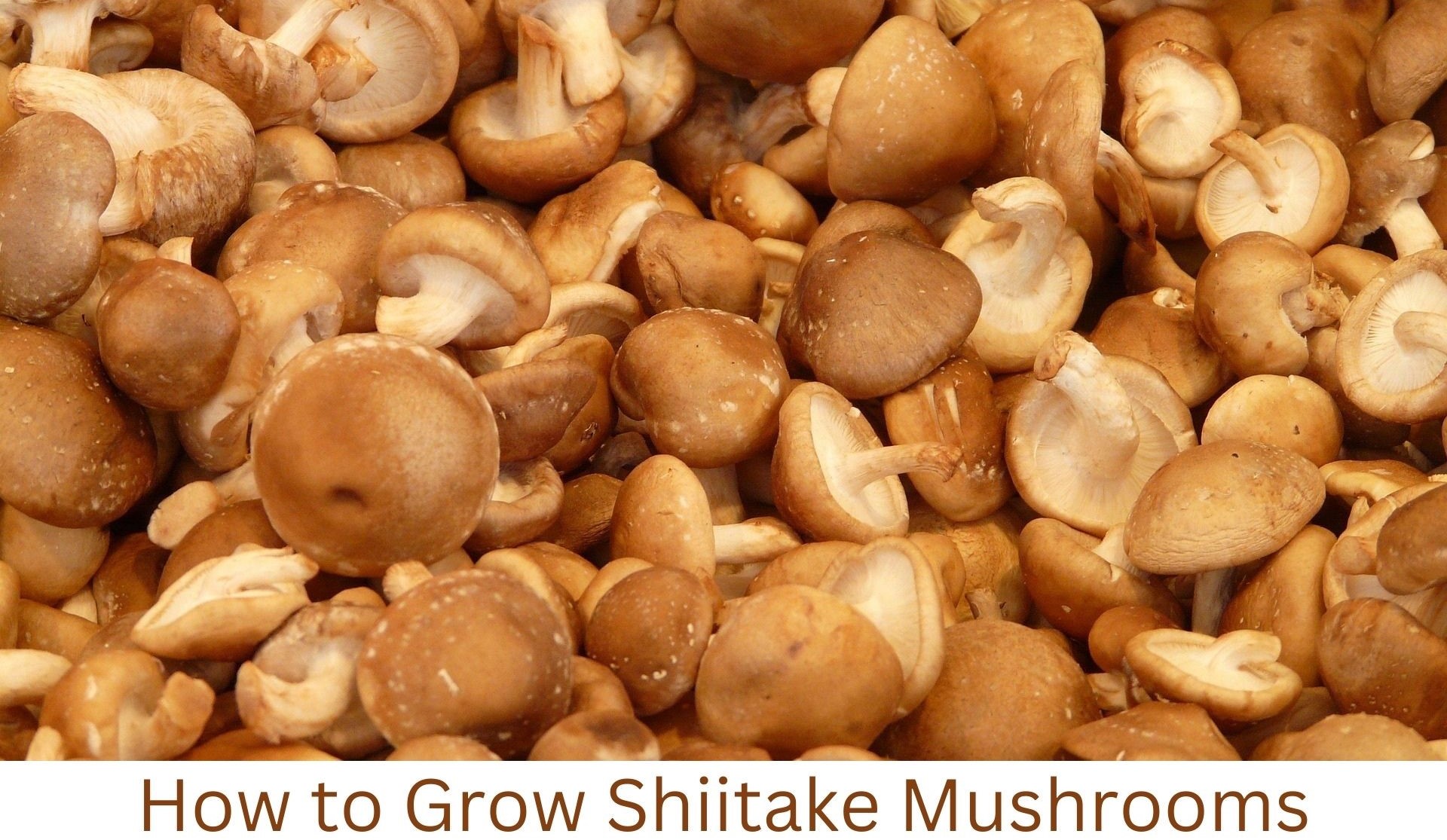
Growing shiitake mushrooms at home feels a little different from growing tomatoes or herbs.
There is no tray of seedlings sitting on a sunny windowsill. Instead, you are waiting for an almost invisible network of white mycelium to work its way through a hardwood log or sawdust block.
For a while, it can feel as though nothing is happening.
Then one morning you check the log and find small brown mushrooms pushing through the bark.
That first harvest makes all the waiting worthwhile.
The two most practical ways to grow shiitake mushrooms at home are hardwood logs and prepared sawdust blocks. Logs are slower but can produce for several seasons. Blocks are quicker and work well indoors, although cleanliness and contamination control become much more important.
Cornell Small Farms describes log-grown shiitake as one of the more dependable specialty mushrooms for outdoor production and also notes that indoor mushroom production requires much more attention to contamination control. See Cornell’s mushroom cultivation resources.
Quick Answer: If you have a shaded outdoor area and plenty of patience, start with hardwood logs. If you want your first harvest sooner, buy a ready-to-fruit shiitake block and learn fruiting conditions before attempting your own sterile substrate preparation.
If you eventually want to move beyond a few home-grown blocks, BlogAgri’s Mushroom Farming for Beginners explains how hobby cultivation differs from small commercial production.
What Are Shiitake Mushrooms?
Shiitake mushrooms (Lentinula edodes) are wood-decaying mushrooms traditionally cultivated on hardwood.
The caps are usually tan to dark brown, while the underside carries pale gills. Young caps tend to have curled edges that gradually flatten as the mushroom matures.
In nature and cultivation, shiitake uses woody material as its food source.
That is why you will usually grow it on:
- Hardwood logs
- Hardwood sawdust blocks
- Prepared commercial fruiting blocks
This is very different from planting a vegetable seed in potting soil.
The mycelium first needs to colonize its woody substrate. Only after that hidden growth phase is established does the fungus begin producing the mushrooms we harvest.
Beginner’s Perspective: With mushrooms, the crop you can see is only the final stage. Most of the important growing work happens inside the log or block before a single cap appears.
Hardwood Logs or Sawdust Blocks: Which Should You Choose?
Both methods can work well, but they suit different growers.
| Method | Hardwood Logs | Sawdust Blocks |
|---|---|---|
| Best location | Shaded outdoor area | Indoor controlled area |
| Difficulty | Beginner friendly | Beginner to intermediate |
| First harvest | Usually much slower | Usually faster |
| Useful life | Can produce for several years | Usually several flushes |
| Contamination pressure | Generally lower outdoors | Greater concern indoors |
| Space needed | More outdoor space | Compact |
| Setup | Drill, spawn, wax | Block, growing area, humidity |
| Best beginner option | Good if patient | Ready-to-fruit block |
Cornell notes that outdoor mushroom cultivation benefits from the natural humidity and airflow of a shaded environment, while indoor production requires growers to pay closer attention to temperature, humidity, airflow, and contamination.
Choose Logs If You:
- Have a shaded yard or woodland edge
- Can source healthy hardwood
- Do not mind waiting
- Want a lower-tech method
- Prefer a project that may produce over multiple seasons
Choose a Ready-to-Fruit Block If You:
- Live in an apartment
- Have limited outdoor space
- Want mushrooms sooner
- Want to learn fruiting before learning sterile substrate preparation
- Prefer a smaller first project
Cornell specifically recommends that people new to indoor mushroom production consider starting with a few ready-to-fruit blocks. They allow beginners to learn humidity, temperature, airflow, and harvesting without first mastering substrate preparation and inoculation. Read Cornell’s DIY substrate guidance.
My Recommendation for a First Grow: Buy one ready-to-fruit shiitake block or inoculate two or three logs. Learn what healthy shiitake looks and smells like before attempting a room full of homemade substrate bags.
Method 1: Growing Shiitake Mushrooms on Logs
Log growing is the method I would choose if I had a shady corner behind the house and did not mind waiting.
It is simple once the initial work is finished.
You inoculate healthy hardwood with shiitake spawn, protect the inoculation points with wax, keep the logs from drying badly, and then give the fungus time to colonize the wood.
Choosing the Right Logs
Use healthy hardwood rather than old rotting wood picked from the forest floor.
Suitable woods commonly used for shiitake production include various oaks and other compatible hardwood species.
Avoid logs that already show obvious decay or heavy colonization by other fungi.
Those competing fungi have already claimed part of the food supply you want your shiitake mycelium to use.
Cornell’s shiitake guidance explains that competing fungi can colonize logs and compete directly with shiitake for available wood resources.
Log Selection: Fresh does not mean rotten, soft, or covered with unknown mushrooms. Start with sound hardwood that gives your shiitake spawn a fair chance to colonize first.
Cutting and Handling the Logs
Logs should be manageable enough that you can lift, soak, and stack them safely.
A log that is technically excellent for mushrooms but too heavy for you to move becomes frustrating very quickly.
Keep cut logs clean and off muddy ground where practical.
Do not leave suitable logs sitting for months before inoculation. The longer untreated wood sits outside, the more opportunities wild fungi have to establish themselves.
Inoculating Shiitake Logs
For log growing, you will usually purchase either:
- Plug spawn
- Sawdust spawn
Drill holes through the bark according to the spawn supplier’s recommended spacing and depth.
Insert the spawn firmly into those holes.
Cornell’s shiitake cultivation guide recommends minimizing unnecessary handling of sawdust spawn because good hygiene helps reduce contamination.
Once the spawn is inserted, seal each inoculation hole with an appropriate food-grade wax.
Cornell explains that waxing helps retain moisture while reducing opportunities for competing fungi to enter through the inoculation holes.
Safety Tips: Melted wax can cause serious burns and is flammable. Keep the heating setup stable, supervise it continuously, and keep children and ignition sources away. Cornell’s shiitake guide specifically warns growers about the fire risk of overheated wax.
Where to Keep Shiitake Logs
Shade is your friend.
Direct afternoon sun can dry logs rapidly, while a damp corner with no airflow creates another set of problems.
Aim for:
- Heavy shade
- Natural airflow
- Protection from drying wind
- Access to water
- Logs kept away from direct soil contact where practical
Cornell emphasizes shade as one of the most important factors for keeping inoculated shiitake logs from drying during incubation.
A wooded area, shaded side of a building, or simple shade structure can work.
I would avoid putting logs directly against the house or somewhere that stays constantly wet.
You want moisture.
You do not want stagnant conditions.
How Long Does Log Colonization Take?
This is the part that tests your patience.
Log-grown shiitake commonly takes many months to establish before reliable fruiting begins.
Weather, log diameter, wood species, shiitake strain, moisture, and temperature all affect the timeline.
Do not keep forcing an immature log simply because you are eager for mushrooms.
Give the mycelium time to occupy the wood.
Patience: A shiitake log is not failing simply because it has not produced mushrooms after a few months. Outdoor log cultivation is a long game.
Forcing Shiitake Logs to Fruit
Once a log has fully colonized and matured, soaking can help trigger fruiting.
Cornell describes forced fruiting of mature shiitake logs by immersing them in water, commonly for around 12–24 hours.
After soaking, place the log in a shaded fruiting area with good humidity and airflow.
Small mushroom pins should eventually begin appearing.
Avoid repeatedly soaking immature or exhausted logs.
The fungus needs recovery time between flushes.
Method 2: Growing Shiitake on Sawdust Blocks
Indoor shiitake blocks give faster feedback than logs.
But there is a tradeoff.
The richer the substrate and the more controlled the indoor system becomes, the more carefully you must manage cleanliness.
I would not give beginners that recipe as a universal sterilization method.
Supplemented substrates can support bacteria and molds just as happily as they support shiitake if preparation goes wrong.
Cornell explains that indoor substrates require treatment before inoculation and that tools, hands, bags, and work surfaces should be kept very clean to reduce contamination.
The Easiest Indoor Method: Buy a Colonized Block
If this is your first attempt, buy a fully colonized, ready-to-fruit shiitake block from a reputable mushroom supplier.
This skips the more contamination-prone steps of:
- Mixing substrate
- Treating or sterilizing it
- Cooling it
- Inoculating it
- Sealing it
- Incubating it
Instead, you begin with the fun part: fruiting.
Beginner Tips: There is no shame in starting with a mushroom kit. A ready-to-fruit block teaches you what healthy shiitake mycelium, pinning, fruiting, humidity, and harvest timing look like.
If you later want to prepare substrates yourself, BlogAgri’s Modern Mushroom Farming Guide explains the wider role of clean substrate preparation, good spawn, humidity control, ventilation, and contamination management.
What Healthy Shiitake Mycelium Looks Like
This is where beginners often become nervous.
Shiitake substrate does not remain visually unchanged.
Healthy mycelium usually begins as white fungal growth spreading through the substrate.
As a shiitake block matures, it can develop a brown, firm outer surface. Browning is part of normal maturation in properly colonized shiitake blocks and should not automatically be mistaken for mold.
What concerns me more is growth that looks distinctly different from the shiitake colony.
Mold and Contamination: What Should You Watch For?
A little uncertainty is normal when you first grow mushrooms.
Mycelium itself is fungal growth, so the beginner question is usually:
“How do I know whether this is my mushroom or unwanted mold?”
Possible warning signs include:
- Bright or powdery green growth
- Black patches
- Unusual pink or orange contamination
- Wet, slimy areas
- Strong sour or rotten odors
- Rapidly spreading fuzzy growth unlike the established shiitake mycelium
- Mushrooms themselves becoming moldy, slimy, or decayed
Cornell notes that contamination in spawn can multiply rapidly once introduced into a larger substrate, which is why clean spawn and sanitation matter so much.
For log growers, other woodland fungi can also appear on the bark. Cornell identifies several common fungi that compete with shiitake for log resources.
Mold: Do not assume every patch of white growth is bad and every brown patch is good. Learn what your particular shiitake strain normally looks like. When a block develops unfamiliar colored mold, a foul smell, sliminess, or widespread contamination, isolate it from healthy blocks.
Should You Cut Mold Off a Mushroom and Eat the Rest?
I would not do that.
Once the harvested mushroom itself is visibly moldy or rotten, discard it rather than trimming the visible patch and eating the remainder.
USDA food-safety guidance advises discarding food that is covered with mold and specifically warns against sniffing moldy food because inhaling spores can cause respiratory problems. See USDA’s mold guidance.
Also discard shiitake mushrooms that are:
- Slimy
- Rotten smelling
- Heavily discolored from spoilage
- Soft and collapsing
- Covered with unfamiliar mold
Food-Safety Rule: When you are uncertain whether a harvested mushroom is spoiled, do not taste it to find out.
Do Not Sniff Moldy Blocks Closely
This is another habit worth stopping before it starts.
People naturally lift a suspicious growing block toward their nose to work out what is wrong.
Avoid deliberately sniffing visible mold.
USDA specifically advises against sniffing moldy food because mold spores can cause respiratory irritation.
If a badly contaminated indoor block needs to be removed, handle it gently rather than shaking spores through your growing room.
Preventing Mold in Indoor Shiitake Blocks
Contamination control begins before mold becomes visible.
Start With Reliable Spawn
Buy spawn from a reputable mushroom supplier.
Contaminated spawn can carry unwanted organisms into every block it touches.
Keep Hands and Equipment Clean
Before handling spawn or clean substrate:
- Wash your hands
- Clean work surfaces
- Use clean tools
- Keep pets away
- Avoid unnecessary airflow carrying dust through the work area
Cornell emphasizes clean hands, tools, containers, bags, and equipment when working with indoor mushroom substrate.
Avoid Excess Water
Shiitake needs humidity, but that does not mean the block should remain dripping wet.
Constant free water encourages poor conditions and can make contamination problems harder to control.
Cornell specifically notes that green mold can become abundant on soaked mushroom blocks when their exterior is not allowed to dry appropriately before being covered again.
Provide Fresh Air
A closed, stagnant plastic chamber may hold humidity beautifully while creating a poor growing environment.
Humidity and ventilation need to work together.
Remove Badly Contaminated Blocks
Do not keep an obviously contaminated block squeezed between healthy blocks just because you hope it will recover.
Move it away from the growing area and evaluate it separately.
Contamination: A contaminated block is easier to lose than an entire shelf. Isolation is one of the simplest tools a home grower has.
Fruiting Shiitake Blocks
Once a shiitake block is properly colonized and mature, follow the fruiting directions supplied with that particular block or strain.
Shiitake is commonly encouraged to fruit through changes in moisture and temperature.
Cornell notes that shiitake responds well to soaking or cold-shock methods, although the exact treatment differs between logs and blocks.
During fruiting, concentrate on four things:
- Suitable temperature
- High relative humidity
- Fresh air
- Indirect light
Do not chase one exact internet humidity number if your supplier gives different instructions for its strain.
The mushroom itself will tell you a lot.
Dry, cracked young mushrooms often point toward inadequate humidity.
Weak or unusual growth can result from environmental problems or contamination.
When Should You Harvest Shiitake?
I prefer harvesting while the mushrooms are still firm and the cap edges retain a slight curl.
Do not wait until every mushroom has flattened completely and begun deteriorating.
Cornell’s harvest guidance recommends picking mushrooms while they are still at good market quality rather than waiting until they are well past prime.
Use clean hands and a clean knife or scissors if cutting.
Cornell recommends harvesting into clean, food-grade containers and washing hands before harvesting.
Harvesting Tip: Treat mushrooms as food the moment you pick them. The growing room may feel like a gardening space, but harvesting should be handled like kitchen produce.
Cleaning Home-Grown Shiitake Mushrooms
Brush off loose substrate, bark, or debris.
Cornell’s post-harvest guidance favors brushing mushrooms rather than soaking them because mushrooms contain a great deal of moisture already.
For ordinary home kitchen preparation, FDA recommends washing fresh produce under running water before preparing or eating it and advises against using soap, detergent, or commercial produce wash. See FDA’s produce-safety guidance.
The practical approach is:
- Brush away obvious growing debris after harvest.
- Refrigerate the mushrooms promptly.
- Just before cooking, clean them carefully under running water if needed.
- Do not soak them unnecessarily.
- Do not use dish soap or household detergent.
How to Store Fresh Shiitake Mushrooms Safely
This section was missing from the original article, and it matters.
Fresh mushrooms are perishable.
FDA recommends keeping fresh mushrooms refrigerated at 40°F (4°C) or below.
Cornell recommends even colder commercial storage, around 36–38°F, and breathable rather than tightly sealed storage.
For a home grower:
- Refrigerate soon after harvest.
- Use a paper bag or breathable container.
- Keep them dry rather than wet.
- Do not leave harvested mushrooms sitting for hours in a warm fruiting room.
- Check for slime, mold, and off odors before use.
Storage Callout: The growing block likes humidity. The harvested mushroom does not need to sit wet at room temperature. Once picked, move from “growing conditions” to “food storage conditions.”
Should Shiitake Mushrooms Be Eaten Raw?
I recommend cooking home-grown shiitake rather than serving them raw or barely warmed.
Published medical literature has documented shiitake dermatitis, an intensely itchy rash associated particularly with eating raw or undercooked shiitake mushrooms.
Cornell’s food-safety guidance for specialty mushrooms also recommends cooking mushrooms before consumption.
A stir-fry, soup, sauté, sauce, or roasted mushroom dish gives shiitake its best texture anyway.
Food-Safety Callout: Growing the mushroom yourself does not make it a raw ready-to-eat food. Clean it properly and cook shiitake before eating.
Keep Raw Mushrooms Away From Cross-Contamination
Home-grown does not mean bacteria-free.
FDA notes that fresh produce can become contaminated from soil, water, handling, storage, and food-preparation surfaces.
In the kitchen:
- Wash your hands before handling mushrooms.
- Keep them away from raw meat and poultry.
- Use clean knives and cutting boards.
- Clean work surfaces between raw meat and produce preparation.
- Refrigerate unused mushrooms promptly.
FDA particularly recommends keeping fresh produce separate from raw meat, poultry, and seafood and cleaning utensils and surfaces between tasks.
A Simple Shiitake Food-Safety Checklist
Before eating a home-grown harvest, ask:
| Check | What You Want |
| Correct mushroom | Known shiitake from your inoculated log/block |
| Appearance | Firm, normal-colored caps |
| Smell | Fresh/mushroom-like, not sour or rotten |
| Surface | No visible spoilage mold or slime |
| Harvest tools | Clean |
| Hands | Washed |
| Storage | Refrigerated promptly |
| Refrigerator | 40°F or below |
| Preparation | Clean utensils and surfaces |
| Cooking | Thoroughly cooked |
If one mushroom looks questionable, throwing it away costs far less than risking illness.
Can You Eat Mushrooms From a Log That Has Other Fungi on It?
Outdoor mushroom logs live in a natural environment.
Eventually, you may see lichens, molds, or other fungi around them.
Cornell notes that several wild fungi can compete with shiitake for the wood without directly attacking the shiitake mycelium.
However, this creates an identification issue for beginners.
Only harvest mushrooms you can confidently identify as the shiitake produced by your inoculated log.
Do not assume that every mushroom appearing on a shiitake log is automatically shiitake.
Identification: Inoculating a log does not stop wild fungi from visiting it. If a mushroom looks different from your known shiitake, do not eat it merely because it grew on the same log.
Getting More Than One Harvest
Healthy shiitake blocks and mature logs can produce more than one flush.
After harvest, allow the substrate to recover according to the spawn or block supplier’s directions.
Do not immediately shock it again and again.
The fungus needs time to rebuild resources between flushes.
Logs may remain productive much longer than indoor blocks, which is one reason patient growers enjoy the outdoor method.
If you are becoming interested in producing mushrooms beyond your kitchen, see BlogAgri’s Mushroom Farming for Beginners: From Hobby to Profit. It covers production systems, contamination control, harvesting, cold storage, and the business side of specialty mushrooms.
Common Shiitake Growing Mistakes
Starting With Rotten Logs
Healthy spawn cannot magically reclaim a log already dominated by other fungi.
Letting Logs Dry Out
Long periods of severe drying can slow shiitake colonization and favor competitors. Cornell notes that some competing log fungi gain an advantage when logs become too dry.
Trying Advanced DIY Blocks Too Soon
Learn fruiting first with a professionally prepared block.
Then learn sterile substrate work.
Treating Humidity as Standing Water
Humidity helps fruiting.
Waterlogged surfaces and poor airflow create different problems.
Keeping Contaminated Blocks Beside Healthy Ones
Separate questionable blocks quickly.
Assuming All Fungal Growth Is Mold
White shiitake mycelium is supposed to grow through the substrate.
Learn its normal appearance before panicking.
Eating Questionable Mushrooms
Do not salvage visibly moldy, slimy, or rotten mushrooms.
Leaving Harvested Mushrooms Warm
Once harvested, refrigerate them promptly.
Eating Shiitake Raw
Cook shiitake rather than treating it like a raw salad mushroom.
Hardwood Logs vs Ready-to-Fruit Blocks: My Beginner Choice
If you have a garden, I would choose a few logs.
You do the hard work once, then tuck them into a shaded corner and let the fungus work slowly.
There is something satisfying about seeing a log that looked completely ordinary for months suddenly produce a flush of mushrooms after rain or soaking.
If you live in an apartment, I would buy a ready-to-fruit block.
You will learn far more from successfully fruiting one clean block than from losing six homemade bags to green mold while trying to learn sterilization, inoculation, incubation, and fruiting all at once.
Start simple. Mushroom growing becomes much easier once you know what healthy growth looks like.
FAQs About Growing Shiitake Mushrooms
How long does it take to grow shiitake mushrooms at home?
Log-grown shiitake usually takes several months before the first harvest. Ready-to-fruit sawdust blocks can produce much sooner because colonization is already complete.
What is the easiest way to grow shiitake mushrooms at home?
A ready-to-fruit shiitake block is usually easiest for indoor beginners. Inoculated hardwood logs are a good choice if you have a shaded outdoor area and more patience.
What does mold look like on a shiitake block?
Warning signs can include green, black, pink, or orange growth, slimy areas, or strong sour or rotten odors. Normal shiitake mycelium usually begins white and mature blocks may naturally turn brown.
Can I eat shiitake mushrooms with mold on them?
Do not eat harvested mushrooms that are visibly moldy, slimy, or rotten. When spoilage is uncertain, it is safer to discard the mushroom.
Should fresh shiitake mushrooms be refrigerated?
Yes. Refrigerate freshly harvested shiitake promptly and keep them dry in breathable packaging such as a paper bag.
Can shiitake mushrooms be eaten raw?
Cooking shiitake is the safer choice. Raw or undercooked shiitake has been associated with an itchy skin reaction known as shiitake dermatitis.
How can I reduce mold when growing shiitake indoors?
Use clean spawn, clean equipment and hands, avoid excessive standing moisture, provide fresh air, and separate clearly contaminated blocks from healthy ones.
How many harvests can one shiitake block produce?
A healthy block can often produce several flushes when allowed to rest between harvests. The exact number depends on the strain, block size, and growing conditions.
