Email: blogagri2@gmail.com
Cash Crops for Small Farms: How to Choose by Market, Labor and Climate

A cash crop can look excellent on paper and still be the wrong crop for your farm.
I have seen the same problem in gardens on a smaller scale. You can grow a beautiful row of basil, tomatoes or flowers, but if you planted more than your family can use, suddenly the question changes from “Can I grow this?” to “What am I going to do with all of it?”
Commercial farming works the same way, only the stakes are higher.
For a small farm, choosing a cash crop is not about finding the plant with the biggest price tag. It is about matching what your land can produce with what somebody nearby is actually prepared to buy.
USDA encourages small farms to consider specialty crops and diversified enterprises, but diversification is meant to spread risk rather than guarantee a particular return. (USDA National Agricultural Library)
Quick Answer: A good cash crop for a small farm fits four things at the same time: your market, your growing conditions, your available labor and your production budget. Find potential buyers before planting, estimate your break-even price, start with a manageable area and expand only after the crop proves itself on your farm.
If you are looking specifically for examples of crop enterprises rather than a selection framework, read BlogAgri’s 10 High-Value Crops for Small Farms.
What Is a Cash Crop?
For practical small-farm planning, a cash crop is a crop grown primarily for sale rather than mainly for household consumption or livestock feed on the same farm.
That could be a familiar crop such as tomatoes, garlic or strawberries. It could also be culinary herbs, flowers, specialty grains or another crop serving a particular local buyer.
The important word is not cash. It is market.
A crop becomes a commercial enterprise when you are producing it with the expectation that customers will buy the harvest.
That means production decisions cannot be separated from marketing decisions.
SARE recommends researching markets before planting and developing a marketing plan that considers prices, delivery points, buyers and sales arrangements. (SARE)
Farmer’s Reality Check: The best-growing crop on your land is not necessarily the best cash crop. A crop needs both a suitable field and a workable buyer.
Start With the Buyer, Not the Seed Catalog
When I am deciding what deserves space in a garden, I first think about how much we will actually use.
A commercial grower should take that idea one step further: find out what customers already need before deciding how much to plant.
That sounds obvious, but it is easy to get excited about an unusual crop after seeing a high selling price online.
The more useful questions are:
- Who buys this crop in my area?
- How much do they normally buy?
- Which varieties or grades do they want?
- During which months do they want it?
- Do they buy by bunch, pound, box, case or pallet?
- What quality standards do they expect?
- Will I deliver it or will they collect it?
- How often do they need supply?
- What happens if I harvest more than they need?
USDA’s Agricultural Marketing Service maintains Local Food Directories covering outlets such as farmers’ markets, CSAs and other local-food businesses. These can help growers investigate what market channels already operate in their region.
Do this market work before committing a large field.
A dozen conversations with actual buyers are worth far more than a generic article claiming that one crop is “in high demand.”
Choose the Market Channel Before Choosing the Acreage
Two farmers can grow exactly the same tomato and operate completely different businesses.
One may sell individual pounds at a Saturday farmers’ market.
Another may deliver cases to restaurants.
A third may supply a wholesale distributor.
The crop is the same. The labor, packaging, price, volume and customer expectations are not.
SARE identifies several common local and regional marketing channels, including farmers’ markets, CSA programs, food hubs, cooperatives and direct sales to restaurants, schools, retailers and other institutions. (SARE)
Farmers’ markets
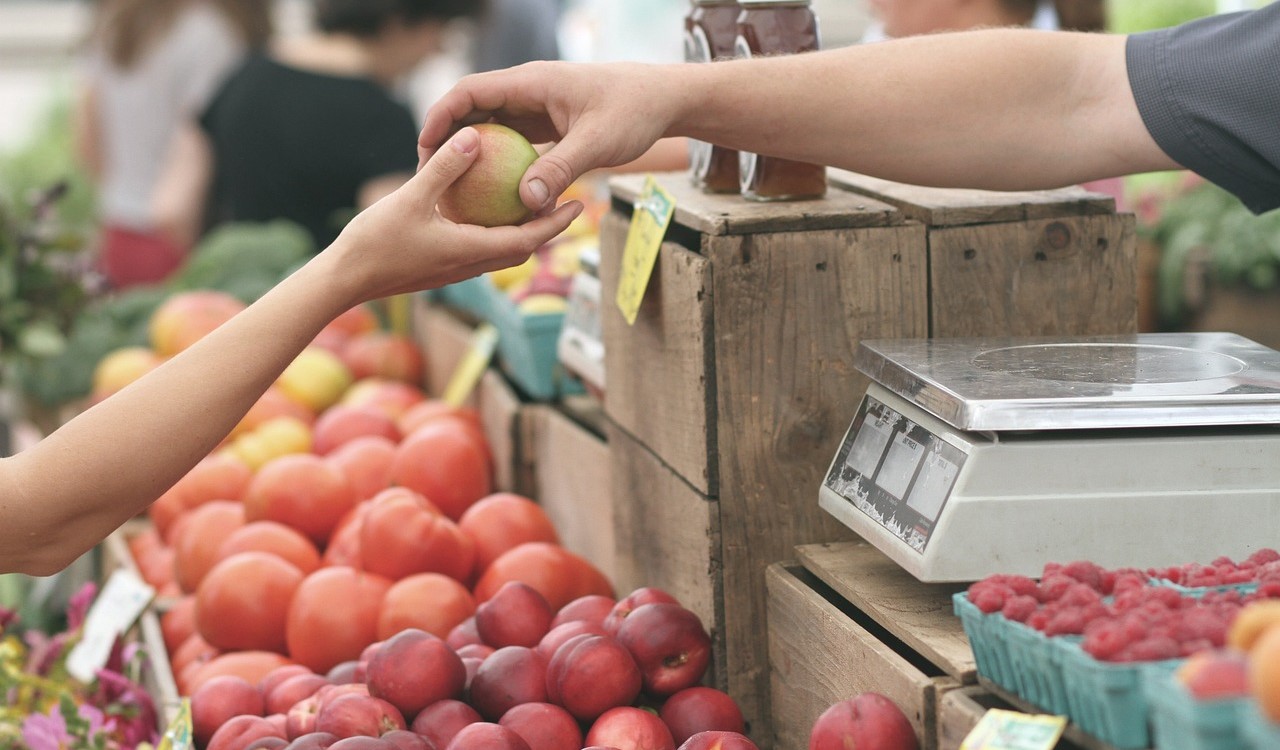
Farmers’ markets can work well for crops that customers enjoy choosing themselves: colorful vegetables, herbs, berries, flowers and other fresh products.
You may capture retail pricing, but you also become the salesperson.
Your costs include more than growing:
- Harvesting
- Washing and sorting
- Packaging
- Transport
- Stall fees
- Display materials
- Market-day labor
- Unsold produce
- Time spent selling
A crop that looks profitable at the field edge can look different after six hours standing behind a market table.
Restaurants
Restaurants may provide repeat demand for specific crops, but chefs generally care about consistency.
A chef who wants basil every Thursday needs usable basil every Thursday, not a large flush one week followed by nothing for the next three weeks.
Before planting for restaurants, ask about:
- Preferred varieties
- Pack size
- Weekly quantity
- Delivery day
- Seasonal demand
- Minimum quality
- Acceptable price range
CSA
Community Supported Agriculture can provide a planned outlet for a range of crops rather than requiring one crop to carry the entire farm.
SARE describes CSA as a system where customers generally purchase a share or subscription connected to the farm’s seasonal production.
CSA works particularly well with crop diversity, but it also requires careful succession planning so boxes stay useful and reasonably varied.
Wholesale
Wholesale usually means moving more product through fewer sales transactions, but that does not automatically make it easier.
SARE notes that direct and wholesale markets can have different labor requirements: direct-market farms may need more sales labor, while wholesale operations can place greater demands on production and harvest labor. (SARE)
Wholesale buyers may also expect specific:
- Package sizes
- Grades
- Volumes
- Delivery schedules
- Food-safety practices
- Cooling and storage conditions
Market Rule: Do not compare only selling prices. Compare what it costs you to reach each customer.
Match the Crop to Your Climate
Once you have a possible market, come back to the farm.
What actually grows well there?
Temperature, frost dates, rainfall, humidity, growing-season length and extreme weather can narrow your options quickly.
A warm-season crop that needs a long growing season may struggle where frost comes early.
A cool-season crop may lose quality when temperatures rise.
A perennial fruit crop can require several years before meaningful harvest, which is a completely different business decision from growing greens that can be harvested within weeks.
Do not choose crops from national lists alone.
Look for production recommendations from your state or regional Cooperative Extension service, especially when evaluating planting dates, varieties, pests and production systems.
Regional advice usually tells you much more than a generic statement that a crop “likes warm weather.”
Then Look at the Soil
I would never plant a whole garden without first noticing where water collects after rain.
The same habit matters even more on a farm.
Check:
- Soil texture
- Drainage
- pH
- Organic matter
- Compaction
- Previous crop history
- Salinity where relevant
- Nutrient status
- Erosion risk
A crop may have a strong market and still be a poor fit for a badly drained field.
Before making major fertility or liming decisions, use representative soil testing rather than guessing.
BlogAgri’s Soil pH and Lime Requirement Estimator can be useful for educational planning, but actual amendment decisions should still be based on local soil-test recommendations.
Water Can Eliminate a Crop Before Price Matters
Water deserves its own decision.
Ask yourself:
How much reliable irrigation capacity do I actually have during the hottest part of the season?
Not how much water is available in spring.
Not how wet the soil looks today.
What can you reliably provide when the crop is actively growing and rainfall becomes uncertain?
A small area of consistently irrigated crop can be more manageable than a larger area planted without dependable water.
Drip irrigation can make sense in many intensive vegetable and horticultural systems, but the economics still depend on installation cost, water source, filtration, maintenance and crop value.
If irrigation capacity is limited, include that constraint when comparing enterprises rather than planting first and solving the water problem later.
Calculate How Much Labor the Crop Really Needs
Labor is where many attractive crop ideas become less attractive.
When people compare crops online, they often discuss:
price per pound
or
revenue per acre
But neither tells you how many hours somebody spent producing that pound.
Consider the entire crop cycle:
- Bed or field preparation
- Seeding or transplanting
- Irrigation setup
- Fertility management
- Weed management
- Pest and disease scouting
- Trellising or pruning
- Harvest
- Washing
- Sorting
- Packing
- Cooling
- Delivery
- Selling
Some crops need only one main harvest.
Others need picking every few days.
Some require careful hand harvesting because bruised produce becomes unsaleable.
Flowers may need frequent cutting and bouquet work. Herbs may need bunching. Tomatoes may need pruning and repeated harvest. Berries can create intense seasonal picking demand.
If you only have two people working the farm, a crop that requires six people during its harvest window is not a good fit unless seasonal labor is realistically available.
Labor Check: Count your own time. A crop does not become profitable just because the owner worked for free.
Consider the Time to First Sale
Cash crops have very different production timelines.
That matters because bills usually arrive before harvest.
A fast-growing crop may generate sales within the same season.
A perennial crop may require years of establishment before reaching useful production.
Neither is automatically better.
The question is whether the farm has enough cash flow to support the establishment period.
A useful small-farm mix may include:
- Quick-turn crops for regular seasonal cash flow
- Medium-duration field crops
- A smaller area of longer-term perennial crops
That can be more manageable than investing everything in one enterprise that will not produce saleable output for several years.
USDA’s National Agricultural Library presents diversification as one strategy for spreading farm risk across more than one enterprise.
Do Not Forget Postharvest Life
I find this one especially important because harvest feels like the finish line when you are growing for yourself.
Commercially, harvest is often only halfway to the customer.
Suppose you harvest a beautiful crop.
Now ask:
How long do I have to sell it?
A storage crop and a highly perishable crop create very different businesses.
Think about:
- Washing
- Drying
- Cooling
- Refrigeration
- Curing
- Sorting
- Packaging
- Storage
- Transport
- Shelf life
Garlic, for example, can be cured and marketed over a longer period than delicate leafy greens.
That flexibility can matter enormously to a small farm.
Highly perishable products may provide good revenue but leave very little room for slow sales.
Infrastructure Changes the Economics
A crop might require more than land and seed.
Depending on the enterprise, you may need:
- Greenhouse or high tunnel
- Indoor growing room
- Germination space
- Irrigation system
- Trellising
- Harvest bins
- Wash station
- Cooler
- Delivery vehicle
- Dry storage
- Packaging equipment
- Specialty cultivation equipment
There is nothing wrong with investing in infrastructure when the numbers support it.
The mistake is counting crop revenue without counting the infrastructure used to produce it.
If you are considering protected production, BlogAgri’s Controlled Environment Farming guide discusses the benefits alongside energy, infrastructure and operating risks rather than treating controlled production as automatic profit.
Build an Enterprise Budget Before Planting Commercially
This is where I would slow down and get a pencil, spreadsheet or calculator.
An enterprise budget estimates the receipts and costs associated with producing a particular agricultural product. Penn State Extension recommends enterprise budgeting when comparing possible farm enterprises and emphasizes adjusting sample budgets to match the individual farm. (Penn State Extension)
Start with the costs you expect to incur.
Variable costs
These may include:
- Seed
- Transplants
- Fertilizer
- Compost or amendments
- Crop-protection inputs
- Irrigation
- Mulch
- Stakes and trellising
- Harvest supplies
- Packaging
- Fuel
- Hired labor
- Market fees
- Delivery
Fixed and ownership costs
Depending on what you are comparing, these may include:
- Land
- Machinery ownership
- Buildings
- High tunnels
- Refrigeration
- Insurance
- Depreciation
- Utilities
- General farm overhead
Then estimate saleable yield, not perfect biological yield.
Some harvest may be:
- Damaged
- Misshapen
- Too small
- Overripe
- Pest-damaged
- Lost during packing
- Unsold
That loss belongs in the calculation.
BlogAgri’s Crop Production Cost Calculator helps organize seed, fertilizer, crop protection, irrigation, machinery, labor and fixed costs.
Once you have your expected revenue and costs, use the Farm Profit Calculator to compare them.
Calculate Your Break-Even Price
This may be the most useful number in the whole exercise.
The basic relationship is:
Break-even price = total relevant cost ÷ expected saleable output
Suppose you expect total production and marketing costs of $6,000 and expect to sell 3,000 pounds of produce.
Your simple break-even selling price is:
$6,000 ÷ 3,000 = $2 per pound
If the realistic local wholesale price is only $1.40 per pound, growing more of the crop will not solve the problem.
You either need:
- Lower costs
- Higher saleable yield
- A different market
- A higher-value form of the product
- Or a different enterprise
BlogAgri’s Farm Break-Even Price Calculator calculates the minimum average selling price needed to cover the costs included in the analysis.
There is also a Break-Even Yield Calculator if you know your expected market price and want to estimate how much saleable production is required to cover costs.
Before You Plant: If the crop only works financially when you assume perfect yield, zero waste and top retail price for every pound, the plan needs another look.
A Simple Cash-Crop Scorecard
Instead of asking, “Which crop makes the most money?”, score each crop against your own farm.
Use 1 for poor fit, 3 for reasonable and 5 for strong.
| Factor | Crop A | Crop B | Crop C |
|---|---|---|---|
| Confirmed local demand | /5 | /5 | /5 |
| Climate fit | /5 | /5 | /5 |
| Soil fit | /5 | /5 | /5 |
| Water availability | /5 | /5 | /5 |
| Labor fit | /5 | /5 | /5 |
| Equipment already available | /5 | /5 | /5 |
| Storage/postharvest fit | /5 | /5 | /5 |
| Time to first sale | /5 | /5 | /5 |
| Market-channel fit | /5 | /5 | /5 |
| Manageable financial risk | /5 | /5 | /5 |
| Total | /50 | /50 | /50 |
This is not a scientific profitability formula.
It is simply a practical way to stop one exciting number—such as selling price—from controlling the entire decision.
Cash Crop Examples by Farm Situation
This is where this guide differs from our article on profitable crops for small farms.
I am not ranking these crops.
Instead, think of them as examples worth investigating under particular farm conditions.
Very small growing area
Possible enterprises to investigate include:
- Microgreens
- Culinary herbs
- Seedlings
- Edible flowers
- Specialty mushrooms
These can make efficient use of space, but labor and market access can become more important than acreage.
For an indoor enterprise, BlogAgri’s Mushroom Farming for Beginners provides a useful starting point for understanding mushroom production systems.
Small market garden with direct customers
Possible crops include:
- Salad greens
- Tomatoes
- Peppers
- Cucumbers
- Fresh herbs
- Garlic
- Cut flowers
The advantage here is often not one special crop. It is the ability to offer several useful products to the same customer.
Someone visiting your farm stand for tomatoes may also buy basil, garlic or flowers.
Farm with protected growing space
A greenhouse or high tunnel may open possibilities such as:
- Tomatoes
- Cucumbers
- Herbs
- Greens
- Transplants
But protected production adds infrastructure and management costs.
See BlogAgri’s Hydroponic Farming guide if you are comparing soil-based and soilless protected systems.
Farm with storage space
Storage or curing capacity can make crops such as garlic, onions and some winter squash worth investigating because the entire harvest does not necessarily need to leave the farm immediately.
But storage losses and storage costs still belong in the enterprise budget.
Farm with established local food customers
If you already operate a CSA, farmers’ market stand or farm shop, adding a crop is easier to test because you already have a customer base.
That is very different from starting a completely new crop and building a completely new market at the same time.
For broader diversification beyond crops, BlogAgri’s Small Farm Income Ideas covers vegetables, herbs, flowers, seedlings, eggs, mushrooms and other small-farm income streams.
Start With a Trial Plot
One of the safest ways to evaluate a new cash crop is to grow enough to learn, but not enough to create a disaster if it fails.
Start with a small block or bed.
Track:
- Planting date
- Seed or plant cost
- Labor hours
- Irrigation
- Fertility
- Pest problems
- Harvest date
- Total harvest
- Saleable harvest
- Selling price
- Unsold quantity
- Packaging cost
- Delivery cost
- Customer feedback
At the end of the season, you will know far more than you did after reading twenty articles about the crop.
You might discover that the plant grows beautifully but nobody buys enough of it.
Or the opposite: customers may keep asking for more.
That is when expansion becomes an evidence-based decision rather than a guess.
Diversify Without Growing Everything
Diversification can spread production and market risk, and USDA’s small-farm resources explicitly discuss alternative enterprises as one way to avoid depending entirely on a single activity.
But diversification has limits.
Twenty crops can also mean:
- Twenty planting schedules
- Different fertility requirements
- Different pests
- Different harvest methods
- More seed inventory
- More packing standards
- More record keeping
There is a difference between diversification and trying to grow everything.
For a beginner, three well-managed crops with clear buyers may be better than fifteen crops planted without a plan.
Use Crop Rotation as a Production Tool, Not a Profit Promise
The old version of this article made crop rotation sound as though it automatically increased profits.
That is too simple.
Rotation is primarily a production-management decision.
A well-designed rotation can help farmers manage soil fertility, pests, diseases and weeds depending on the crops and system involved. But the correct rotation is specific to the farm.
Do not rotate crops randomly just for the sake of changing fields.
Consider:
- Crop family
- Disease history
- Nutrient demands
- Cover crops
- Weed pressure
- Field access
- Planting and harvest dates
BlogAgri’s guide to Crop Intensification also discusses succession planting, intercropping, cover crops and other ways small farmers can use limited land more deliberately.
Do Not Build the Plan Around a “Premium”
You may sometimes see articles recommending a crop because it sells for a premium.
Be careful with that word.
A premium is not guaranteed.
A specialty tomato may receive a higher price from one chef but no additional value at a wholesale market.
Locally grown produce may matter greatly to one customer and very little to another.
Even direct marketing, where the farmer can retain more control over pricing, adds sales and customer-service work.
SARE advises researching the market and developing buyer relationships as part of crop-diversification planning.
Your budget should use a realistic price you have reason to expect, not the highest price you can find online.
Check Regulations Before You Invest
Rules can vary depending on:
- Crop
- Location
- Market
- Processing
- Packaging
- Certification claims
- Pesticide use
- Food-safety requirements
- Direct versus wholesale sales
Fresh produce sold at a roadside stand may face different requirements from packaged, processed or value-added food products.
Before making a large investment, check your state agriculture department, local authorities and relevant federal guidance.
This is especially important if you plan to process crops into products such as sauces, jams, pickles or dried foods.
Do not assume that growing the ingredient automatically allows you to process and sell any product made from it.
Common Cash-Crop Mistakes on Small Farms
Planting because a crop is trending
Trends can disappear before your crop is ready.
Buyers matter more than headlines.
Assuming high revenue means high profit
A crop with high gross sales can also carry high labor, infrastructure and marketing costs.
Ignoring unsold produce
A harvest only becomes revenue when somebody pays for it.
Unsold product should be part of your planning.
Treating family labor as free
Your time has value.
Track it even if you do not initially draw a wage from the farm.
Expanding too quickly
A successful 500-square-foot trial does not automatically mean you should plant five acres next season.
Scaling changes labor, equipment, storage and marketing requirements.
Depending on one buyer
A reliable restaurant can be valuable, but losing one customer should not leave the entire crop without a market.
Copying another farmer’s numbers
Land cost, labor, climate, yield and selling price vary.
Penn State Extension specifically recommends adapting enterprise budgets using the farmer’s own costs rather than treating sample figures as universal.
A Practical Example: Choosing Between Three Crops
Suppose a small grower has one acre, basic irrigation and access to a Saturday farmers’ market.
They are considering:
Garlic
Fresh basil
Strawberries
Instead of asking which has the highest selling price, they compare the whole enterprise.
Garlic occupies the ground for a long period but can be cured and sold over time.
Basil can begin generating saleable leaves relatively quickly but needs repeated harvest and has limited postharvest life.
Strawberries may have strong direct-market appeal but can create substantial harvest labor during fruiting.
Now the decision becomes useful.
If the grower has limited weekly labor but good curing/storage space, garlic might deserve a larger trial.
If several restaurants have already requested weekly basil deliveries, basil becomes more attractive.
If the farm already has families visiting for direct sales, strawberries might fit the marketing model better.
None is universally “best.”
The farm determines the answer.
When Should You Drop a Cash Crop?
Sometimes the smartest farming decision is to stop growing something.
Review the enterprise after each season.
Consider dropping, reducing or changing a crop when:
- Saleable yield remains poor
- Labor demand is unreasonable
- Customers consistently choose alternatives
- The break-even price exceeds realistic market prices
- Disease pressure remains severe
- Water requirements exceed capacity
- Too much harvest goes unsold
- Another enterprise uses the same space more effectively
Do not keep a crop simply because you have already invested time in learning it.
Good farm management includes knowing when an enterprise no longer earns its place.
FAQs About Cash Crops for Small Farms
What is a cash crop?
A cash crop is grown primarily for sale. On a small farm, the best cash-crop choice depends on local buyers, climate, soil, water, labor, production costs and the intended market.
What is the best cash crop for a small farm?
There is no single best crop. A strong choice is one that grows reliably on your farm and can be sold through an identified market at a price that covers production and marketing costs.
Are cash crops the same as profitable crops?
Not exactly. A crop can be grown for cash and still lose money. Profit depends on revenue and the costs required to produce, harvest and sell the crop.
What cash crops work on a small amount of land?
Microgreens, herbs, flowers, specialty mushrooms and intensive vegetables are examples worth investigating where land is limited. Their viability still depends on labor, infrastructure and buyer access.
Should I find customers before planting?
For commercial production, yes. SARE specifically recommends researching the market before planting when evaluating diversified crop enterprises.
How do I know whether a cash crop will be profitable?
Create an enterprise budget, estimate saleable yield, use a realistic expected selling price and calculate your break-even price. Include labor, packaging and marketing costs rather than seed and fertilizer alone.
Should a small farm grow only one cash crop?
Not necessarily. Diversification can spread risk, but too many enterprises can also make the farm difficult to manage. The right level depends on labor, equipment, markets and production skills.
Where can I find buyers for cash crops?
Potential channels include farmers’ markets, CSAs, restaurants, retailers, food hubs and other direct or wholesale outlets. USDA AMS maintains Local Food Directories that can help identify some local-market infrastructure.
Final Thoughts
Choosing a cash crop starts long before planting day.
Walk the field. Check the soil. Think about your water. Be realistic about labor.
Then go and talk to buyers.
When you return to the farm, build the numbers with the price those buyers actually discussed—not the price from somebody else’s success story.
Start with a small planting, keep records and see what survives both the growing season and the marketplace.
That is a much more dependable way to choose cash crops than chasing whichever crop happens to be called the next big opportunity.
Sources and Further Reading
- USDA National Agricultural Library — Alternative Crops and Enterprises for Small Farm Diversification — diversification and alternative-enterprise resources.
- USDA Agricultural Marketing Service — Local Food Directories — farmers’ markets, CSAs and local-market resources.
- SARE — Marketing Strategies and Profit Potential — market research, buyer relationships and marketing plans.
- SARE — Farm to Table: Building Local and Regional Food Systems — CSA, farmers’ markets, food hubs and institutional markets.
- Penn State Extension — Budgeting for Agricultural Decision Making — enterprise-budget principles.
- Penn State Extension — Starting a New Agricultural Business — comparing possible agricultural enterprises using budgets.
For specific enterprise examples, compare our 10 high-value crops, costs, markets and risks.

[…] For a step-by-step selection framework, read how to choose a cash crop for your farm. […]