Email: blogagri2@gmail.com
Aquaponics for Beginners: Build Your First System
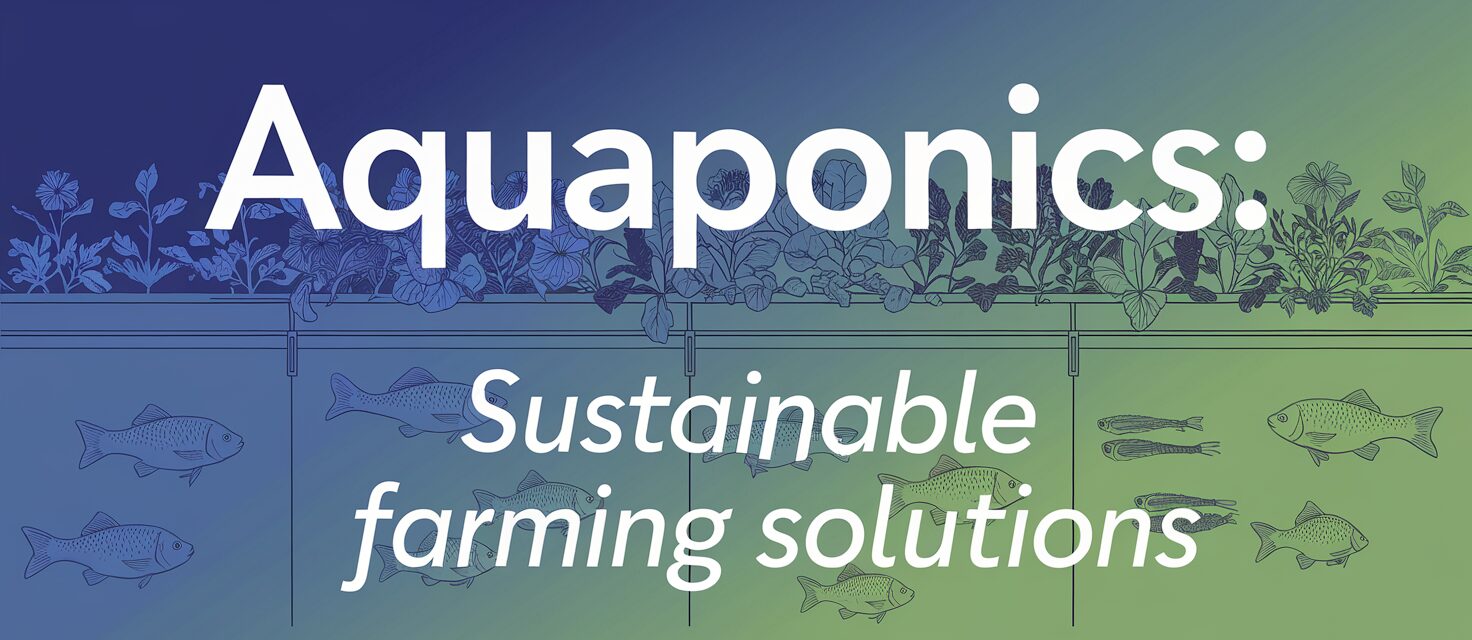
Aquaponics combines fish farming with soil-free plant production in one recirculating system. Fish release waste, beneficial bacteria convert that waste into plant-available nutrients, and plant roots help clean the water before it returns to the fish tank. A successful beginner system depends on water testing, aeration, balanced stocking, and daily observation.
Aquaponics may look like a self-running ecosystem, but it still needs regular management. Fish must be fed, pumps must keep working, water quality must be tested, and plants must receive enough light and nutrients.
The best way to begin is with a small, simple system that is easy to inspect and repair. Starting with too many fish, complicated plumbing, or demanding fruiting crops can turn a useful learning project into an expensive problem.
What Is Aquaponics?
Aquaponics is a food-production method that combines:
- Aquaculture, which means raising fish or other aquatic animals
- Hydroponics, which means growing plants without soil
- Biological filtration, in which microorganisms convert fish waste into forms that plants can use
The fish, plants, and microorganisms depend on one another, but the system is not completely closed. It still requires fish feed, electricity, oxygen, light, water replacement, testing, and occasional nutrient correction.
The Food and Agriculture Organization’s aquaponics manual describes fish, plants, and beneficial bacteria as the three main living components of an aquaponic system. All three must remain healthy for the unit to stay balanced.
Aquaponics is part of the wider group of soil-free growing methods. Readers comparing different systems can also explore BlogAgri’s guide to aeroponic farming systems.
How Does Aquaponics Work?
The basic process is called the nitrogen cycle.
- Fish eat feed and release waste into the water.
- Waste and uneaten feed contribute ammonia.
- Beneficial nitrifying microorganisms convert ammonia into nitrite and then nitrate.
- Plants absorb nitrate and other dissolved nutrients through their roots.
- Water passes through the growing area and returns to the fish tank.
Ammonia and nitrite can become dangerous to fish when they accumulate. Nitrate is generally less toxic at moderate levels and serves as an important nitrogen source for plants.
This conversion does not happen immediately in a new system. The biofilter or growing media must first develop a sufficient population of beneficial microorganisms.
Agricultural Insight: Plants do not simply absorb fresh fish waste. Microorganisms must first process much of the nitrogen into forms that plants can use more effectively.
Is Aquaponics Suitable for You?
Aquaponics can work well for home gardeners, schools, small farms, urban growers, and research projects. It may be unsuitable for someone who cannot check the system daily.
Use this table before buying equipment.
| Question | Ready to begin | Warning sign |
|---|---|---|
| Can you check the system daily? | Someone is available every day | System may be unattended for several days |
| Is electricity reliable? | Reliable supply with backup aeration | Frequent outages with no backup |
| Can you test water? | Test kit and record sheet available | No plan to monitor ammonia, nitrite, or pH |
| Is the location suitable? | Level, shaded, accessible, and protected | Full heat exposure or unstable ground |
| Are suitable fish legal locally? | Species and permits confirmed | Fish selected only from an online list |
| Is the water source suitable? | Water source has been checked | Chlorine, chloramine, salt, or contaminants unknown |
| Can you manage fish welfare? | Feeding, aeration, and health plan prepared | Plants are treated as the only priority |
| Do you understand the market? | Home use or buyer identified | Commercial system planned without customers |
A small hobby system can be a useful way to learn. A commercial aquaponics business involves a much higher level of technical, financial, food-safety, and market planning.
Important: Do not begin with a commercial-scale system only because aquaponics is described as sustainable or profitable. First operate a smaller unit through different seasons and record its real costs and failures.
Main Types of Aquaponic Systems
The three common aquaponic growing methods are media beds, deep water culture, and nutrient film technique.
Media Bed Aquaponics
A media bed is filled with an inert material such as expanded clay, washed gravel, or another aquaponics-safe medium.
Water from the fish tank enters the bed and later drains back into the system. The media supports plant roots and provides surface area for beneficial microorganisms.
Media beds are often the most practical choice for beginners because they can combine plant support, biological filtration, and some solids capture.
Advantages include:
- Relatively simple construction
- Support for many plant types
- Large area for beneficial microorganisms
- Easier access to plant roots
- Suitability for small backyard systems
Possible problems include:
- Clogged media
- Uneven water distribution
- Accumulated fish solids
- Heavy grow beds
- Difficult cleaning if the design is poor
Deep Water Culture
Deep water culture, also called raft culture, uses floating boards or plant supports above a channel of nutrient-rich water. Plant roots hang directly into the water.
This method is commonly used for leafy vegetables such as lettuce.
It requires:
- Strong aeration
- Effective solids removal
- Stable water movement
- Suitable raft materials
- Careful root-zone management
Deep water culture can be productive, but beginners should not assume that a larger volume of water removes the need for filtration and monitoring.
Nutrient Film Technique
Nutrient film technique uses narrow channels through which a shallow layer of water flows past plant roots.
NFT systems can work well for small leafy crops and herbs, but channels may clog with roots or solids. Pump failure can also expose roots to drying more quickly than in some other systems.
Aquaponics System Comparison
| System type | Best suited to | Main strength | Main beginner risk |
|---|---|---|---|
| Media bed | Mixed herbs and vegetables | Simple and flexible | Clogging and excessive solids |
| Deep water culture | Lettuce and leafy greens | Stable root access to water | Low oxygen or poor filtration |
| Nutrient film technique | Small herbs and leafy crops | Efficient use of space | Blocked channels or pump failure |
| Hybrid system | Experienced growers | Greater crop flexibility | More plumbing and management |
For most beginners, a small media-bed system is easier to understand and troubleshoot than a complex hybrid design.
Equipment Needed for a Beginner Aquaponics System
The exact equipment depends on system size and design, but most units need the following components.
Fish Tank
The tank must be:
- Strong enough to hold the full water weight
- Made from fish-safe material
- Easy to clean and inspect
- Protected from overheating
- Large enough for the selected fish
- Positioned on a stable and level base
Avoid containers that previously held fuel, pesticides, industrial chemicals, or unknown substances.
Grow Bed or Plant Channel
The growing area must support the selected plants and allow water to return safely to the tank.
A grow bed filled with wet media becomes very heavy. The frame and floor must support the full load, not only the empty container.
Water Pump
The water pump moves water through the fish tank, filters, and growing area.
Choose a pump according to:
- Total system volume
- Required water movement
- Vertical lifting height
- Pipe resistance
- Solids load
- Continuous operating ability
Do not select a pump only from its advertised maximum flow. Flow normally decreases as water is lifted through pipes and fittings.
Air Pump and Air Stones
Fish, roots, and beneficial microorganisms all use oxygen.
An air pump should continue supplying oxygen even if normal water movement is reduced. A backup air source is particularly important in warm weather or heavily stocked systems.
Oklahoma State University warns that recirculating aquaculture and aquaponic systems can be highly vulnerable to power failures, blocked pipes, and sudden water-quality problems.
Mechanical and Biological Filtration
Mechanical filtration removes or collects larger solid particles.
Biological filtration provides surfaces where nitrifying microorganisms can live. In some small media-bed systems, the growing media performs part of this role. Larger or more heavily stocked systems usually require more deliberate solids and biofilter management.
Plumbing
Use plumbing materials that are safe for fish and food-production systems.
The design should include:
- Accessible valves
- Removable pipes where possible
- Overflow protection
- Screens that prevent fish entry
- Easy-to-clean drains
- Protection against back-siphoning
- Safe return of water to the tank
Water-Testing Equipment
A basic freshwater test kit should measure:
- pH
- Ammonia
- Nitrite
- Nitrate
A thermometer is also essential. A dissolved-oxygen meter is useful, particularly for larger or heavily stocked systems.
Light and Climate Protection
Outdoor systems need suitable sunlight but may also require shade during hot weather.
Indoor systems need:
- Appropriate plant lighting
- Ventilation
- Humidity control
- Electrical safety
- Protection against water spills
- Sufficient room for maintenance
Safety Note: Water and electricity are a dangerous combination. Use outdoor-rated or moisture-appropriate electrical equipment, protected connections, drip loops, and locally compliant ground-fault protection.
How to Build a Beginner Aquaponics System
1. Choose a Suitable Location
Place the system where it can be checked easily every day.
A useful location should have:
- A strong, level base
- Access to water
- Safe electrical access
- Enough plant light
- Protection from severe weather
- Drainage for spills
- Space around tanks and filters
- Protection from children and animals
Do not place the system where a leaking tank could damage electrical equipment, building foundations, or stored materials.
2. Decide What You Want to Produce
Choose whether the main purpose is:
- Learning
- Home vegetable production
- Ornamental fish
- Edible fish
- School demonstration
- Seedling or herb production
- Small commercial testing
The purpose affects tank size, fish choice, plant area, filtration, lighting, and legal requirements.
A beginner who wants herbs and lettuce does not need the same design as a grower planning to harvest large food fish.
3. Assemble the Fish Tank and Growing Area
Position the tank and plant bed before filling them. Confirm that every stand and support is stable.
Install the pump, return pipes, drains, air lines, filters, and overflow protection. Keep important fittings visible and reachable.
Avoid burying permanent connections behind walls or under beds where leaks cannot be detected.
4. Test the System Without Fish
Fill the unit with suitable water and run it before adding fish.
Check for:
- Leaks
- Overflow
- Poor drainage
- Weak supports
- Excessive pump noise
- Dead zones
- Blocked outlets
- Unstable water levels
- Loss of siphon
- Backflow during a power interruption
Turn the power off deliberately and observe what happens. The tank should not overflow, drain dangerously low, or send water onto electrical connections.
Field Tip: Mark the normal operating water level on the fish tank. A changing level can help reveal evaporation, leaks, blocked pipes, or incorrect sump operation.
5. Check and Prepare the Water Source
Municipal water may contain chlorine or chloramine. Chlorine may dissipate under certain conditions, but chloramine is more persistent and generally requires proper treatment.
Do not assume that leaving all tap water overnight will remove every disinfectant. Contact the water supplier or test the water to determine which treatment is used.
Well water may contain unsuitable pH, hardness, alkalinity, iron, salt, or other dissolved substances. Rainwater may have low alkalinity or become contaminated during collection.
The Oklahoma State University small-scale aquaponics guide recommends evaluating replacement water because municipal, groundwater, and rainwater sources can present different problems.
6. Cycle the System
Cycling establishes the microorganisms that convert ammonia into nitrite and nitrate.
A fishless cycling method allows the biofilter to develop without exposing fish to the highest start-up ammonia and nitrite risks. However, the ammonia source and cycling method must be suitable for aquaponics and should not introduce detergents, perfumes, medications, or other contaminants.
During cycling:
- Keep water moving
- Maintain aeration
- Test pH
- Test ammonia
- Test nitrite
- Test nitrate
- Record results
- Avoid sudden chemical adjustments
- Be patient
Cycling often takes several weeks, but the time varies with water temperature, pH, oxygen, surface area, and the source of microorganisms.
The system is not ready simply because the water looks clear. Clear water can still contain harmful ammonia or nitrite.
The Oklahoma State University nitrification guide provides a detailed explanation of cycling, water testing, and biological filtration.
Common Mistake: Adding a full number of fish to a newly assembled system. New pipes, clean water, and new media do not contain a mature biofilter.
7. Add Plants
Leafy greens and herbs are usually easier for beginners than large fruiting crops.
Start with healthy seedlings and remove most soil from the roots before placing them into the system. Rinse carefully without damaging fine roots.
Do not introduce:
- Pesticide-treated plants without checking compatibility
- Diseased seedlings
- Root-bound plants
- Soil containing unknown chemicals
- Plants with hidden insect infestations
Add plants gradually so you can observe how the system responds.
8. Add Fish Gradually
Choose fish that fit:
- Local law
- Water temperature
- Tank size
- Oxygen supply
- Feed availability
- Intended use
- Management experience
Acclimate fish carefully to temperature and water conditions. Avoid pouring contaminated transport water into the main tank where practical.
Stock lightly during the learning period. A lightly stocked system is usually more forgiving than a crowded one.
FAO’s beginner guidance recommends avoiding overcrowding and gives approximately 20 kilograms of fish per 1,000 litres of water as a manageable upper rule of thumb for many small systems. This is not a universal stocking target. Fish species, harvest size, filtration, temperature, aeration, feed, and regulations must also be considered.
Water Quality in Aquaponics
Water quality is the link between the fish, plants, and microorganisms.
The following values are broad compromise ranges for many mixed aquaponic systems. They are not substitutes for species-specific recommendations.
| Parameter | General beginner range | Why it matters |
|---|---|---|
| pH | Approximately 6.0–7.0 | Affects fish, bacteria, and nutrient availability |
| Dissolved oxygen | Approximately 5–8 mg/L | Supports fish, roots, and nitrifying microorganisms |
| Ammonia | Below 1 mg/L | Elevated levels may stress or kill fish |
| Nitrite | Below 1 mg/L | Interferes with oxygen transport in fish |
| Nitrate | Commonly below 150 mg/L | Plant nutrient but can indicate imbalance when excessive |
| Temperature | Match fish and plant needs | Controls metabolism, oxygen demand, and growth |
These compromise ranges are adapted from Oklahoma State University’s aquaponics water-quality guidance. Species-specific safe values may be narrower, especially for cold-water fish.
Why pH Changes
Nitrification naturally tends to reduce alkalinity and can gradually lower pH.
Do not chase pH with frequent large chemical additions. Sudden changes can stress fish and harm the biological filter.
Test consistently, record the trend, and use aquaponics-safe adjustments recommended for your water conditions.
Why Dissolved Oxygen Matters
Warm water normally holds less oxygen than cool water, while fish metabolism and microbial activity can increase during warm conditions.
Low oxygen may cause:
- Fish gasping at the surface
- Fish gathering near water returns
- Reduced feeding
- Slow nitrification
- Unpleasant odours
- Root damage
- Sudden fish death
Treat loss of aeration as an urgent problem.
Best Fish for Aquaponics
There is no single best fish for every aquaponic system.
| Fish type | General water preference | Main consideration |
|---|---|---|
| Tilapia | Warm water | Hardy but restricted or regulated in some regions |
| Catfish | Warm water | Need suitable tank space, oxygen, and feed |
| Carp | Moderate to warm water | Legal and market acceptance vary |
| Trout | Cool water | Require high oxygen and tighter temperature control |
| Perch | Species-dependent | Growth and water needs differ by species |
| Goldfish or koi | Species-dependent | Useful for ornamental systems but not normally food production |
Confirm the legal status of a species before purchase. Some fish are invasive or restricted and may require permits.
Select fish from a reliable hatchery rather than collecting wild fish. Wild fish may introduce parasites, diseases, predators, or legal problems.
Climate Consideration: Choose the fish for the water temperature you can maintain economically. Heating cold outdoor water for tropical fish or cooling warm water for trout may make the system costly.
Best Plants for Aquaponics Beginners
Leafy vegetables and herbs are often the easiest starting crops.
Useful beginner options include:
- Lettuce
- Basil
- Pak choi or bok choy
- Swiss chard
- Kale
- Watercress
- Parsley
- Coriander or cilantro
- Mint
- Some Asian greens
Mint grows vigorously and may spread through channels or media. Keep its roots under control.
Fruiting Crops
Tomatoes, cucumbers, peppers, eggplants, strawberries, and similar crops may grow in aquaponics, but they usually require:
- A mature system
- Strong plant support
- More light
- Careful pruning
- Greater potassium demand
- Greater calcium demand
- Pollination
- Better solids and root management
A system that grows lettuce well may not automatically support heavy tomato production.
Root Crops
Carrots, potatoes, radishes, and other root crops are not ideal for every aquaponic design. They may become misshapen in coarse media and cannot develop normally in narrow NFT channels.
Media beds offer more possibilities, but variety and bed depth matter.
Feeding Fish Correctly
Fish feed is the main nutrient input in many aquaponic systems.
Use a complete feed suitable for:
- Fish species
- Fish size
- Water temperature
- Production goal
Feed only what the fish can consume within a reasonable period. Remove uneaten feed and reduce the next feeding if food remains.
FAO advises checking for leftover feed after approximately 30 minutes because decaying food consumes oxygen and can harm water quality.
Do not increase feed only because plants look pale. Pale plants may result from poor light, incorrect pH, root disease, temperature stress, iron deficiency, or another imbalance.
Daily, Weekly, and Monthly Maintenance
| Frequency | Main tasks |
|---|---|
| Daily | Check fish behaviour, feeding, pumps, air, water flow, leaks, and plant wilting |
| Several times weekly | Check temperature and remove uneaten feed or dead plant material |
| Weekly | Test pH, ammonia, nitrite, and nitrate during normal operation |
| Weekly | Inspect roots, filters, pipes, and tank surfaces |
| As needed | Top up with suitable, temperature-compatible water |
| Monthly | Inspect pumps, air stones, fittings, electrical protection, and backup equipment |
| Each crop cycle | Remove old roots, clean accessible channels, and update records |
| Each season | Review heating, cooling, shade, energy use, and fish stocking |
During cycling, illness, hot weather, or unexplained fish behaviour, test water more frequently.
Keep a record of:
- Date
- Water temperature
- pH
- Ammonia
- Nitrite
- Nitrate
- Fish feed
- Fish losses
- Plant growth
- Water added
- Corrective action
Records make it easier to identify changes before they become emergencies.
Common Aquaponics Problems and Solutions
| Problem | Possible cause | First checks |
|---|---|---|
| Fish gasping at surface | Low oxygen, pump failure, high temperature | Check air pump, water movement, temperature, and crowding |
| Rising ammonia | New biofilter, overfeeding, excess fish, dead fish | Reduce feeding, check filtration, aeration, and test accuracy |
| Rising nitrite | Incomplete cycling or damaged biofilter | Check pH, oxygen, temperature, and recent chemical use |
| Pale new leaves | Iron unavailability, high pH, weak roots | Test pH and inspect roots before supplementing |
| Slow plant growth | Too few nutrients, weak light, unsuitable temperature | Check feed input, light, pH, roots, and plant choice |
| Cloudy or bad-smelling water | Excess solids, dead material, overfeeding | Inspect tank bottom, filter, feed rate, and water flow |
| Wilting plants | Pump failure, blocked channel, root damage | Check water delivery and root condition |
| Sudden fish deaths | Oxygen failure, toxic water, temperature shock, disease | Test water immediately and seek specialist help |
| Algae growth | Excess light and available nutrients | Shade water surfaces and remove accumulated algae |
| Clogged pipes | Roots, solids, snails, or fish entry | Isolate flow safely and inspect accessible fittings |
Do not add several treatments at the same time. One change may hide the real cause or create another problem.
Pest and Disease Management
Aquaponic crop protection requires special care because a product applied to plants may enter the water and harm fish or beneficial microorganisms.
Oklahoma State University advises using nonchemical integrated pest-management methods because many pesticides and fish treatments can threaten other organisms in the shared system.
Useful approaches include:
- Inspecting new seedlings
- Removing heavily infested leaves
- Using insect screens
- Installing sticky monitoring cards
- Improving airflow
- Cleaning tools
- Controlling weeds around the system
- Introducing suitable beneficial insects
- Separating infected plants
- Using resistant varieties
Never assume a product is aquaponics-safe because it is described as natural or organic.
Safety Note: Use only treatments specifically permitted for the crop, fish species, production system, and country. Confirm whether treated fish or plants require a withdrawal period before harvest.
Aquaponics Food Safety
Aquaponic produce should be handled as carefully as produce from any other growing system.
Good practices include:
- Washing hands before harvest
- Keeping harvest containers clean
- Preventing tank water from splashing onto edible leaves
- Excluding pets and wild animals
- Removing dead fish promptly
- Keeping fish-processing areas separate from vegetables
- Cleaning tools and food-contact surfaces
- Using clean water for post-harvest washing
- Refrigerating perishable produce promptly
The FDA advises washing fresh produce under running water before eating and keeping it separate from raw meat and seafood during handling.
Commercial growers should confirm local produce-safety, aquaculture, food-processing, wastewater, building, and zoning requirements before selling fish or vegetables.
Can Aquaponics Save Water?
Aquaponics recirculates water rather than applying it once and allowing most of it to leave the growing area.
Water is still lost through:
- Plant transpiration
- Surface evaporation
- Harvested plant tissue
- Fish harvest
- Filter cleaning
- Leaks
- Splashes
- Necessary water replacement
Oklahoma State University estimates that small aquaponic systems may lose approximately 1–5% of system water each day, depending on conditions and design. Replacement water must be suitable for the fish, plants, and biofilter.
Avoid claiming that every aquaponics system uses a fixed percentage less water than field farming. Water savings depend on crop, climate, comparison method, system design, leakage, cleaning, and energy use.
Aquaponics Costs and Profitability
A small system may provide vegetables, fish, education, or personal enjoyment. That does not automatically make it financially profitable.
Typical costs include:
| Cost category | Estimated amount |
|---|---|
| Fish tank | $_____ |
| Grow beds or channels | $_____ |
| Water and air pumps | $_____ |
| Filters | $_____ |
| Plumbing | $_____ |
| Test equipment | $_____ |
| Lighting or greenhouse protection | $_____ |
| Fish and seedlings | $_____ |
| Fish feed | $_____ |
| Electricity | $_____ |
| Heating or cooling | $_____ |
| Backup equipment | $_____ |
| Repairs and replacement parts | $_____ |
| Permits and testing | $_____ |
| Labour | $_____ |
| Total expected cost | $_____ |
Commercial returns depend on:
- Local vegetable prices
- Fish prices
- Crop quality
- Survival rate
- Energy cost
- Labour efficiency
- Building cost
- Production consistency
- Market access
- Food-safety compliance
- Customer demand
Oklahoma State University recommends considerable caution before making a large aquaponics investment because systems require close daily attention and reliable evidence on commercial profitability remains limited.
Growers comparing aquaponics with other enterprises can review BlogAgri’s guide to small farm income ideas before committing substantial money.
Important: Calculate profit after including electricity, fish losses, replacement pumps, water testing, labour, marketing, heating, and cooling. Do not calculate returns from crop sales alone.
Sustainable Aquaponics Management
Aquaponics can reduce soil use and recycle water, but sustainability depends on how the system is managed.
Consider:
- Source of electricity
- Fish-feed ingredients
- Water source
- Heating and cooling demand
- Local fish suitability
- Material lifespan
- Plastic replacement
- Waste handling
- Distance to customers
- Fish welfare
- Marketable crop percentage
A system using large amounts of electricity to maintain unsuitable fish and crops may not be more sustainable than a well-managed local soil-based system.
Aquaponics is one option within sustainable production. BlogAgri’s guide to crop intensification explains other ways growers can increase production while considering land, water, soil, and long-term management.
Common Aquaponics Mistakes
Adding Fish Before Cycling
A new system may not contain enough nitrifying microorganisms to process fish waste safely.
Starting With Too Many Fish
Crowding increases oxygen demand, waste production, stress, disease risk, and sensitivity to equipment failure.
Ignoring Backup Aeration
Fish can die quickly when pumps stop, especially in warm or heavily stocked systems.
Overfeeding
Uneaten feed decomposes, consumes oxygen, and increases ammonia and solids.
Testing Only pH
Normal pH does not prove that ammonia, nitrite, oxygen, and temperature are safe.
Using Unsafe Containers
Recycled containers may retain harmful chemicals even after washing.
Applying Garden Pesticides
Products that are acceptable in soil gardening may kill fish or damage the biofilter.
Growing Demanding Crops Too Early
Large fruiting crops may struggle in a young or lightly stocked system.
Changing Water Chemistry Too Quickly
Rapid pH or temperature changes can stress fish and microorganisms.
Expanding Before Understanding the First System
A larger unit multiplies plumbing, energy, feeding, filtration, market, and emergency-management problems.
When Aquaponics May Not Be a Good Choice
Reconsider or delay the project when:
- Electricity is unreliable and no backup is available
- Water quality is unknown
- The system cannot be checked every day
- The local climate requires expensive heating or cooling
- Suitable fish are unavailable or illegal
- Veterinary or aquaculture support is unavailable
- The budget does not include testing and backup equipment
- The only goal is guaranteed profit
- The location cannot safely support the water weight
- No market has been tested for commercial production
Starting later with a safer design is better than rushing into a system that puts fish, plants, property, or finances at risk.
Frequently Asked Questions
What is aquaponics in simple words?
Aquaponics is a growing system that combines fish farming with soil-free plant production. Fish waste contributes nutrients, beneficial microorganisms convert the waste into plant-available forms, and plant roots help remove nutrients from the water before it returns to the fish tank.
Is aquaponics easy for beginners?
A small media-bed system can be manageable for a careful beginner, but aquaponics is not maintenance-free. Beginners must understand water testing, fish feeding, pumps, aeration, biological filtration, plant care, and emergency response. Starting with fewer fish and simple crops makes learning safer.
How long does an aquaponics system take to cycle?
Cycling commonly takes several weeks, but there is no fixed universal period. Water temperature, pH, oxygen, biofilter surface area, and the source of beneficial microorganisms affect the process. Test ammonia, nitrite, and nitrate rather than deciding readiness by time alone.
What is the best aquaponics system for beginners?
A small media-bed system is often the easiest beginner option because the growing media supports plants and provides surface area for beneficial microorganisms. It is also easier to inspect than many complex channel or raft systems. The design must still include aeration, safe plumbing, and water testing.
Which plants grow best in beginner aquaponics?
Lettuce, basil, pak choi, Swiss chard, kale, parsley, coriander, and other leafy greens are useful starting crops. Tomatoes, cucumbers, peppers, and strawberries are more demanding and usually perform better after the system has matured and nutrient management is better understood.
Which fish are best for aquaponics?
The best fish depend on local law, water temperature, tank size, oxygen, feed, and intended use. Tilapia, catfish, carp, trout, perch, goldfish, and koi are used in different systems. Confirm species legality and local production guidance before buying fish.
Can aquaponics work without electricity?
Most productive aquaponic systems depend on electricity for water circulation, aeration, heating, cooling, or lighting. A power failure can quickly reduce dissolved oxygen. Systems should therefore include backup aeration or another emergency plan suitable for their fish load and climate.
Do aquaponic systems need water changes?
Well-balanced systems recirculate most water, but water may still need to be replaced because of evaporation, transpiration, filter cleaning, salt buildup, contamination, or water-quality emergencies. Replacement water should be treated and matched to the system’s temperature and chemistry.
Can pesticides be used in aquaponics?
Many garden pesticides can harm fish, plant roots, or beneficial microorganisms. Use prevention, insect screens, traps, sanitation, resistant varieties, and suitable biological controls. Apply a treatment only when it is legally approved and confirmed safe for the complete aquaponic system.
Is aquaponics profitable?
Aquaponics can produce valuable fish and vegetables, but profitability is not guaranteed. Returns depend on energy, labour, feed, equipment, fish survival, plant yield, market prices, heating, cooling, repairs, regulations, and customer demand. Test the business model on a small scale before expanding.
Start Small and Record What Happens
Aquaponics for beginners works best when the first goal is learning rather than maximum production.
Begin with a simple media-bed system, a conservative number of fish, easy leafy crops, reliable aeration, and a complete freshwater test kit. Record water quality, feed, growth, problems, and operating costs from the first day.
Once the system remains stable through changing weather and several crop cycles, you can decide whether adding more fish, plant area, automation, or commercial production is justified.
For more soil-free farming ideas, compare this method with BlogAgri’s guide to future aeroponic farming systems and explore other practical resources across BlogAgri.
