Email: blogagri2@gmail.com

How to Store Avocados, Freeze Them, and Keep Them Fresh

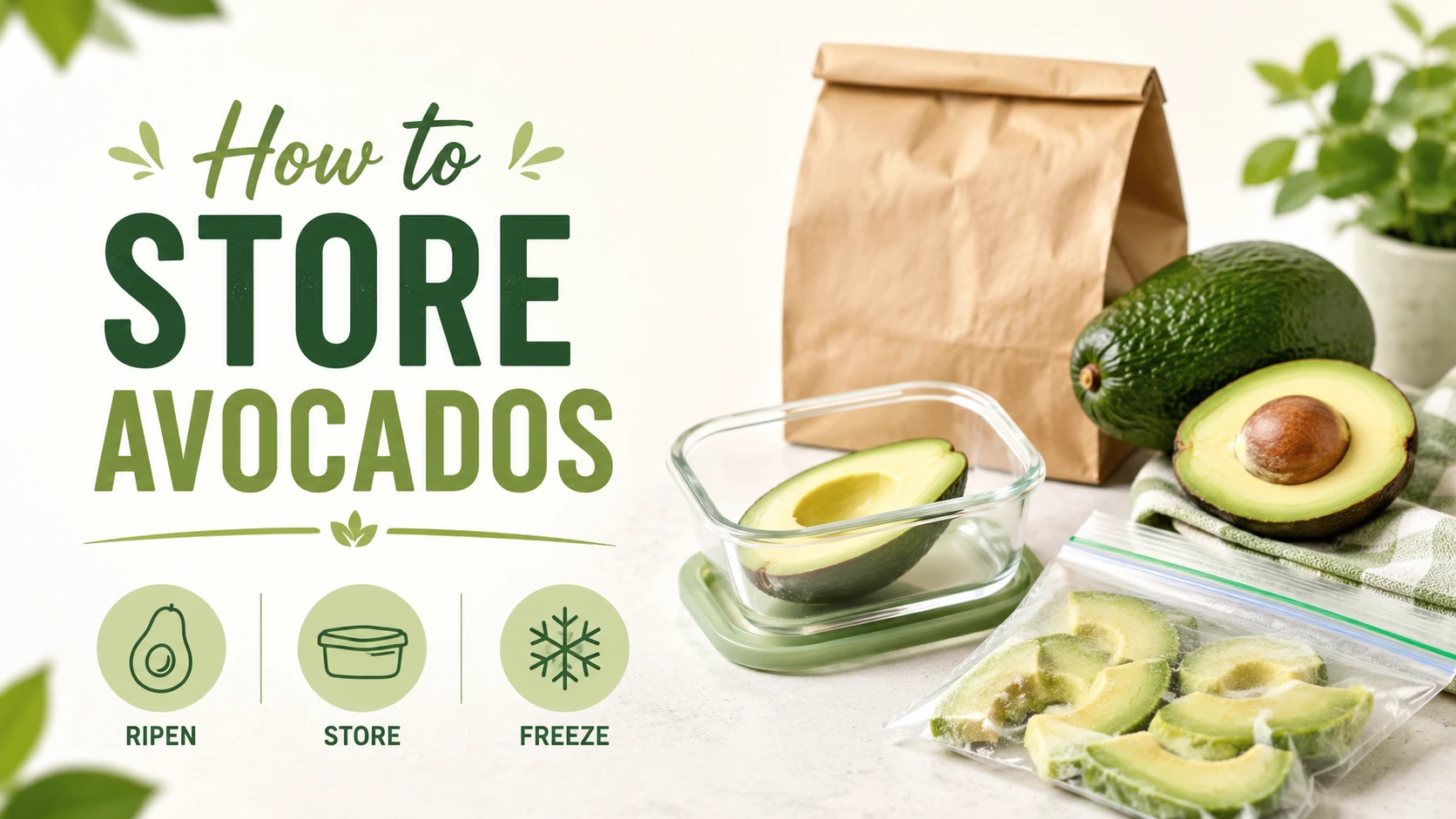
Knowing how to store avocados can prevent a hard fruit from staying unripe for too long or a perfectly ripe avocado from becoming overripe overnight.
The correct method depends on the fruit’s ripeness, whether it has been cut, and when you plan to use it. Hard avocados should normally stay on the counter. Ripe whole avocados can be refrigerated. Cut avocado needs protection from air, while extra ripe fruit can be frozen for later use.
Quick Answer
Keep hard avocados at room temperature until they begin to soften. Refrigerate ripe whole avocados to slow further ripening. Cover cut avocado tightly and use it within one or two days. Freeze ripe avocado as mash or purée for dips, sauces, spreads, and smoothies.
Gardener’s Note
Avocado storage is a form of small-scale postharvest management. The aim is not always to stop ripening. It is to speed it up, slow it down, or preserve the fruit according to when you plan to eat it.
How to Store Avocados at a Glance
Check the avocado’s condition before deciding where to store it.
| Avocado condition | Best place | Recommended method | When to use |
|---|---|---|---|
| Hard and unripe | Kitchen counter | Leave whole at room temperature | Check daily |
| Hard but needed soon | Paper bag | Add a ripe banana or apple | Usually 1–3 days |
| Nearly ripe | Counter or refrigerator | Leave out if needed soon; chill if needed later | Check daily |
| Fully ripe and whole | Refrigerator | Store dry in the produce drawer | Usually several days |
| Cut avocado half | Refrigerator | Add citrus juice and cover tightly | Best within 1–2 days |
| Sliced or diced avocado | Refrigerator | Use a small airtight container | Best within 1 day |
| Mashed avocado | Refrigerator | Press covering directly onto the surface | Best within 1–2 days |
| Extra ripe avocado | Freezer | Mash or purée before freezing | Best within about 4 months |
These storage periods are estimates. Variety, handling damage, room temperature, refrigerator temperature, and starting ripeness can all affect how long an avocado remains usable.
Check the Avocado’s Ripeness Before Storing It
Storage begins with a simple ripeness test.
Hold the avocado in your palm and apply gentle, even pressure. Avoid pressing deeply with your fingertips because this can bruise the flesh.
Hard avocado
A hard avocado does not yield under gentle pressure. It needs more time at room temperature.
Breaking avocado
A breaking avocado has a small amount of give but still feels firm. It may become ready within one or two days.
Firm-ripe avocado
A firm-ripe avocado yields gently without feeling soft. This stage is suitable for slices, cubes, salads, sandwiches, and garnishes.
Fully ripe avocado
A fully ripe avocado gives slightly under gentle pressure. The flesh should feel creamy without feeling hollow or mushy.
Overripe avocado
An overripe avocado may feel very soft, have sunken areas, leak moisture, or show damage around the stem.
Do not depend on skin color alone. Hass avocados often become darker as they ripen, but some green-skinned varieties remain green when ready to eat.
Field Tip
Place the softest avocados at the front of your counter and the firmest at the back. Check them every day so ripe fruit is not forgotten.
How to Store Unripe Whole Avocados
Whole unripe avocados should normally remain at room temperature.
Store them:
- On a clean kitchen counter
- In a fruit bowl with good airflow
- Away from direct sunlight
- Away from a hot oven or stove
- Where you can check them daily
Do not seal hard avocados inside a plastic bag. Plastic can trap condensation and excess moisture.
A paper bag is useful when you want to encourage faster ripening. It holds some of the natural ethylene gas released by fruit while still allowing limited airflow.
Should unripe avocados be refrigerated?
Refrigerating a very hard avocado slows the ripening process.
In some cases, an avocado chilled too early may soften unevenly after it returns to room temperature. Leave hard fruit on the counter unless you specifically need to delay ripening.
Move the avocado into the refrigerator after it reaches the firmness you prefer.
Climate Consideration
Avocados ripen faster in warm kitchens. During hot weather, check them twice a day. In a cool room, the same fruit may need several additional days to become ripe.
How to Store Ripe Whole Avocados
Move a ripe avocado into the refrigerator when you are not ready to eat it.
Cold storage slows the natural processes that continue after harvest. It cannot return an overripe avocado to an earlier stage, so refrigerate the fruit before it becomes very soft.
Keep ripe whole avocados:
- Dry until shortly before use
- In the refrigerator’s produce drawer
- In a clean container if they need protection from bruising
- Away from leaking foods or raw meat
- Away from ripe bananas and apples where practical
A ripe whole avocado may remain useful for several days in the refrigerator. Check it regularly because fruit that was already very soft before refrigeration may deteriorate sooner.
If the avocado becomes too soft for clean slices, use it in:
- Guacamole
- Salad dressing
- Sandwich spread
- Smoothies
- Creamy sauces
- Soups
Agricultural Insight
Avocados are normally harvested after reaching maturity but ripen after leaving the tree. Refrigeration slows respiration and softening, while room temperature allows these processes to continue faster.
How to Keep Several Avocados Fresh
A bag of avocados can be difficult to manage because several fruits may ripen at the same time.
Use a simple three-zone system.
Zone 1: The counter
Keep hard avocados on the counter for normal ripening.
Zone 2: The paper bag
Place one or two avocados inside a paper bag when you need them sooner. Add a ripe banana or apple to increase ethylene exposure.
Zone 3: The refrigerator
Move each avocado into the refrigerator as soon as it reaches the ripeness you prefer.
For example, if you buy six hard avocados:
- Leave three on the counter.
- Place one in a paper bag with a banana.
- Keep the two firmest fruits separate for later.
- Check all six every day.
- Refrigerate each fruit when it becomes ready.
This system prevents the entire batch from becoming overripe on the same day.
Common Mistake
Do not refrigerate an entire bag of hard avocados immediately. Sort them by firmness and manage each group according to when you plan to use it.
How to Store Cut Avocado
Once an avocado is cut, its flesh begins reacting with oxygen.
This process is called enzymatic oxidation. It causes the exposed surface to turn brown.
Light browning does not always mean the avocado is spoiled. However, limiting air exposure helps preserve its appearance, flavor, and texture.
Wash the avocado before cutting
Rinse the whole avocado under running water before slicing it.
Gently clean the skin with your hands or a clean produce brush, then dry it with a clean towel.
This is necessary even though the peel is not normally eaten. A knife can carry material from the skin into the edible flesh.
How to store half an avocado
Follow these steps:
- Leave the skin on the unused half.
- Keep the pit if it remains naturally attached.
- Brush the exposed flesh lightly with lemon or lime juice.
- Press a reusable food cover or food-safe wrap directly against the flesh.
- Place the half inside a small airtight container.
- Refrigerate it promptly.
- Use it within one or two days.
The pit protects only the flesh directly beneath it. It does not prevent the remaining surface from reacting with oxygen.
How to store sliced avocado
Sliced avocado browns faster because more flesh is exposed.
Place the slices close together inside a small container. Add a light coating of lemon or lime juice when the citrus flavor suits the recipe.
Cover the slices tightly and use the smallest practical container to reduce the amount of trapped air.
How to store diced avocado
Gently coat diced avocado with citrus juice and place it inside a shallow airtight container.
Diced avocado is best prepared shortly before serving. Even with careful storage, the pieces may soften and lose their clean edges.
How to store mashed avocado
Place the mashed avocado inside a narrow container and level the surface.
Add a small amount of lemon or lime juice. Press a reusable cover or food-safe wrap directly against the mash before adding the container lid.
Remove visible air pockets whenever possible.
If a thin brown layer appears, inspect the avocado carefully. When it smells fresh and shows no signs of spoilage, the browned surface may be stirred in or removed.
Important
Do not store whole or cut avocados submerged in water. A green appearance does not guarantee that the fruit is safe, and prolonged water storage may allow harmful microorganisms to multiply.
Can You Freeze Avocado?
Yes, you can freeze avocado, but its texture will change.
Freezing creates ice crystals inside the fruit’s soft tissues. After thawing, the avocado may become softer, slightly watery, or unsuitable for neat slices.
Frozen avocado works best in:
- Guacamole
- Smoothies
- Creamy dressings
- Dips
- Sauces
- Soups
- Sandwich spreads
- Baking recipes using mashed avocado
It is less suitable for salads, sushi, garnishes, or recipes that require firm slices.
How to Freeze Mashed or Puréed Avocado
Mashed or puréed avocado normally gives the best freezing result.
- Choose ripe avocados without mold or spoiled areas.
- Wash and dry the fruit.
- Cut it on a stable chopping board.
- Remove the pit and peel.
- Mash or blend the flesh.
- Add approximately one tablespoon of lemon or lime juice for each medium avocado.
- Transfer the avocado to a freezer-safe bag or container.
- Remove as much air as practical.
- Divide it into recipe-sized portions.
- Label the package with the date and quantity.
- Freeze the package flat when using freezer bags.
Adding citrus juice helps reduce browning. It also mixes more evenly through mashed avocado than it does over whole halves.
Can You Freeze Avocado Halves?
You can freeze avocado halves, but they will be softer after thawing.
Remove the skin and pit. Brush all exposed surfaces with lemon or lime juice.
Wrap each half tightly and place it inside a freezer-safe bag. Remove as much air as possible before sealing.
Use thawed halves for mashing, blending, or sauces rather than expecting firm slices.
Can You Freeze Avocado Chunks?
Avocado chunks can be frozen, although they may become watery or mushy after thawing.
For smoothies, place small pieces on a lined tray and freeze them separately. Once firm, transfer them into a freezer bag.
Freezing the pieces separately prevents them from forming one large block.
Best Avocado Freezing Method
| Frozen form | Texture after thawing | Best use | Result |
|---|---|---|---|
| Purée | Smooth but softer | Dips, sauces, dressings | Best |
| Mashed portions | Soft and slightly uneven | Guacamole and spreads | Very good |
| Halves | Soft and less firm | Mashing and blending | Acceptable |
| Chunks | May become watery | Smoothies | Acceptable |
| Whole unpeeled avocado | Often inconsistent | Not recommended | Poor |
Mashed or puréed avocado is generally the most practical option. It is easier to portion, protect from air, thaw, and add to recipes.
How to Thaw Frozen Avocado
Move the required portion from the freezer into the refrigerator.
Allow it to thaw inside a covered container. Stir mashed or puréed avocado after thawing to combine any separated moisture.
Use it while it is still cool.
Avoid repeated thawing and refreezing. Freeze the avocado in small portions so you only thaw the amount needed for one recipe.
Field Tip
Freeze mashed avocado in measured portions such as ¼ cup or ½ cup. Write the quantity on each package so it can be added directly to a recipe.
How to Soften and Ripen an Avocado
The words “soften” and “ripen” are often used as though they mean the same thing, but the processes are different.
Natural ripening changes the avocado’s texture, aroma, flavor, and composition. Heat may soften the flesh without creating the flavor of a naturally ripened avocado.
How to Ripen an Avocado Naturally
Leave the whole avocado at room temperature and check it daily.
Keep it away from direct sunlight, ovens, heaters, and other sources of strong heat.
Depending on its starting condition, the fruit may take several days to become ripe.
How to Ripen an Avocado Faster
Place the avocado inside a brown paper bag with a ripe banana or apple.
Fold the top of the bag closed and leave it at room temperature. Check the avocado once or twice daily.
Bananas and apples release ethylene, a natural plant hormone that supports fruit ripening. Keeping the fruits together inside a paper bag increases the avocado’s exposure to this gas.
The process may take one to three days, depending on the fruit’s maturity and room temperature.
How to Soften an Avocado That Has Already Been Cut
If you cut an avocado and find that it is still hard:
- Apply lemon or lime juice to the exposed flesh.
- Place the two halves back together.
- Keep the pit in its original half when practical.
- Cover the avocado tightly.
- Refrigerate it.
- Check it the following day.
A cut avocado may soften slightly, but it may not develop the same quality as a whole avocado ripened naturally.
Can You Soften an Avocado in a Microwave?
A microwave can warm and soften avocado flesh, but it does not create normal ripening.
The flavor may remain grassy or bland, while the texture can become uneven.
Can You Soften an Avocado in an Oven?
Heating an avocado in an oven may soften its tissues, but it will not produce the same flavor as natural ripening.
Use the paper-bag method when flavor matters. Heating should only be considered when no ripe fruit is available and the avocado will be blended with stronger ingredients.
Agricultural Insight
Ethylene supports natural ripening. Heat mainly changes tissue softness. This is why a heated avocado may feel softer but still lack the aroma and flavor of properly ripened fruit.
Avocado Storage Methods to Avoid
Storing avocados in water
Do not keep whole or cut avocados submerged in water inside the refrigerator.
The fruit may remain green, but appearance alone does not confirm food safety.
Refrigerating every avocado immediately
Very hard avocados may ripen slowly or unevenly if they are chilled too early.
Sealing wet avocados in a container
Surface moisture may encourage poor storage conditions. Dry washed avocados before storing or cutting them.
Depending on the pit alone
The pit protects only a small area. It does not stop oxygen from reaching the remaining flesh.
Using too much citrus juice
Lemon and lime juice can slow browning, but excessive juice may overpower the avocado’s natural flavor.
Freezing spoiled avocados
Freezing does not repair rotten, moldy, or rancid fruit. Only freeze avocados that are still suitable to eat.
Browning Versus Spoilage
A light brown surface on cut avocado is usually caused by oxidation.
This may affect appearance and flavor, but it is different from active spoilage.
Signs the avocado may still be usable
- A thin brown layer only on the exposed surface
- A fresh or mild avocado smell
- Creamy flesh beneath the surface
- No mold
- No sliminess
- No leaking liquid
Signs the avocado should be discarded
- Visible mold
- A sour, fermented, or rancid odor
- Slimy flesh
- Large black areas throughout the fruit
- Deep internal decay
- Leaking or foaming liquid
- Collapsed skin around badly spoiled flesh
When you are uncertain, discard the fruit. Do not taste an avocado to test whether visible mold or obvious spoilage is safe.
Safety Note
Cut avocados on a stable chopping board instead of holding them in your hand. Use a spoon to remove the pit when possible and keep your fingers away from the knife’s path.
A Seven-Day Avocado Storage Plan
This simple schedule can help you manage several avocados.
Day 1
Sort the avocados into hard, nearly ripe, and ripe groups.
Refrigerate ripe fruit that will not be eaten immediately.
Day 2
Check the avocados on the counter.
Place one hard avocado inside a paper bag with a banana if you need it within the next two days.
Day 3
Use the softest avocado first.
Move newly ripened fruit into the refrigerator.
Day 4
Inspect refrigerated avocados and plan recipes for any fruit becoming very soft.
Day 5
Use soft fruit in guacamole, spreads, dressings, or smoothies.
Freeze extra ripe avocado that will not be eaten soon.
Day 6
Check the remaining counter fruit and move ready avocados into cold storage.
Day 7
Use, freeze, or discard fruit according to its condition.
This schedule is flexible. Ripening will happen faster in a warm kitchen and more slowly in a cool room.
Frequently Asked Questions
How should avocados be stored?
Store hard, unripe avocados at room temperature. Once they yield gently to pressure, move them into the refrigerator if you are not eating them immediately. Cover cut avocado tightly, refrigerate it, and use it as soon as practical.
Can you freeze avocado?
Yes. Ripe avocado can be frozen, although its texture becomes softer after thawing. Mashed or puréed avocado mixed with a small amount of lemon or lime juice usually gives the best result.
Can you freeze avocados whole?
Whole avocados can be frozen, but the result is often inconsistent. Peeling, pitting, and mashing the avocado before freezing provides better portion control and a more useful texture after thawing.
How do you keep avocado fresh after cutting it?
Apply a light coating of lemon or lime juice, press a reusable cover directly against the flesh, place the avocado inside a small airtight container, and refrigerate it. Use it within one or two days.
How do you store cut avocado without plastic wrap?
Apply a small amount of citrus juice and place the avocado cut-side down inside a small airtight container. A reusable flexible food cover can also be pressed directly against the flesh.
How do you soften an avocado quickly?
Place the whole avocado inside a brown paper bag with a ripe banana or apple. Close the bag and keep it at room temperature. Check it once or twice daily.
How do you ripen an avocado without a paper bag?
Leave the avocado on the counter at room temperature and check it daily. Keeping it near ripe bananas or apples may increase its exposure to ethylene and encourage ripening.
Should avocados be kept in the refrigerator?
Ripe avocados should be refrigerated when you need to delay further softening. Hard avocados are normally better left at room temperature until they approach the ripeness you want.
Is brown avocado safe to eat?
Light surface browning caused by air exposure does not automatically mean the avocado is spoiled. Discard fruit with mold, a sour or rancid smell, slimy flesh, leaking liquid, or widespread black decay.
How long can frozen avocado be stored?
Frozen mashed or puréed avocado is best used within approximately four months for good quality. Store it in an airtight freezer-safe package and label it with the freezing date.
Final Avocado Storage Advice
The easiest way to remember how to store avocados is to match the method to the fruit’s current condition.
Keep hard fruit on the counter. Use a paper bag when you need faster ripening. Refrigerate ripe whole avocados. Protect cut flesh from air and use it quickly.
Freeze ripe avocado as mash or purée when its future use does not require firm slices.
Check each avocado instead of following a rigid timetable. Temperature, variety, handling, and starting ripeness can cause two fruits purchased together to ripen at different speeds.
Next Step
After learning how to store avocados, read BlogAgri’s guide to profitable small farm crops or explore more practical articles in the fruit gardening section.
Food-preservation references
For additional guidance, see UC Master Food Preserver’s avocado preservation advice and Iowa State Extension’s avocado selection and preparation resource. Use food-safe containers and follow current storage and thawing guidance.
