Email: blogagri2@gmail.com

Poultry Care for Beginners: Simple Tips That Actually Work

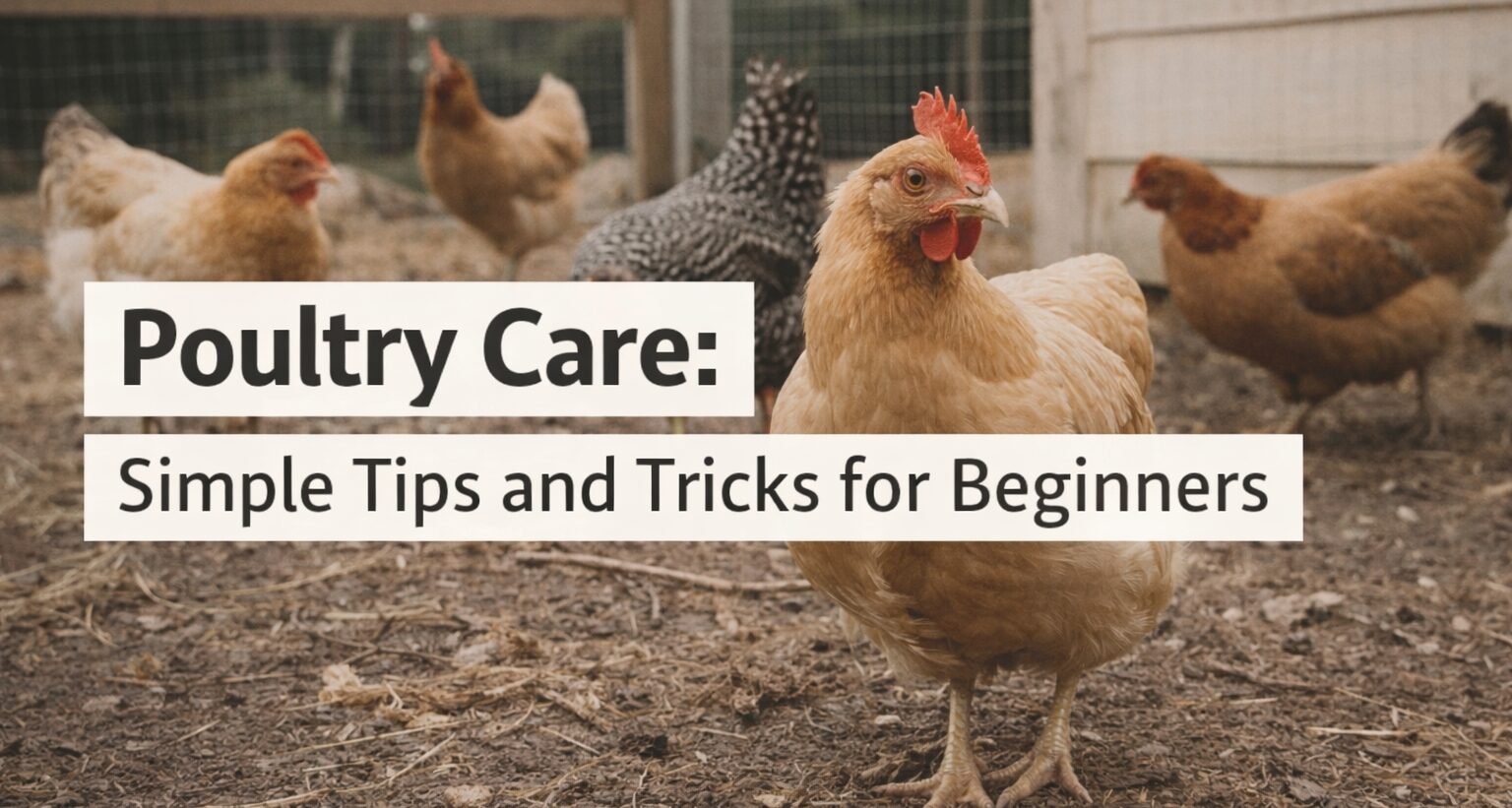
Poultry care gets much easier when you stop treating it like one big job and start treating it like a few small routines done well.
For most beginners, that means clean water, the right feed, a dry coop, enough space, and a quick daily check to catch problems early. You do not need a complicated setup. You need a simple one that stays clean, safe, and easy to manage.
This guide focuses mainly on chickens because they are the easiest starting point for most backyard keepers. If you are new to poultry care, start small, keep your routine simple, and build good habits from day one.
Quick Start
- Check local backyard poultry rules before buying birds
- Start with a small flock you can manage easily
- Use age-appropriate feed and clean water every day
- Choose a dry, well-ventilated, predator-safe coop
- Get into a simple morning and evening routine
Before You Buy Birds, Do These 3 Checks
1. Check your local rules.
Before you buy birds, make sure your city, county, or HOA allows backyard poultry. Some places allow hens but not roosters. Others limit flock size or coop placement.
2. Decide your goal.
Do you want fresh eggs, a family hobby, meat birds, or a few friendly backyard pets? Your answer changes what breeds you choose, how many birds you need, and how much daily work is realistic.
3. Be honest about your schedule.
A beginner flock does not need constant attention. It does need daily care. If you can do a short morning and evening routine, you are in a good position to start.
If you are still deciding what type of birds to raise, read our guide on the best chicken breeds for beginners.
Chicks or Started Pullets? Pick the Easier Starting Point
If you want the easiest first flock, started pullets are usually the smoother choice.
Day-old chicks need brooder heat, close temperature monitoring, and more hands-on care in the first few weeks. Started pullets cost more, but they skip the brooder stage and get you much closer to egg production.
| Option | Best For | Main Advantage | Main Tradeoff |
|---|---|---|---|
| Day-old chicks | Beginners who want the full raising experience | Lower starting age and more breed choices | Need brooder heat and closer monitoring |
| Started pullets | Beginners who want an easier start | Simpler setup and closer to laying age | Higher upfront cost |
Practical example: If you mostly want eggs and you have never raised birds before, a few started pullets are usually less stressful than managing chicks from day one.
Buy Birds From a Source That Lowers Risk
Where you buy your birds matters more than many beginners realize.
Look for active birds with bright eyes and clean feathers. If you are buying chicks, ask whether they were vaccinated for Marek’s disease. It is also smart to buy from hatcheries or sellers with strong health standards rather than taking chances on unknown sources.
A cheap bird is not a bargain if it brings health problems into your flock.
Helpful tip: Start with healthy birds from a trusted source and keep your first flock small. That makes it much easier to learn what normal behavior looks like.
Build a Coop That Saves Work Later
A beginner coop should be dry, well ventilated, predator-resistant, and easy to clean.
Many first-time keepers focus on how the coop looks. What matters more is how it works every single day.
Think in this order:
- Keep it dry
- Keep fresh air moving
- Keep predators out
- Make cleaning easy
A common beginner guideline is about 4 square feet of coop space and 8 to 10 square feet of run space per bird. More space is even better if your flock spends a lot of time confined.
For nesting boxes, one box for every 3 to 4 hens usually works well. Roost bars should give birds a comfortable place to sleep off the ground.
Practical example: A coop may look fine on a sunny afternoon, but if it sits in a low wet part of the yard, the run can turn muddy after rain and make daily care harder fast.
If you need help with setup, read our guide on how big a chicken coop should be.
Use Hardware Cloth, Not Just Chicken Wire
This is one of the most important poultry care tips for beginners.
Chicken wire helps keep birds in. It does very little to stop determined predators. Hardware cloth is the stronger choice for windows, vents, runs, and weak points around the coop.
Also check for:
- Loose latches
- Gaps near the bottom of the run
- Areas where predators can dig underneath
- Doors that do not fully close at night
If you lose birds to predators, the problem is usually not bad luck. It is usually a weak point in the setup.
Beginner mistake to avoid: Buying a cute coop first and thinking about predator protection later. Safety needs to be built in from the start.
Feed Birds by Life Stage, Not by Guesswork
The simplest feeding rule is this: match the feed to the bird’s stage of growth.
| Feed Type | Best For | Why It Matters |
|---|---|---|
| Starter feed | Chicks | Supports early growth |
| Grower feed | Young birds | Helps steady development |
| Layer feed | Laying hens | Supports egg production |
| Calcium source | Laying hens | Helps shell strength |
| Grit | Birds eating extras beyond complete feed | Helps digestion |
Kitchen scraps can be a small extra, but they should not replace balanced feed. New keepers often create feeding problems by offering too many treats and not enough complete ration.
Fresh water matters just as much as feed. Waterers should stay clean, stay upright, and stay free of droppings.
For a deeper feeding breakdown, link this section to your post on starter feed vs grower feed vs layer feed.
Use a 5-Minute Morning and Evening Poultry Care Routine
The easiest way to get poultry care right is to follow the same small routine every day.
Morning Routine
- Check water first and refill if needed
- Add feed and make sure it is dry and fresh
- Look at each bird for normal movement, posture, and appetite
- Open the run and scan for signs of digging or damage
Evening Routine
- Count birds before closing the coop
- Collect eggs and remove broken ones
- Check bedding around waterers for damp spots
- Look for one bird sitting apart or acting unusual
The 5-Minute Flock Check
- Are they eating normally?
- Are they active and alert?
- Are droppings changing sharply?
- Do combs look pale or behavior dull?
- Is one bird hiding or avoiding the group?
This quick habit helps beginners catch trouble early.
Follow a Weekly and Monthly Care Plan
A flock is easier to manage when you stop relying on memory.
| Frequency | Task |
|---|---|
| Daily | Refill water, feed birds, collect eggs, scan flock behavior |
| 2 to 3 times a week | Check bedding, clean wet spots, inspect feeders and waterers |
| Weekly | Refresh nesting boxes, inspect coop security, review bird condition |
| Monthly | Deep clean equipment, check feed storage, review flock records |
Keep one notebook or phone note for egg counts, odd behavior, weather changes, and any health issues. Patterns are much easier to spot when you write them down.
Keep Your Flock Healthy With Simple Biosecurity
Biosecurity sounds technical, but the basics are simple.
You want to reduce the chances of disease coming into your flock and spreading from one bird to another.
- Quarantine new birds before mixing them with your flock
- Keep wild birds away from feed and water
- Store feed in sealed containers to discourage rodents
- Wash your hands after handling birds, eggs, or anything in the coop
- Use dedicated boots or shoes in poultry areas if possible
- Isolate birds that suddenly seem weak, dull, or unwell
This is especially important in homes with young children, older adults, or anyone with a weakened immune system.
Hot Weather, Cold Weather, and Rain Change Your Routine
Weather changes can quietly create problems even in a well-run flock.
Summer Poultry Care
- Check water more than once a day
- Make sure birds have shade
- Improve airflow around the coop and run
- Watch for panting and heat stress
Winter Poultry Care
- Focus on keeping the coop dry
- Do not seal every opening and trap moisture inside
- Make sure water does not stay frozen
- Check for damp bedding more often
Rainy Weather Poultry Care
- Add bedding to wet areas
- Improve drainage around the run
- Move waterers away from muddy spots
- Watch for odor and damp litter building up
If seasonal care is a big concern for your readers, add internal links here to winter chicken care and summer chicken care tips.
Common Poultry Problems and the First Step to Take
| Problem | Possible Cause | First Step |
|---|---|---|
| Fewer eggs | Stress, season, diet change, molting | Check feed, water, stress, and recent weather |
| Thin or soft shells | Low calcium or nutrition imbalance | Offer calcium and review feed quality |
| Dirty water every day | Waterer too low | Raise it slightly off the ground |
| Birds pecking each other | Overcrowding or stress | Add space, reduce boredom, check flock balance |
| One bird looks dull or isolated | Illness or injury | Isolate and monitor closely |
| Strong coop smell | Wet bedding or poor ventilation | Remove wet litter and improve airflow |
This kind of table helps beginners act faster instead of panicking when something changes.
9 Poultry Care Mistakes Beginners Make
- Buying birds before checking local rules
- Starting with too many birds
- Underestimating predators
- Overfeeding treats and scraps
- Skipping quarantine for new birds
- Poor ventilation inside the coop
- Ignoring small behavior changes
- Making the coop hard to clean
- Waiting too long to isolate a sick bird
Most poultry problems do not start as emergencies. They start as small things that were easy to fix a few days earlier.
Simple rule: If one bird suddenly looks dull, stands apart, or stops eating, isolate first and watch closely. Acting early is easier than fixing a bigger problem later.
Your First 7 Days With New Birds
The first week is when beginners usually overthink everything. Keep it simple.
Day 1
Settle the birds in with clean water, feed, and a calm environment.
Day 2
Make sure they found food and water and are moving normally.
Day 3
Inspect the coop and run like a predator would. Look for gaps, weak latches, and wet spots.
Day 4
Start tracking egg count, behavior, and anything unusual.
Day 5
Adjust feeder and waterer height if birds keep kicking bedding into them.
Day 6
Watch the flock quietly for five minutes without interrupting them. This teaches you what normal looks like.
Day 7
Do a light reset. Clean damp spots, refresh bedding, and ask yourself what part of the setup already feels harder than it should.
Practical example: If the water is filthy every day by the end of week one, that is usually not a bird problem. It is a setup problem. Raise the waterer and move it to a cleaner spot.
FAQs
What is the easiest poultry to raise for beginners?
Do I need a rooster to get eggs?
How often should I clean the coop?
Is chicken wire enough for protection?
What are the first signs that a bird may be sick?
Can healthy-looking poultry spread Salmonella?
Final Checklist Before You Start
- Your local rules allow poultry
- Your coop is secure and easy to clean
- Your water system is simple to refill and wash
- Your feed storage is dry and sealed
- Your birds have enough space
- Your daily routine is realistic
- You have a plan for quarantine and health checks
Good poultry care starts with a setup you can manage consistently, not one that only looks good on day one.
If you keep your flock dry, fed, watered, and observed every day, you will already be doing most of what beginners need to do right.
Further reading
Use University of Minnesota Extension’s poultry care and management resources for additional husbandry and biosecurity guidance. For feed by age and production stage, read our chicken feeding guide. Consult a local veterinarian about illness and flock-specific health plans.